Opinion: India and the Jerusalem crisis, silence isn't always gold

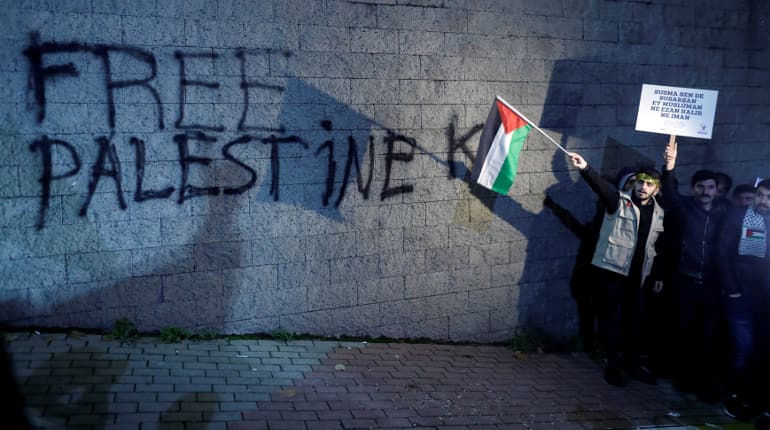
Jerusalem
The current regime in New Delhi made a lot of fuss and lofty pronouncements on doing away with hypocrisy on the Israel-Palestine issue
When it comes to diplomatic ambiguity, India has taken the cake on Jerusalem. Consider the statement from the Ministry of External Affairs -
"India's position on Palestine is independent and consistent. It is shaped by our views and interests, and not determined by any third country"
What does it tell you about India's position on Jerusalem? That the position remains what the last official submission said? Or that we have a position but we won't share it? Or that we've spoken because we had to, but we'd rather pretend what's happening isn't happening. To put it mildly, it's unbecoming for a country that hopes to secure a seat at the global high table. Jerusalem is the biggest point of debate in geopolitics today. To dither on it is to squander diplomatic capital.
The crisis should, instead, be made the most of. It's an opportunity for New Delhi. While Washington has undermined its role as a fair mediator, other players are jumping in. Russia's Vladimir Putin, after having played a decisive role in Syria and touring Turkey and Egypt, is being seen as a strong contender willing to get his hands dirty. He is emerging as the strongest outsider in this region with a finger in every pie.
China, earlier this year, sought to play a more prominent role in the region by issuing a four-point proposal on the Palestine conflict. President Xi Jinping offered to invest in industrial parks and solar power plants in Palestine. China already has substantial investments in Israel and would have been a defence partner too, had it not been for American roadblocks. Beijing also came up with a strongly worded response to Trump's decision to declare Jerusalem the capital of Israel, saying it will potentially flare up regional tensions. It is taking a stand.
France's Macron has been showing increasing interest in West Asia. He visited Saudi Arabia and invited Lebanese Prime Minister Hariri to his country. He told Israeli PM Netanyahu that Trump's moves are a threat to regional stability. Even Singapore has spoken out against unilateral decisions that might impede the peace process.
India, in contrast, remains conspicuous by its vague response. It's a pity because India is also the best poised to play a more substantial role. The Palestinians trust India, the first non-Arab country to have recognised the PLO's authority as "the sole legitimate representative of the Palestinian people." Isreal calls India a strategic partner and a lot of other things that made headlines this summer when Modi became the first Indian PM to visit Tel Aviv.
The bilateral defence cooperation is worth billionsand growing. India has no political stakes in the region and can leverage its good offices with both sides. It is seen favourably by the Arab players and has ties with Iran. In short, it is a neutral player with an international stature and a reputation for being a responsible state.
The current regime in New Delhi made a lot of fuss and lofty pronouncements on doing away with hypocrisy on the Israel-Palestine issue. The Prime Minister then walked the talk by skipping a visit to Ramallah when he went to Israel. It's time to demonstrate the same position of strength by offering to resuscitate the peace process.
Fears of such a move opening the Pandora's box on Kashmir are unfounded. Kashmir is not Jerusalem. The conflict is different. The dynamics are different. India has stood firm on the contention that this is a bilateral issue and rightly refused all offers of international mediation. The West Asian players have taken no such position.
India has successfully played a constructive role in the Afghan situation. It is seen as a reliable force in rebuilding the country. It is training the military and police force. It whittled away the chance it had in Myanmar by again taking a myopic view of the Rohingya crisis. Delhi shouldn't repeat the mistake in Jerusalem. To be recognised as a global leader, it has to demonstrate leadership and the willingness to deal with sticky affairs.
(Disclaimer: The author writes here in a personal capacity).