Opinion: Between the power of capital and the state - what works?

China economy
There then should be a balanced and calibrated relationship between the state and capital.
The state, as an institution, is relatively new in the history of mankind. But, so is capital, in the modern sense of the term. The relationship between the two has historically and contemporarily been fraught and, often times, adversarial, even though the nature of the relationship is rather symbiotic: the state needs capital and capital needs the state. In this relational dynamic, at times, the state vies for and assumes primacy and, sometimes, capital becomes paramount. Ideally, this dynamic should have been such that it yield synergies of a nature , that are mutually beneficial and benign, but rarely does this happy combination emerge. The contemporary world appears to be gyrating to a rhythm where the state is making a comeback, and attempting to overwhelm capital and its corollaries, globalisation, free trade, and free movement of peoples.
Before I elucidate upon the core or thematic argument of this essay, I would like to point out that I am neither a trained economist in the formal meaning of the term (even though I am rather naturally inclined towards the discipline and hold an abiding interest in it) nor am I a trained political scientist (despite studying the discipline), again in the formal sense of the term. I am less than what these disciplines imply but more than what these entail. However, I , kind of , veered to the idea, that the state and its power, generally speaking, worked or could work to the welfare of people. But, after having been a student of the state and state power and having multiple vantage points on it, both top down and bottoms up, I am reviewing (or have actually reviewed) both my understanding of and proclivities toward either.
The reasons, in the main, pertain to the general observation that welfare is or perhaps has become just one aspect of the state (generally speaking). There’s other functions of the state that assume priority and precedence like its security function or the power aggrandizement one. In either instance, welfare of the people assumes secondary or even tertiary importance. As an example, science, which has done wonders for the world, becomes an instrument and instrumentality of the state. What ensues is prevalence of nuclear weapons and their quest, arms races and so on, to cite an egregious example. And, often times, the state and power become ends in themselves.
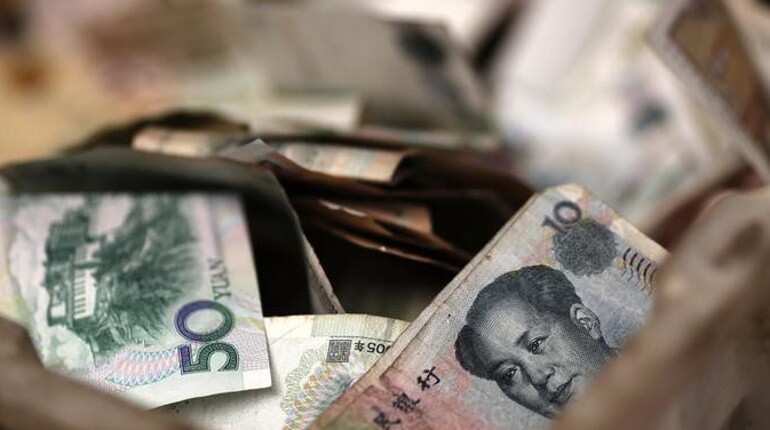
In terms of capital, the same can hold and apply. For instance, profit seeking and making become an end in themselves. While this can lead to exploitation of various kinds, but capital and its potential can also have a transformational impact, improving the lives of people. I will offer two examples to illustrate the point: First, consider the case of China. Ever since China opened its economy, in 1978, to and for capital (retaining its political system and philosophy though), the country has made stupendous strides, taking millions out of poverty. Second, consider the case of democratisation, understood here as empowerment and access , in the expansive senses of the term, capital appears to have done more than the state.
It is the power of capital that has democratised information (to paraphrase Thomas Friedman of the New York Times) leading to a veritable information revolution it is capital which has made the globe smaller it is capital that has and is flattening hierarchies of various kinds and sorts it is capital and its availability that allows people choice and even freedom it is capital that is enabling than the state in multiple domains of life and so on.
All this is not to suggest that in capital lies nirvana, so to speak. No. Not at all. Mankind is too complex a species to be subsumed under the rubric of capital and its content the species is also driven and motivated by values which cannot and must not be determined by capital. Moreover, capital cannot sate the fundamental spiritual and emotional longings and yearnings of mankind. But, the issue or debate here is not about these more fundamental and existential issues it is more prosaic: whether the state or capital does more to improve the material welfare of people?
The thrust of the argument delineated here lays clear where my proclivities now lie. Capital, and its potential, is more effective than the state and state power. But, yet again, it is not to assert that there is no need of the state. Yes, there is. Capital, on its own, follows the rate of profit, reductively speaking it neither cares for distributional consequences (which are important in their own right) and monopoly rents can be derived by those who have access to capital, among other things. There then should be a balanced and calibrated relationship between the state and capital. But, the state, while ameliorating the edges of raw and undiluted capital , should not obstruct capital. There is, in the prosaic sense(s) , a degree of liberating potential in capital, if conceived and used judiciously which the state does not appear to have.
(Disclaimer: The opinions expressed above are the personal views of the author and do not reflect the views of ZMCL)