Ocean bed now has more microplastics than ever before

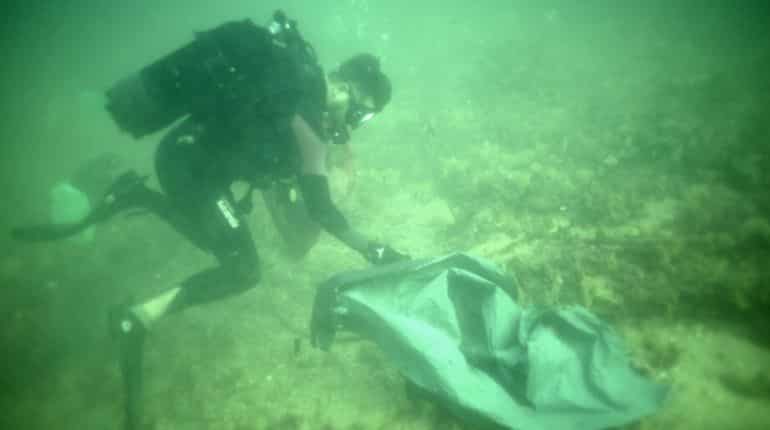
A handout image made available by Oceanium de Dakar shows a scuba diver collecting plastic and other waste from a bay during a 'clean-up day' campaign of the ocean off the coast of Goree island on September 15, 2019
The ocean now has the highest level of microplastics ever recorded on the seabed.
A group of scientists, part of the analysis by the University of Manchester recently discovered up to 1.9 million plastic pieces per square metre in the ocean.
The sediments were pulled out from the bottom of the Mediterranean near Italy.
According to BBC, these items include clothing fibres, synthetic textiles, and fragments from bigger objects.
Microplastics are objects smaller than 1 mm. These have become concentrated in the ocean bed owing to currents down under.
At least four to 12 million tonnes of plastic waste enters the oceans every year through rivers, a study had earlier claimed.
However, we can only account for just 1 per cent of the total plastic waste. The rest 99 per cent still remains untraceable.
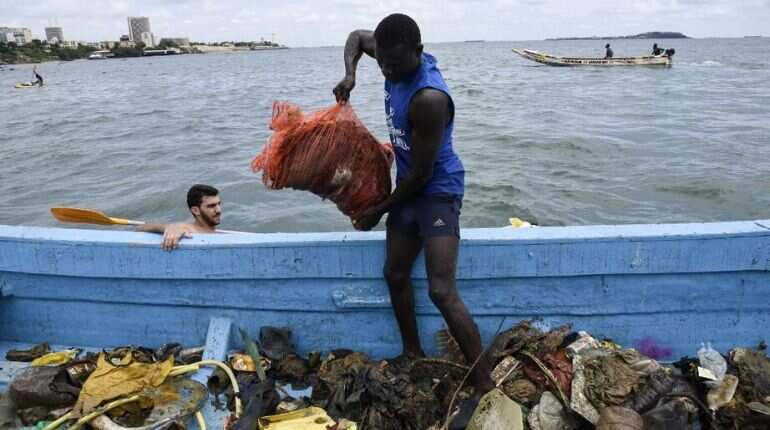
Some of this waste has been consumed by marine life, as evident in postpartum reports of animals that are flushed out of the ocean.
A large amount of this plastic waste has probably fragmented and has sunk to the bottom of the ocean.
The research also displayed how deep-sea trenches and ocean canyons can house microplastics.
However, these microplastics are moved further to greater depths by flows of mud, sometimes by 100 of kilometres in one go.
Such deep-water currents provide oxygen and nutrients of deep-sea creatures. If microplastics travel to such depths, they could lodge into biodiversity hotspots, and could be ingested by creatures.