NASA's QueSST: The second generation supersonic planes

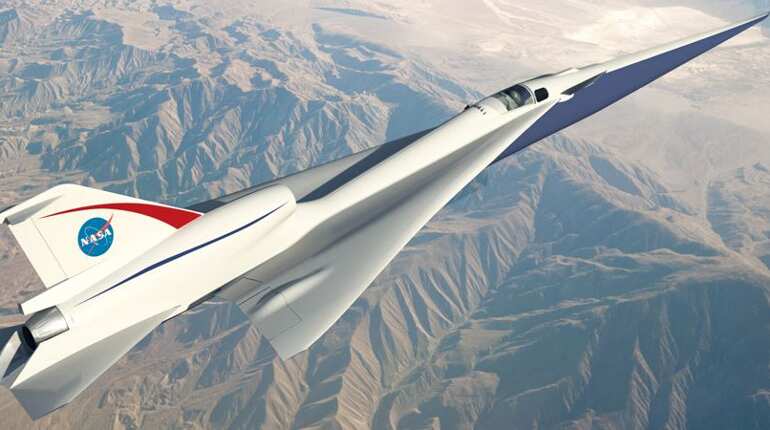
Quiet Supersonic Technology X-Plane
NASA is all set to launch Quiet Supersonic Technology X-Plane which will mark a comeback of supersonic flights after Concorde retired in 2003
By Aimen Zaki
Taking a step forward in supersonic transport, NASA has decided to build a supersonic aircraft for commercialuse.
NASA is all set to launch Quiet Supersonic Technology(QueSST) X-Plane which will mark a comeback of supersonic flights after Concorde retired in 2003.
NASA in a report has also confirmed that it has conducted few experimental flights in Florida's space coast. The agency is also planning to get abetter understanding of the impactoflow-altitude atmospheric turbulence on sonic booms by continuing with itsassessment in Florida. NASA has worked out its design for the supersonic plane in collaboration with Lockheed Martin.
According to a report, the new supersonic aircraft is 94 feet long with room for one pilot. The overall budget for the project is nearly $390 million.
Last year, NASA administrator Charles Bolden had said: “NASA is working hard to make flight greener, safer and quieter – all while developing aircraft that travel faster, and building an aviation system that operates more efficiently.”
“To that end, it’s worth noting that it's been almost 70 years since Chuck Yeager broke the sound barrier in the Bell X-1 as part of our predecessor agency's high-speed research. Now we’re continuing that supersonic X-plane legacy with this preliminary design award for a quieter supersonic jet with an aim toward passenger flight," Bolden added.
 Nasa is all set to build the new Quiet Supersonic Technology X-Plane which could have flight times. (Image source: Lockheed Martin) (Others)
The new supersonic passenger plane is designed to fly at 55,000 feet above the ground. The design also proposes to solve the noise problem that is associated with such aircrafts. NASA with its new project is aiming at establishing an advance low-sound supersonic flight that will be a revolutionary step in the supersonic aerospace industry.
Commercial supersonic transports became a reality in the 20th century with the two supersonic planes: Concorde and Tupolev Tu-144.
Concorde
 British Airways Concorde (Image source: Wikipedia) (Others)
Concorde was an elite supersonic passenger jet airliner that was introduced as part of a joint venture by the UK and French government on March 2, 1969. The aircraft was a huge success as it travelled with a speed of over twice the speed of sound.
It was generally preferred by rich passengers who could afford the tickets of the supersonic flight. It soon became a hotspot for high profile Hollywood bigwigsand rock stars.
The Concorde's budget in 1962 was projected at £160m which would be around £2 billionin today's money.
However, Concorde flights were discontinued following a plane crash on July 25, 2000 in Gonesse near Paris in which a hundred passengers were killed. The fall in air travel after 9/11 attacks wasalso a major reason for its retirement.
Tupolev Tu-144
 Tupolev Tu-144 (Image source: Wikipedia) (Others)
The supersonic aircraft was Russian-built Tu-144. The plane was a product of the formerUSSR and flew for twenty years - 1963 to 1983.
Apparently, Russia could not solve the problems faced by the Tu-144 flight services that included cabin noise, higher oil pricesand various structural failures.
Now withthe second generation NASA supersonic airliners in the horizon, the age of supersonic flights could be making a comeback with the QueSST.