Nagorno-Karabakh truce frays; Russia appeals for peace

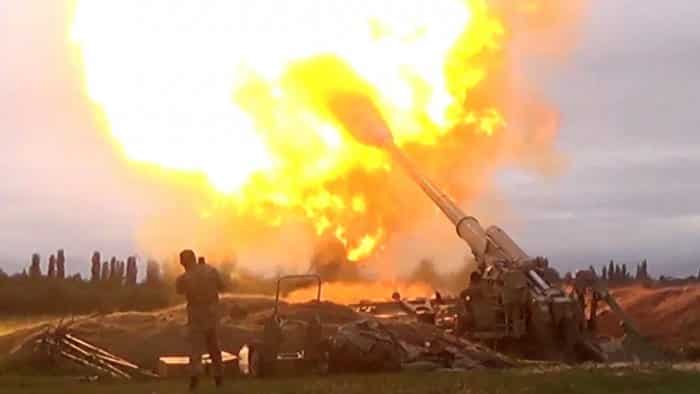
Clashes in the Nagorno-Karabakh region
Azerbaijan and ethnic Armenian forces continued to accuse each other on Tuesday of launching new attacks in and around Nagorno-Karabakh, increasing strain on a three-day-old humanitarian ceasefire intended to end heavy fighting over the mountain enclave.
The fighting has surged to its worst level since the 1990s, when some 30,000 people were killed.
Ethnic Armenian officials in Nagorno-Karabakh said 17 more servicemen had been killed in fighting with Azerbaijan, bringing its total military death toll to 542 since fighting broke out on September 27, Russia's Interfax news agency reported on Tuesday.
Russia, which brokered the ceasefire, appealed for both sides to respect it and Luxembourg repeated European Union calls for Turkey, an ally of Azerbaijan, to do more to secure an end to hostilities that have killed hundreds of people.
The fighting, the deadliest over Nagorno-Karabakh in more than 25 years, is being watched closely abroad partly because of its proximity to Azeri gas and oil pipelines and the risk of regional powers Turkey and Russia being dragged in.
Both Ankara and Moscow are under growing pressure to use their influence in the region to end the fighting.
The ceasefire is meant to allow ethnic Armenian forces and Azerbaijan to swap prisoners and bodies of people killed in two weeks of fighting. Nagorno-Karabakh is internationally recognised as part of Azerbaijan but governed and populated by ethnic Armenians.
But the ceasefire has frayed quickly. Azerbaijan said on Sunday it had launched air strikes against an Armenian regiment, following what it said was an Armenian rocket attack on an apartment building in the second biggest city of Ganja. Armenia denied carrying out such an attack..
On Monday, Azerbaijan’s defence ministry said Armenian forces had tried to attack its positions around the Aghdere-Aghdam and Fizuli-Jabrail regions, and were shelling territories in the Goranboy and Terter regions inside Azerbaijan.
Nagorno-Karabakh said its forces had inflicted losses on Azeri forces and that large-scale military operations were continuing in the Hadrut area of the enclave.
Zohrab Mnatsakanyan, Armenia’s foreign minister, met Russian Foreign Minister Sergei Lavrov in Moscow. He accused Azerbaijan of acting to expand Turkey’s influence in the region and of using pro-Turkish mercenaries - charges both Ankara and Baku deny.
Azerbaijan said 41 Azeri civilians had been killed and 207 wounded since September 27. It has not disclosed information about military casualties.
Nagorno-Karabakh said its military death toll since September 27 had reached 525. At least 31 civilians had been killed, RIA news agency quoted Nagorno-Karabakh rights ombudsman Artak Beglaryan as saying.
(with inputs from agencies