Meet S. Africa's Frans Hugo: 90-year-old journalist who delivers news in the desert

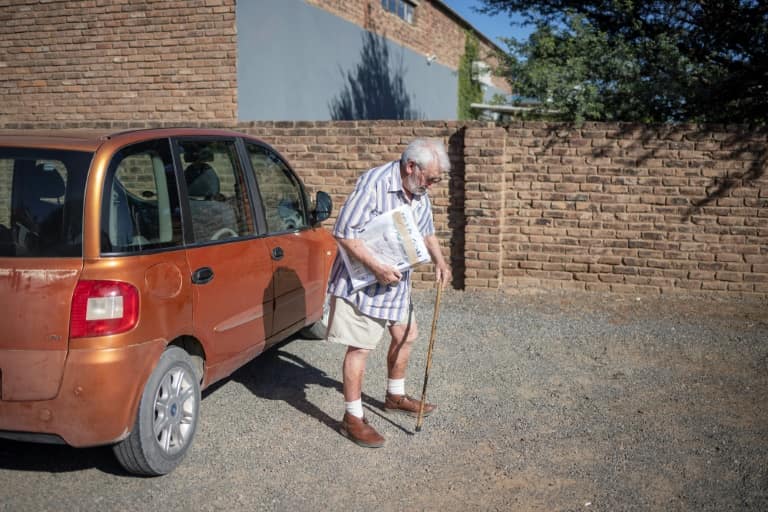
Frans Hugo
Every Thursday without fail,90-year-old Frans Hugo travels to distribute newspapers in the South African desert, packing a flask fullof coffee, some boiled eggs, and a towel to cover his bare legs from the sweltering heat. This agededitor has been travelling the 1,200-kilometer (750-mile) round trip across the semiarid Karoo area of the country every week.This has been his routinefor around 40 years, as reported by AFP.
He was perhaps the last bastion of a dwindling industry when he was born Charl Francois Hugo in Cape Town in 1932, but everyone just calls him Frans.
The Messenger, Die Noordwester, and Die Oewernuus are three of the community newspapers that the active nonagenarian edits and hand-delivers.
Hugo distributes news to the towns and villages dotted throughout this vast, arid backcountry while driving an orange Fiat Multipla loaded with copies of the eight-page weeklies and a vintage portable radio to keep him company.

Frans Hugo, 90, drives 1,200 kilometres every week to distribute his three newspapers, which he owns and edits in South Africa's rural Karoo. (AFP)
Movingto the countryside to take a break
He sets off at 1:30 in the morning from Calvinia, a little town of fewer than 3,000 people located roughly 500 kilometres north of Africa's southernmost tip, and returns in the early evening.
"I am like a pompdonkie," he told AFP on a recent tour, using the local moniker for the nodding donkey pumps used to extract groundwater from boreholes.
Also watch |World of Africa: Vibrant South African designs
"I keep doing this every Thursday without fail. I will probably stop when I am physically not capable of doing it anymore."
Hugo worked as a journalist in Cape Town and then in Namibia for almost 30 years before moving to this remote area.
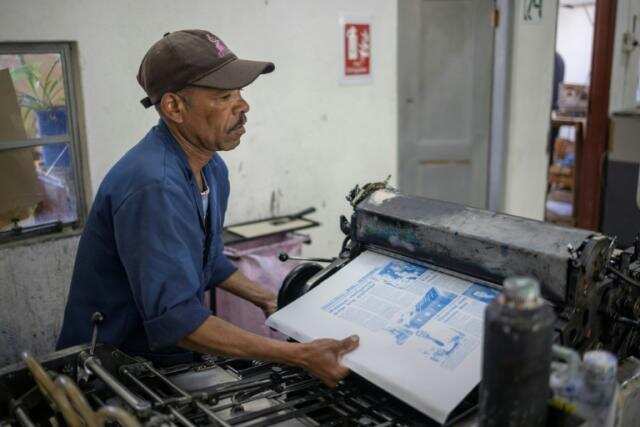
Although there is a decline in readership, newspapers have survived the internet's onslaught.(AFP)
"I couldn't handle the pressure anymore, so I moved to the Karoo," he told AFP.
"Just as I was able to take a breath and relax, the man who owned the printers and the newspaper here in Calvinia came to ask me if I was interested in the business."
Surviving in the digital age
While many printed newspapers worldwide are fighting to survive the digital era, he has managed to keep certain classic small-town publications alive with the help of his wife and three helpers. The Messenger, formerly the Victoria West Messenger, was established in 1875, whilst Die Noordwester and Die Oewernuus began publishing in the 1900s.
All three are published in Afrikaans, one of South Africa's 11 official languages and a language of Dutch settlers, however they occasionally contain English-language content.
Hugo shrugs at those who want to "read the news on their cellphones."
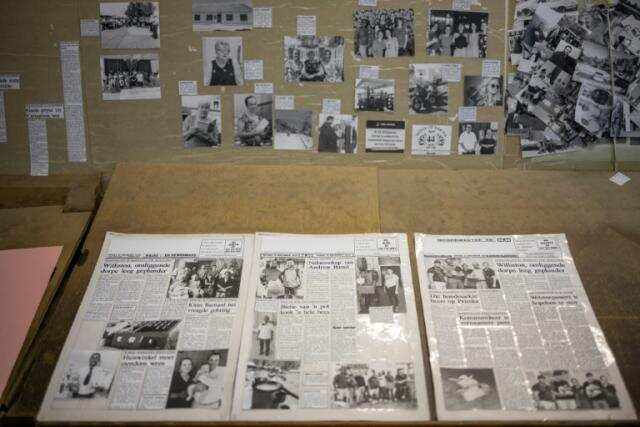
Newspapers in the Afrikaans language include The Messenger, Die Noordwester, and Die Oewernuus.(AFP)
The growth of the internet has affected reading, but it doesn't appear to have reached his newsroom, which resembles a museum.
The office is decorated with a vintage Heidelberg printing press and paper cutters. The staff makes use of early 1990s-era computers and software.
Hugo claims that despite this, there is a never-ending desire for local news since his staff publishes roughly 1,300 copies every week.
The newspapers, which cost eight rand (about 50 cents), are left at businesses, convenience stores, and the residences of the correspondents.
Farmers who reside in a distant, semi-arid area make up the majority of the readers.
(With inputs from agencies)
WATCH WION LIVE HERE: