

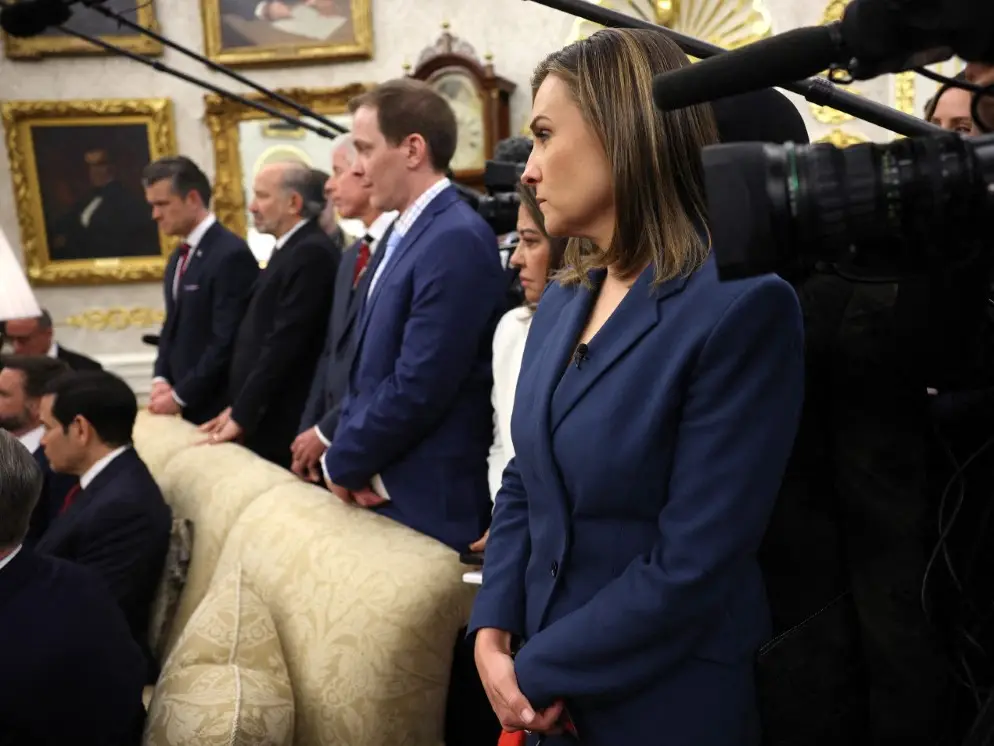
&imwidth=800&imheight=600&format=webp&quality=medium "Trump lashed out at ABC reporter Mary Bruce for asking tough questions on Epstein and Khashoggi")
Mary Bruce, the White House correspondent of ABC News, was rebuked by US President Donald Trump for asking questions related to the Epstein Files and the killing of Jamal Khashoggi on Tuesday. Trump called her a “terrible reporter”, called the broadcaster a "crappy company", and threatened to cancel the license of the broadcaster.
Mary Bruce asked three critical questions at the White House. She questioned the President about whether it was appropriate for Mr Trump to have a business relationship with Mohammed bin Salman while he was president, which was followed by the question, “Your Royal Highness, the U.S. intelligence concluded that you orchestrated the brutal murder of a journalist (Jamal Khashoggi). 9/11 families are furious that you are here in the Oval Office. Why should Americans trust you? And the same to you, Mr President." And the last question was related to the White House was waiting for congressional action to release more details about the sex offender Jeffrey Epstein, “why not just release now?” Ms Bruce asked.
Mr Trump responded to the Saudi Prince, saying that many people didn't like Jamal Khashoggi. However, MBS conceded that the death of Khashoggi was painful and “a huge mistake.” Mr Trump further lashed out at Ms Bruce, saying that it was not the question but the manner in which she asked it.
Who is Mary Bruce?
Mary Bruce has been serving as a White House correspondent for the ABC network for approximately 5 years. She has done some notable coverages, like the 2020 United States presidential election, and Russian interference in the 2016 United States elections. White House reporters had previously also been confrontational with the US President Donald Trump, and Trump, on several occasions, has shut them down horribly. These encounters have been on various occasions, insulting and offensive. Mary Bruce, however, showed tremendous courage in sharply addressing the political and economic controversies around the Saudi Prince's visit to White House, in her questions. An occurrence emblematic of the critical nature of the US media, in stark contrast to other major democracies like India, where journalists parade around the prevailing narrative and interviews of democratically elected leaders fall on the periphery of Page 3 gossip and a PR campaign.

