'Eventually Hawaii is going to look like a resort community': Mark Zuckerberg sparks outrage over land acquisition

&imwidth=600&imheight=450&format=webp&quality=medium "'Eventually Hawaii is going to look like a resort community': Mark Zuckerberg sparks outrage over land acquisition")
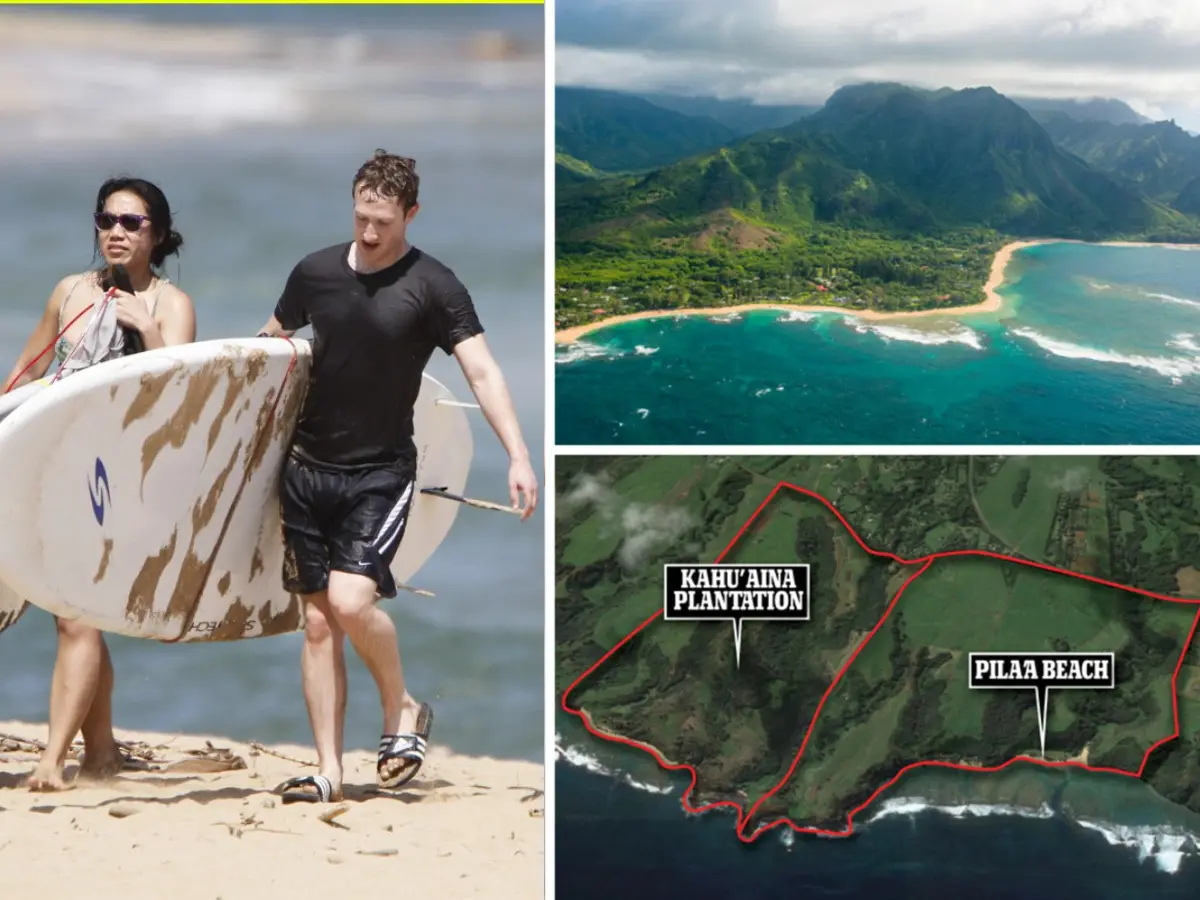
Mark Zuckerberg Hawaii Property Photograph: (creative commons)
Mark Zuckerberg is drawing flak from the natives of Hawaii with his increased ownership of land and extravagant mansion on the island. The native Hawaiians are facing an identity dysphoria with decreased access to their traditional “Āina”.
Mark Zuckerberg has once again sparked outrage from locals of Hawaii by adding roughly 962 acres to his private property in the north shore of Kauai, also known as “Koolau Ranch”. It all started in 2014, when Billionaire Meta CEO Mark Zuckerberg purchased roughly 700 acres of property near Kilauea. Over the years, the property doubled in size to 1400 acres, and now, after the recent acquisition, it roughly stands at 2300 acres, spreading across roughly 3.6 square miles, equivalent to the size of two football fields. Experts estimate the value to be at $65 million.
This recent acquisition has raised an alert among the natives of Hawaii. "If our island has any hope of remaining Hawaii, this kind of activity has got to stop," said Puali'i Rossi, a professor of Native Hawaiian studies and quoted by Wired, "Eventually Hawaiʻi isn't going to look like Hawaiʻi anymore — it's going to look like a resort community."
The massive plot has two mansions connected by a hidden tunnel. The mansions spread across 57,000 square ft. living space with plans of 30 bedrooms and 30 bathrooms, guest houses, treehouses, a gym, tennis court, sauna, cold plunge, and more. Then there is a 5,000 square feet of underground sanctuary with blast-resistant doors, escape hatches, water, food and energy systems. Some say it is built for a post-apocalyptic scenario like a social collapse, climate shock or nuclear war. A former contractor bluntly says, “It’s fight club. We don’t talk about Fight Club.” Some were reportedly fired for posting or talking about the project. Thus, the compound achieved a mythical status.
According to a report by Wired, 37 billionaires collectively own 218,000 acres of land on the island, which is more than one tenth of the Island. The most controversial part is that Zuckerberg's estate sits atop a burial ground where at least two of the cultural practitioner Julian Ako’s ancestors were laid to rest. Even though Acko, after much back and forth with Mark, managed to get those lands fenced and registered with the state, according to the oral history of the native tribe, there are more ancestral remains in the ground. Community members worry that workers who find these remains will not be able to come out due to the NDA and thus silencing their discoveries. In 2025, the disparity between haves and have-nots is huge. According to a Bloomberg report, the richest people in the world, with their super-yachts and private jets, are living a high-carbon lifestyle. According to a report by Oxfam, the world's 50 richest billionaires account for more carbon pollution every two hours than the average person does in their lifetime. Mark Zuckerberg's team have formally expanded their submission to include agricultural and conservation plans, with less than one per cent being developed. But the debate persists as the local identity and access to traditional “ʻĀina” is quietly being taken away.

