Lukashenko orders interior ministry to end unrest in Minsk, sanctions more border protection

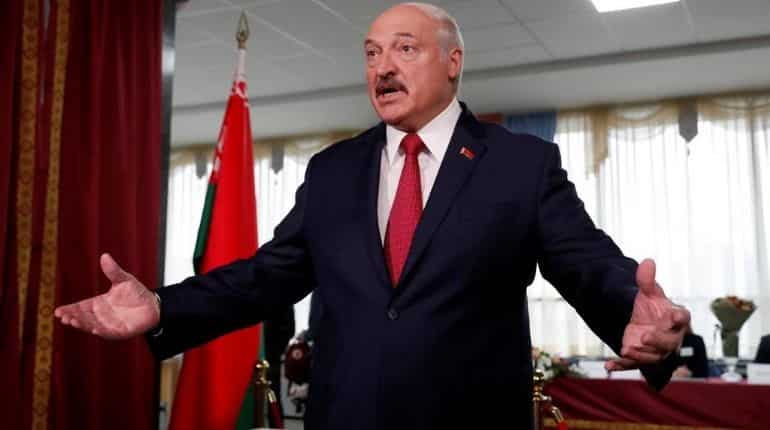
Alexander Lukashenko
Belarus President Alexander Lukashenko on Wednesday said that he had ordered the Interior Ministry to step up efforts to end the unrest in Minsk.
Protests across the country erupted after he won the presidential election, which the opponents believe is rigged.
Lukashenko added that the state media workers who had chosen to join the protests would not be allowed to return to their jobs.
"Fighters and arms"
Additionally, he ordered border patrol to increase security across the border regions to prevent the entry of “fighters and arms” into the country, according to Delta.
Belarusian leader Alexander Lukashenko on Monday said that a new presidential election would be held in the country after a new constitution is adopted.
Lukashenko is facing protests across the country after being in power for 26 years after a disputed election took place on August 9. Earlier on Monday, he had said that no new elections will happen.
"This is what will happen... We need to adopt a new constitution. That is what you wanted", he said.
"We need to adopt it via a referendum since this was how the previous constitution was approved. Under this new constitution, elections could be held - parliamentary, presidential, and local - if that is what you want", he said.
"We'll put the changes to a referendum, and I'll hand over my constitutional powers. But not under pressure or because of the street," Lukashenko said, in remarks quoted by the official Belta news agency.
“Yes, I'm not a saint. You know my harsh side. I'm not eternal. But if you drag down the first president you'll drag down neighbouring countries and all the rest", he announced.
EU emergency summit underway
European Union leaders held an emergency video summit on Wednesday to discuss the crisis in Belarus.
The EU had earlier announced that they’re working on a new round of sanctions against Belarus. This would target those who were involved in allegedly rigging the August 9 votes, as well as in forcibly repressing protests.
The meeting began with Dutch Prime Minister Mark Rutte saying that the EU simply “cannot accept the result of these elections”.