Labour's Corbyn urged to back public vote on Brexit or face voter exodus

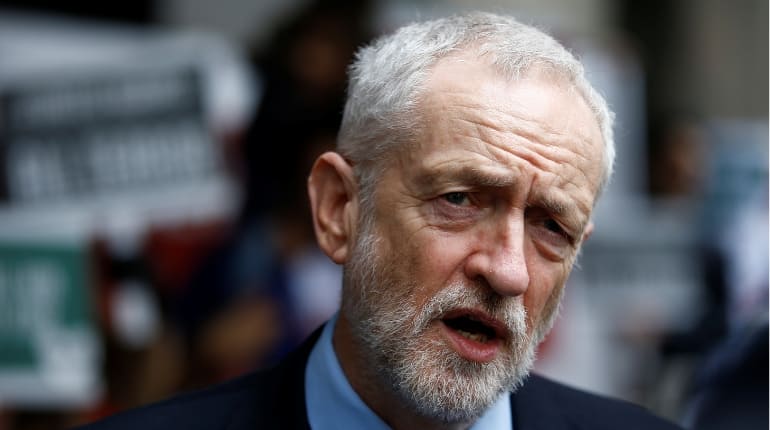
Jeremy Corbyn
The leader of the United Kingdom's Labour Party, Jeremy Corbyn, was warned by the party's European Parliament chief Sunday that failure to back a second referendum on Brexit could spark a mass exodus for voters.
Speaking to the weekly Observer newspaper, Richard Corbett said Corbyn ran the risk of losing young and pro-European Union voters if the party, whose current policy is for a soft Brexit, did not back a campaign to put the outcome of the UK's withdrawal from the bloc back to the public.
"If Labour does not re-confirm its support for a confirmatory public vote on any Brexit deal in its manifesto then it will haemorrhage votes to parties who do have a clear message," Corbett said. "If on the other hand, we do offer clarity and a confirmatory ballot, we could do very well."
Although Labour has not ruled out the possibility of a second Brexit referendum, its policy thus far has been to pursue a softer Brexit to the one pursued by Conservative Party prime minister, Theresa May.
Labour's plan would be to include a new customs union with the EU, as opposed to May, who has ruled that option out.
The pair were currently engaged in cross-party talks in a bid to draw up a withdrawal agreement that would command a majority in the House of Commons, the lower chamber of UK lawmaking, which has rejected May's deal three times.
Brexit had been scheduled to go ahead on Mar. 29, two years after May enacted Article 50 of the Lisbon Treaty, but the date has since been delayed twice due to May's failure to get MPs to back her deal. The new date agreed by the EU is Oct. 31, although the UK's departure could be earlier should the Commons back a deal.
On Friday, the UK's Chancellor of the Exchequer, Philip Hammond, downplayed suggestions that the latest delay boosted the chances of a confirmatory Brexit vote.
May's decision to discuss Brexit with Corbyn comes after she faced opposition to her withdrawal deal from members of her own party and from the Northern Irish party, the DUP, which entered the Commons as the Conservative Party minority government's confidence and supply partners.
UK voters narrowly opted to leave the EU in a 2016 referendum.