Kenya's Supreme Court's verdict on election malpractices will have wider repercussions in Africa

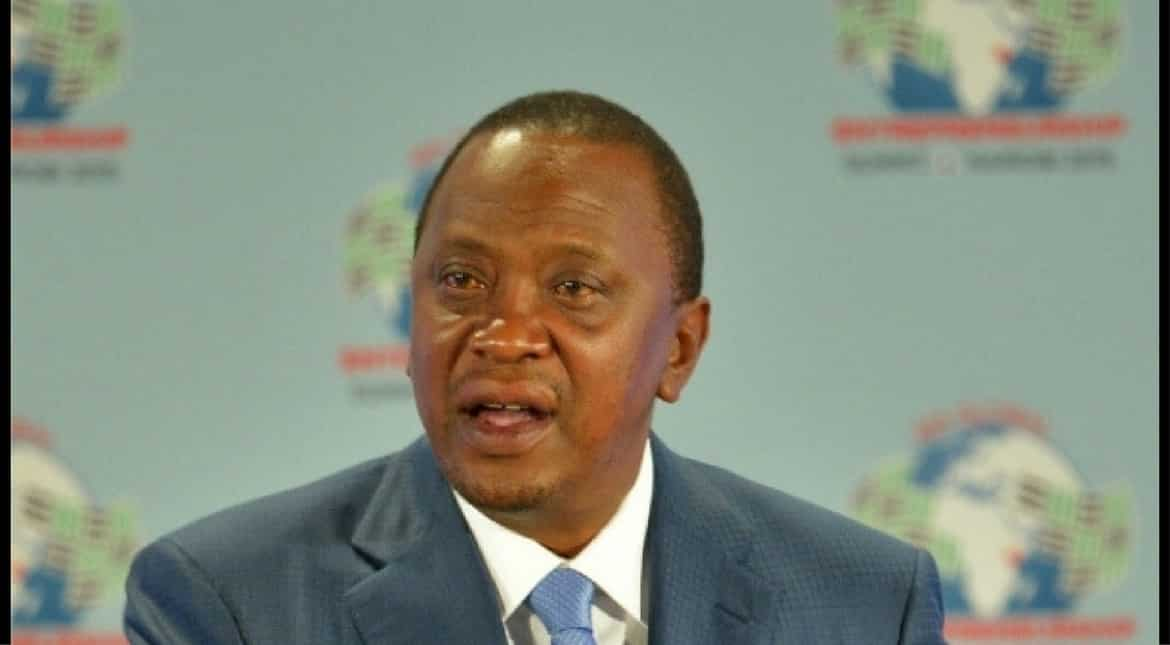
Uhuru Kenyatta
Kenya's Supreme Court has declared invalid the re-election of incumbent president Uhuru Kenyatta. This gives hope to Opposition leaders in Africa.
Kenya's Supreme Court has declared invalid the re-election of incumbent president Uhuru Kenyatta. This unprecedented move is also a sign of hope for veteran Opposition leader Raila Odinga, who has over the years accused the electoral body of irregularities.
“The declaration of Kenyatta’s winis invalid, null and void,” said Judge David Maraga, announcing the verdict of four out of the six judges.
The Supreme Court ruled on last Friday that the election board had committed irregularities that rendered the August 8 poll invalid, thereby,overturningPresident Uhuru Kenyatta's win. Incidentally,Kenyatta wonby a margin of 1.4 million votes.
Kenyatta emerged as a winner of the August 8 polls with over 60 per cent of votes as against Odinga's 40 per cent.
Kenyatta emerged as a winner of the August 8 polls with over 60 per cent of votes as against Odinga's 40 per cent.
Main Opposition leader Raila Odinga headed to the Court with a petition, citing irregularities by the electoral body and hacking of results which he considered to havefavouredKenyatta's campaign. Kenya's election body acknowledged hacking attempts but said those attempts were unsuccessful.
Kenyatta's victory had the backing of election observers, they all welcomed the Independent Electoral and Boundaries Commission's report of free and fair elections.
The Election Commission's stand on a fair election, however, did not go down very well with Odinga's followers who took to violence, resulting in dozens of death. To put an end to the violence,Odinga approachedthe Supreme Court.
This is not the first time, however, that Odinga has approached the Court hoping that the judges will be impartial. He did the same in 2013when he lost the election to the same rival Uhuru Kenyatta.There was light at the end of the tunnel for Odinga when the Supreme Court granted his coalition, NASA, limited access to the electoral body’s data.
Losing candidates in different countries of Africa have always placed their faith in the Court's impartiality.
Kenya Supreme Court's ruling has broughthope to other Opposition candidates across Africa. Losing candidates in different countries of Africa have always placed their faith in the Court's impartiality. The latest post-election Constitutional Court battle is in Gabon, where the main Opposition, led by former African Union (AU) chief, Jean Ping is seeking to overturn results of the last presidential election. Approaching the Courts proved to be effective to curb instability, it is a move that Odinga took and many others in Africa.
But what does it mean for the winner?
Observers are watching as events unfold in Kenya after the Supreme Court ruling. The elections body was ordered to conduct fresh polls in sixty days.
With all eyes on Kenyatta's response to the unprecedented ruling,Kenyatta said that he has accepted a Court ruling annulling his re-election on August 8. He, however, expressed his disagreement with the judges’ position. The 55-year-old, now a serving president and not president-elect, had some uncharitable words for the Supreme Court describing them as ‘thugs', local media reported.
For the poll re- run to take place peacefully, there has to be a consensus between President Kenyatta and the Opposition leader on the electoral board to runthe election. For now, both leaders have voiced their differences, with Odinga calling for a new electoral board while Kenyatta insistingthe poll should re-run with the current electoral board.
Kenya has a history of post-election violence, it remains to be seen howthesetwo leaders will handle the re-run and ensure stability in this sixty days.