Just how crucial Russian gas is for West, in spite of its invasion of Ukraine

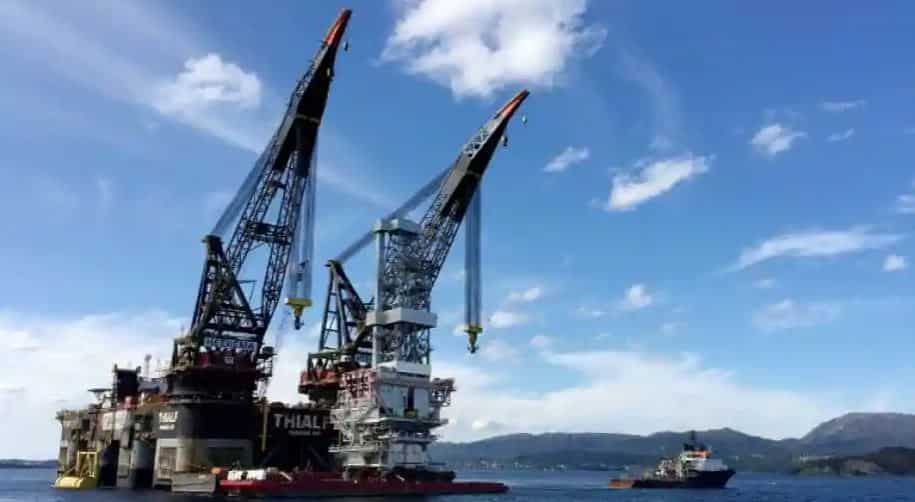
(Representative image) Oilfield
In the wake of Russian invasion of Ukraine, several western countries are contemplating to impose a ban on Russian oil import.
Even though US announcing sanctions on Russian oil is very much on the cards, several European countries have carefully avoided directly hitting the country’s energy exports.
Moreover, Russia has threatened to close a major gas pipeline to Germany and warned of $300 oil prices if the West goes ahead with a ban on its energy exports.
Even if US moves ahead with its plan, can other western nations follow suit considering that Russia caters to almost half of Europe’s gas needs?
Russian oil
Russia is the world’s second-largest producer of petroleum after the United States although, at times, its position fluctuates with that of Saudi Arabia.
Russia accounts for 7 per cent of the global share and is the top exporter of crude and oil products worldwide. Several European countries are heavily reliant on Russian energy.
Russia produces close to 11 million barrels of crude oil per day, of which roughly half the output is used to meet domestic demand.
About half of Russia’s oil output is shipped to European countries and another large chunk goes to China.
EU’s dependence
According to the International Energy Agency, the EU imported 155 billion cubic meters of natural gas from Russia in 2021, almost half (45%) of its gas imports and nearly 40 per cent of the total amount used.
The IEA has put together a 10-part plan to help the region reduce its dependenceontheRussian energy source by a third inone year — while still adhering to theEuropean Green Deal.
The plan includes not renewing expired contracts, ramping up renewable sources, keeping open existing nuclear power plants and asking the public to turn down the heat inside buildings.
Switching from burning naturalgasto burning coal is a quick fix that is technically possible, but it’s not going to help theEUachieve its climate goals.
European countries that rely most on Russian gas
According to data from the European Union Agency for the Cooperation of Energy Regulators, Germany imports around half of its gas from Russia.
France procures about a quarter of its supply from Russia while it relies heavily more on Norway.
Italy would also be among the most impacted major economies at a 46 per cent reliance on Russian gas.
The UK, on the other hand, draws half its gas supply from domestic sources and imports mostly from Norway and Qatar.
Gas used in Spain also comes from different locations, the biggest trade partners being Algeria and the United States.
Some smaller countries in Europe rely exclusively on Russian gas, namely North Macedonia, Bosnia and Herzegovina and Moldova.
Dependence also exceeded 90 per cent of gas supply in Finland and Latvia. It stood at 89 per cent in Serbia as per the latest available data.
Inflationary shock
Expectations remain grim. JP Morgan predicts oil could hit a record $185 a barrel by 2022-end if the supply disruption to Russian exports lasts long, while a Reuters poll showed mostanalysts expect yearly priceto average below $100.
With natural gas prices hitting all-time highs, soaring energy costs are expected to push inflation above 7 per cent on both sides of the Atlantic in the coming months and severely impact households' purchasing power.
What are the alternatives?
According tocurrent estimates, 79.4 per cent of the world's proven oil reserves (1,189.80 billion barrels, as of 2018) are located in Organization of the Petroleum Exporting Countries (OPEC) member countries, with the bulk in West Asia, accounting for 64.5 per cent of the bloc's total.
During 2011-2020, OPEC members added 71.1 billion barrels to their total proven crude reserves, a significant addition compared to other producers.
On March 1, the US and other member states of the International Energy Agency (IEA) decided to release 60 million barrels of oil reserves to make up for supply disruptions caused by Russia's invasion of Ukraine.
(With inputs from agencies)