Japan withdraws immigration bill after death of Sri Lankan sparks criticism

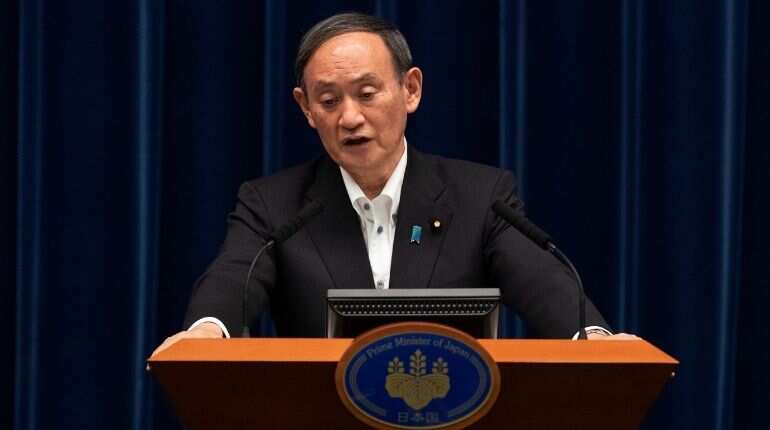
FILE PHOTO: Japanese Prime Minister Yoshihide Suga
Japan's government on Tuesday withdrew abillthat would have made it easier to deport failed applicants for refugee status, officials said,afterthedeathin March of aSriLankanwoman at animmigrationdetention centre sparkedcriticism.
Members of Prime Minister Yoshihide Suga's ruling Liberal Democratic Party (LDP) abandoned their attempt to pass an overhaul of theimmigrationlaw, party officials said, which would have meant asylum seekers could be deportedaftertheir third failed application.
The government had said the change would solve the problem of long detentions of asylum seekers. Lawyers, opposition lawmakers and human rights groups said it ran counter to international norms.
Japan's treatment of foreigners facing deportation was put under the spotlight againafterthedeathof 33-year-old Wishma Sandamali at animmigrationdetention centre in central Nagoya.
Sandamali died in early Marchaftercomplaining of stomach pain and other symptoms from mid-January, Kyodo news reported. She went to police in August for help with domestic violence and was then detained for overstaying her visa, Kyodo said.
Opposition lawmakers had pushed authorities to show Sandamali's family video footage of her taken while she was in custody but that was turned down on security concerns, according to officials.
Criticismof thebillmounted online and one ruling party official told Reuters there was no point in pushing it through, given the growing backlash. Suga's support fell below 33 per centin a recent poll by the Jiji news agency, reflecting frustration over his handling of the pandemic.
Japanhas long been reticent aboutimmigrationand asylum, despite an ageing population and shrinking workforce that economists say could be alleviated by accepting more immigrants.
In 2019, just 0.4per centof asylum applications were successful inJapan, against 25.9 per centin Germany and 29.6per cent in the United States.
Under the current system, some asylum seekers are granted provisional release from detention centres during their asylum process, meaning they can live relatively freely although they cannot work. Others are held in the centres, where they spend months or even years.