Israel-Hamas war: US vetoes UNSC resolution on ceasefire

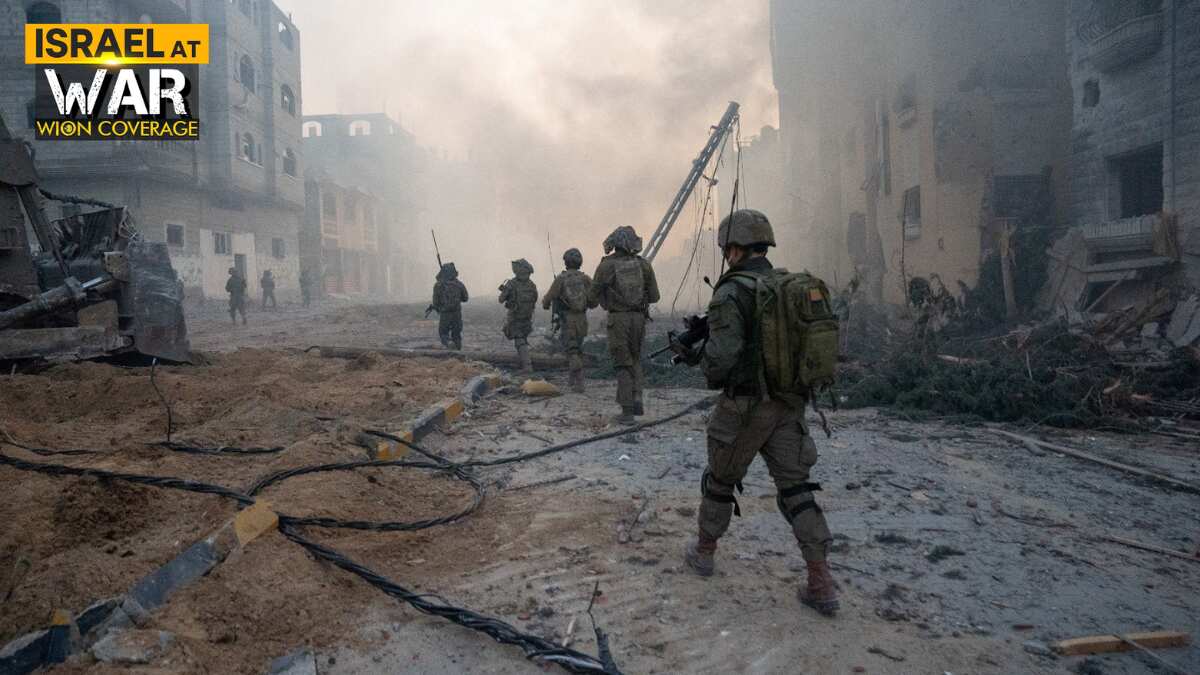
The Israel-Hamas war has been going on for more than a year now.
The United States on Wednesday vetoed a UNSecurity Council resolution for a ceasefire in Gaza, drawing criticism of the Biden administration for once again blocking international action aimed at halting Israel's war with Hamas.
The 15-member council voted on a resolution put forward by 10 non-permanent members that called for an "immediate, unconditional and permanent ceasefire" in the 13-month conflict and separately demanded the release of hostages.
Only the USvoted against, using its veto as a permanent council member to block the resolution.
Robert Wood, deputy USambassador to the UN, said Washington had made clear it would only support a resolution that explicitly calls for the immediate release of hostages as part of a ceasefire.
"A durable end to the war must come with the release of the hostages. These two urgent goals are inextricably linked. This resolution abandoned that necessity, and for that reason, the United States could not support it," he said.
Wood said the UShad sought compromise, but the text of the proposed resolution would have sent a "dangerous message" to Palestinian militant group Hamas that "there's no need to come back to the negotiating table."
Israel's campaign in Gaza has killed nearly 44,000 people and displaced nearly all the enclave's population at least once. It was launched in response to an attack by Hamas-led fighters who killed 1,200 people and captured more than 250 hostages in Israel on Oct. 7, 2023.
Members roundly criticized the USfor blocking the resolution put forward by the council's 10 elected members: Algeria, Ecuador, Guyana, Japan, Malta, Mozambique, South Korea, Sierra Leone, Slovenia and Switzerland.
"It is deeply regretted that due to the use of the veto this council has once again failed to uphold its responsibility to maintain international peace and security," Malta's UNAmbassador Vanessa Frazier said after the vote failed, adding that the text of the resolution "was by no means a maximalist one."
"It represented the bare minimum of what is needed to begin to address the desperate situation on the ground," she said.
Food security experts have warned that famine is imminent among Gaza's 2.3 million people.
USPresident Joe Biden, who leaves office on Jan. 20, has offered Israel strong diplomatic backing and continued to provide arms for the war, while trying unsuccessfully to broker a ceasefire deal between Israel and Hamas that would see hostages released in exchange for Palestinians held by Israel.
After blocking earlier resolutions on Gaza, Washington in March abstained from a vote that allowed a resolution to pass demanding an immediate ceasefire.
A senior USofficial, who briefed reporters on condition of anonymity ahead of Wednesday's vote, said Britain had put forward new language that the USwould have supported as a compromise, but that was rejected by the elected members.
Some members were more interested in bringing about a USveto than compromising on the resolution, the official said, accusing USadversaries Russia and China of encouraging those members.
'Green light'
France's ambassador Nicolas de Riviere said the resolution rejected by the US"very firmly" required the release of hostages.
"France still has two hostages in Gaza, and we deeply regret that the Security Council was not able to formulate this demand," he said.
China's UNambassador, Fu Cong, said each time the United States had exercised its veto to protect Israel, the number of people killed in Gaza had steadily risen.
"How many more people have to die before they wake up from their pretend slumber?" he asked.
"Insistence on setting a precondition for ceasefire is tantamount to giving the green light to continue the war and condoning the continued killing."
Israel's UNambassador Danny Danon said ahead of the vote the text was not a resolution for peace but was "a resolution for appeasement" of Hamas.
"History will remember who stood with the hostages and who abandoned them," Danon said.
Disclaimer: This story has been published from a news agency feed with minimal edits to adhere to WION's style guide. The headline may have been changed to better reflect the content of the story or to make it more suitable for WION audience.