Iraqi forces accused of brutality and torture in Mosul, investigation to start

Mosul
Iraq's ministry of interior requested investigation after German magazine Der Spiegel published pictures of soldiers torturing civilians
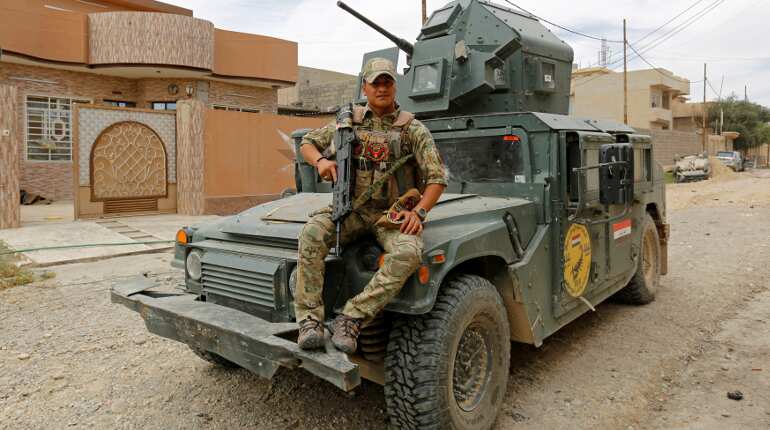
The Iraqi Ministry of Interior, Qasim al-Araji, launched an investigationinto accusationsof torture and abuse allegedlycommitted by the Iraqi elite forces of the Emergency Response Division (ERD) during the Mosul offensive.
Since October 2016several units of the Iraqi army foughtto uproot the Islamic State (IS)from Mosul, which nowoccupies only abouty ten per cent of Mosulwhen before it had full control.
The decision to investigate the ERDcomes after the German magazine Der Spiegel published an article and a few pictures taken by Iraqi photographer Ali Arkady, while he was following the ERD's operations.
Arkady, who is also adocumentary filmmaker, was allowed full access for a project aiming topresentthe effort that soldiers were making in Mosul. His project took a sudden turn when he started witnessing civilians suspected of being Islamic State supporters being hanged to the ceiling, blindfolded and beaten up by ERD soldiers. He recountsbrutality, torture and random killingbased only on rumours and mere suspicion. A man, for instance, was tortured to death only because his elder brother joined the Islamic State.
The ERD is currently conducting street-to-street operations against the last pockets where IS militants still hold control. The unit is part of the special forces directly answering to the ministry of interior and has been trained mainly by the US army. They often conduct night raids and rapid incursions.
Before publishing his reportage, Ali Arkady moved out of Iraq with his family, fearing for their safety. Since then, he repeatedly received threats.
The Emergency Response Division issued a statement dismissing the report and stating that itis based on "fabricated and unreal images".
Brett McGurk, the US Special Presidential Envoy for the Global Coalition to Counter ISIS, expressed his country's position on the matter on Twitter:
Arkady's work opens a window on something many journalists were afraid of while following the Mosul offensive on the ground. Many documented and photographedanybodymerely suspected of supporting the ISwhile they were being carried away on the back of pickups and armoured vehicles. No one was allowed to follow these peoplein order to understand how they werequestioned.
The main narrative wasIraqi forces as brave liberators freeing civilians from the pure evilof the Islamic State. The Iraqi army was quite devoted in showing their humanitarian side whenever reporters were around.
The Der Spiegel report is a reminder ofthe long-standing problem of access for civilian witnesses in war zones. If independent actors are not allowed to follow every step of a conflict, the battlefield will always protect and hide all abuses and violations. This is valid for every army – regular or irregular – in the world.
But war is war, and is always dirty. There is no gallantry and too many times armies, insurgents and terrorists profit fromtheft, human trafficking and every form of violation. In almost every country at warthere are no sensitisation programsfor regular armies on how to behave. This is especially needed in countries like Iraq, which have witnessed long conflicts. Any 20-year-old Iraqi has barely memories of a peacful country, and this shapes his judgment.
Conflicts exasperate relations between neighbours. Arrests based merelyon the word oflocals--which can be based on rumours, pressure from the army, and fraught for many other reasons--cannot be the norm. The risk of personal vendettasis too high. An official investigation and a fair trial are the need of the hour if a government wants to start walking towards a reconciliation process.
(WION with inputs from Reuters)