Humpback whale suffers agonising death after ferry rips apart its mouth; rights group shares tragic video

Ferry kills humpback whale
Trigger warning: Contents of the story might be disturbing for some readers. Discretion advised
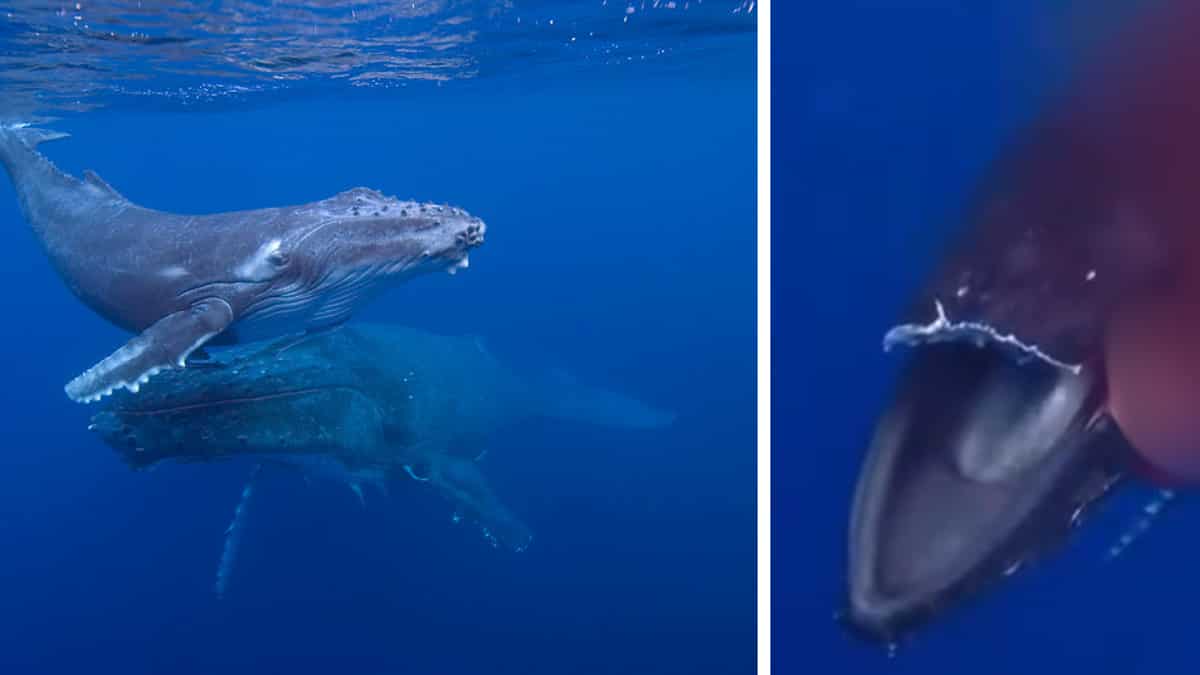
A young humpback had its jaw ripped off by a ferry last week following a head-on collision. Tragic footage of the aftermath shows the bloodied whale with its upper mouth sliced off.
Wildlife organisation Sea Shepard claims that the boat that struck the female whale, named Sweet Girl, was travelling six times the permitted speed. The incident happened near a port in Tahiti on October 8 where the whale was swimming.
Conservationist divers took shots of the whale which showed the animal's upper mouth completely torn off and blood pouring out of the wounds as she tried to reach the surface. The young whale can also be heard screaming in pain.
Sea Shepard shared the video and said that the whale died after "several hours of agony". The organisation claimed that the ferry was travelling at a speed of 30 knots through a port where the speed limit was five knots.
Marine conservation group Mata Tohora was called to the scene, but the whale died soon after its arrival, Daily Mail reported.
"It drowned due to impacts and fractures to the nasal bone in particular," Doctor Agnès Benet, founder of Mata Tohora, said.
The two organisations have filed a complaint with the local government and are asking for a criminal investigation into the matter.
"We will do everything possible to identify and convict the criminals who did this. We are also launching an appeal for witnesses," the group said.
Sweet Girl humpback whale dies
Sweet Girl was known to several enthusiasts in the region. One such person was Rachel Moore, an underwater photographer, who had spent time with the whale four days before her tragic death. She shared a tribute to her on her Instagram page.
WARNING: GRAPHIC VIDEO. VIEWER DISCRETION IS ADVISED
"She had many names here, but I liked to call her Sweet Girl. Over the past few weeks, she touched so many lives," Moore wrote.
"She was brutally disfigured and endured hours of pain and suffering before finally succumbing to her wounds and drowning."
Grieving her death, Moore described the whale as "kind" and "curious".
Whale watching in Tahiti
Tourism in the French Polynesia islands largely depends on whale watching. The region is home to the world's largest marine mammal sanctuary. However, environmental associations rue the promotion of tourism in the area.
Agnes Benet, a biologist and founder of Mata Tohora, said, "We need to limit the number of boats around the whales and dolphins. It's a question of managing the activity, which needs to be done quickly."
Meanwhile, officials say they have taken steps to protect the whales. According to regulations, a safety distance of 330 feet between the animal and authorised boats must be maintained. Swimmers need to stay 50 feet away from the animals.
Notably, there are around 80,000 humpback whales worldwide, with nearly 3,200 living around the Islands of Tahiti.

