How New York Times 'Caliphate' podcast controversy panned out

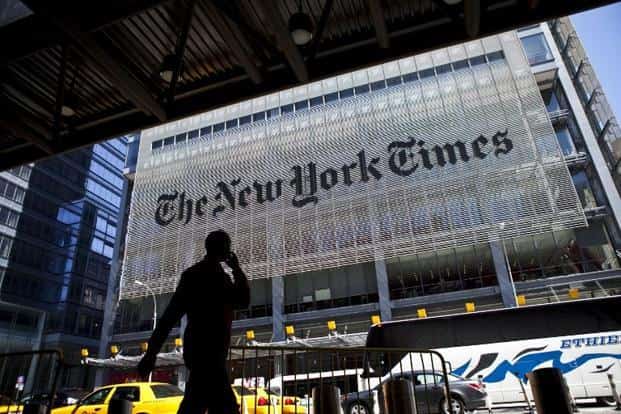
The New York Times
Once a crown jewel in the New York Times reportage -- Rukmini Callimachi's 'Caliphate' -- is now at the centre of a scandal that has pitted practices of journalism against its ethics.
'Caliphate' relied on the firsthand account of one former ISIS fighter, middle-class Canadian recruit Abu Huzayfah. In the consequence, eyewitnesses, civilians, and others on the ground in Syria and Iraq were also interviewed.
Caliphate examined the rise of the Islamic State terror movement, and a larger part of this thrived on Islamophobia.
The show was, however, primarily driven by the host’s perspective.
Westerners already mystified by the rise of ISIS were madeto trust the show's narrative of the group’s methodology and mindset from adistance.
Fear sells, and that's what made the show stand out. Also, the podcast came from the New York Times and Callimachi, a multiple Pulitzer Prize finalist -- raising its stakes.
Sadly, the podcast’s accuracy has now been called into question. The Canadian police arrested Shehroze Chaudhry, also known as Abu Huzayfah, under the country’s terrorism hoax laws.
The police alleged Chaudhry lied about his involvement with ISIS.
In fact, there’s little evidence he even visited Syria -- in contrast witht what the podcast reported.
The good part was the New York Times did not shy away from opening a review of “Caliphate”, paving way for other media houses to scrutinise it.
NYT the appointed media correspondent Ben Smith to investigate the podcasts.
Callimachi’s integrity has also been called into question. It has also been later reported that other journalists within the paper had reportedly expressed concern about her sources and the license she took in situations that were near-impossible to fact-check.
Rukmini Callimachi, once a reverred journalist, is now an object of wonder, and sometimes, ridicule on Twitter.
Canadian federal authorities, currently, are pursuing her source, Shehroze Chaudhry, under a law that criminalises terrorist hoaxes. The NYT has organised a group of top editors, including Dean Murphy and Mark Mazzetti, to further probe the matter.