Further US sanctions would mean 'declaration of economic war': Russian PM Medvedev

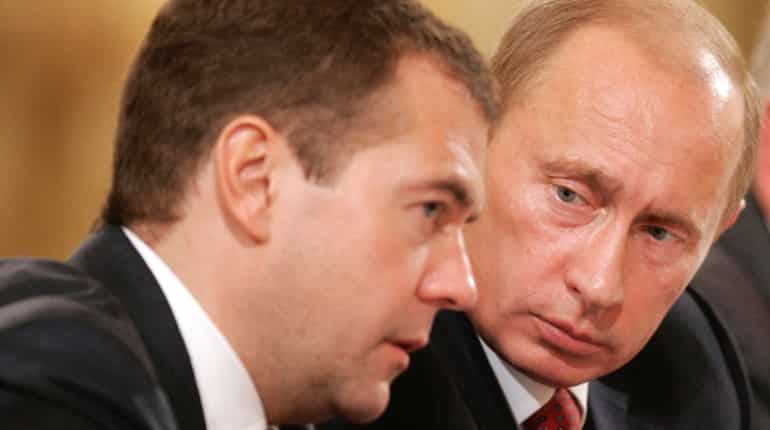
Dmitry Medvedev
The Trump administration had said on earlier that it would impose sanctions on Russia for its role in the alleged nerve gas attack on Sergei Skripal
After the US imposed new round of sanctions against Russia on Thursday, Prime Minister Dmitry Medvedev warned that further sanctions would mean "declaration of economic war".
"I would not like to comment on talks about future sanctions, but I can say one thing: If some ban on banks' operations or on their use of one or another currency follows, it would be possible to clearly call it a declaration of economic war," Medvedev said.
The Trump administration had said on earlier that it would impose sanctions on Russia for its role in the alleged nerve gas attack on Sergei Skripal, a former colonel in Russia's GRU military intelligence service, and his 33-year-old daughter, Yulia in Salisbury, UK.
Russia has vehemently denied any role in the incident, insisting that the Skripal case was "not backed by evidence."
Medvedev spelled out Russia's retaliation, saying: "We must absolutely respond to this war. By economic means, by political means and if necessary by other means," adding,"our American friends must understand this."
The State Department said the sanctions were aimed at punishing Moscow for having "used chemical or biological weapons in violation of international law", mandated under the Chemical and Biological Weapons and Warfare Elimination Act of 1991.
The Trump administration's sanctions on Russia will come in two tranches, in the first US exports will target national security-related goods. In the second round which could prove to treacherous for Russia, the US plans to blocking all American bank loans to Russian entities, an outright ban on US exports to Russia, and suspension of diplomatic relations.
As the US sanctions were announced, Russia's currency ruble to its lowest level in the last two years before recovering slightly.
Kremlin spokesman Dmitry Peskov had said earlier that the US move was "absolutely unfriendly," but said Moscow continued to hope that for an improvement in battered US-Russia relations.