Fresh rains hinder rescue efforts in flood-ravaged southern Brazil

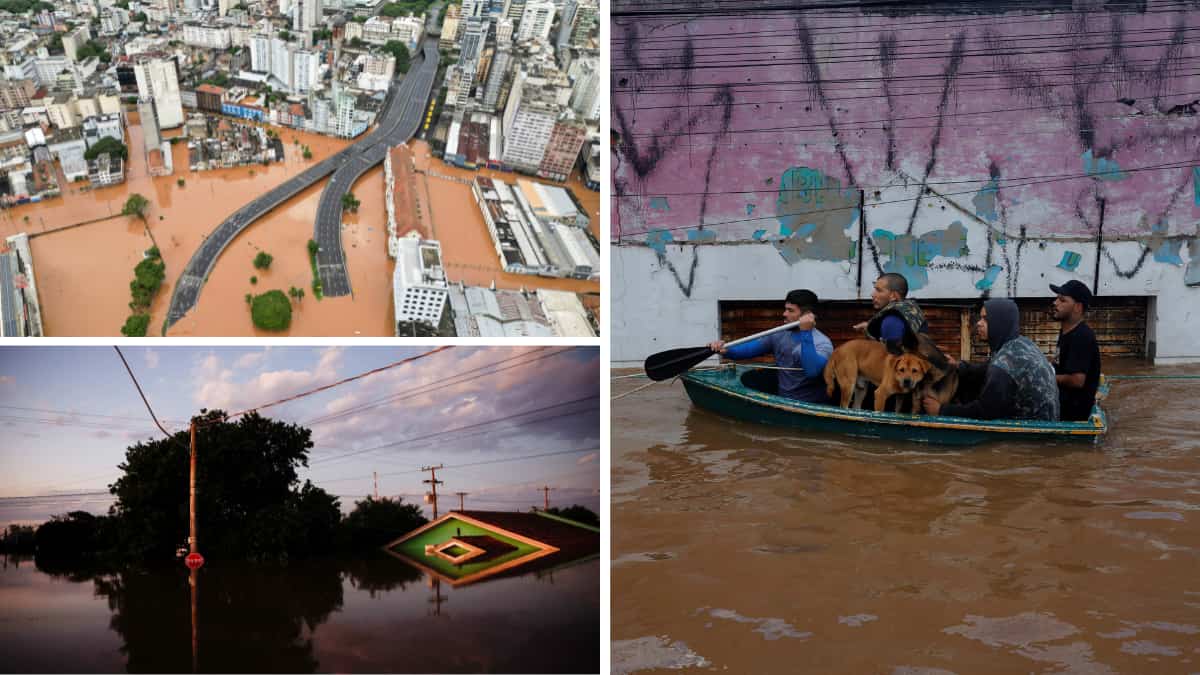
Brazil floods
Rescue efforts in flood-stricken southern Brazil were hampered on Wednesday (May 8) by renewed rain and the threat of lightning and strong winds. These weather conditions risk worsening calamity that has already claimed at least 100 lives and displaced over 163,000 people.
The floods that started last week, caused by unusually heavy rains, have destroyed highways and bridges in the state of Rio Grande do Sul.
Around 128 people are still missing, the state's civil defense authority said and urged people living close to the Patos lagoon to leave their homes immediately.
The army soldiers were seen using the amphibious armored cars to rescue people from flooding in Canoas, where the waters have reached a depth of some three meters (10 ft) and the streets can only be navigated by boat.
"I have been living in this tractor with my children, to survive this calamity. We believe it will pass," an exhausted Farias told Reuters. He said he had slept little and eaten less.
RISK OF MORE FLOODS
Brazil's disaster center placed the southern region of Rio Grande do Sul under high risk as heavy rain is expected to resume imminently. Weather forecaster MetSul warns of very large floods of serious proportions for the area.
In neighboring Uruguay, storms and flooding have closed highways and left nearly 800 people displaced and over 3,000 people without power, the government said.
In Brazil, many residents in and around Porto Alegre, a city of 1.3 million people, have been living in darkness after power companies cut off electricity for security reasons.
The residents have faced shortages of products, especially drinking water. Supermarket managers said there was no access for supply trucks or employees trying to get to work. Mineral water sales were restricted in some supermarkets.
Meanwhile the volunteer rescue operations after dark in Porto Alegre were also hampered by looting.
"We are not going out to rescue people at night without an armed escort, because it has become too risky," volunteer Lauro Strogulski said.
(With inputs from agencies)