First Neuralink patient heard about brain implant through drunken phone call from friend

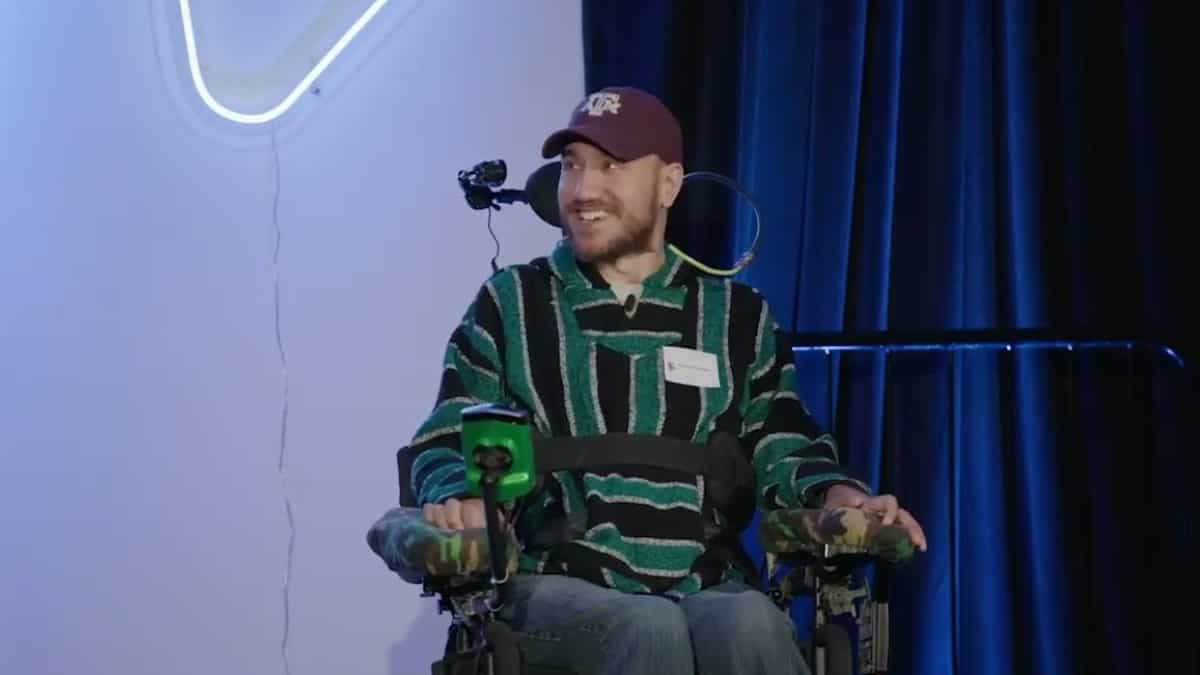
Noland Arbaugh
Noland Arbaugh, the first person to get a Neuralink brain-computer interface (BCI) implanted, came to know about the Elon Musk-owned company's human trials in chaotic fashion.
The 29-year-old Arbaugh, who became paralysed after a diving accident eight years ago said during an interview with the Wall Street Journal, that he came to know about Neuralink six months ago, thanks to a drunk phone call from a friend.
His friend called him up while under the influence to tell him that Neuralink was looking for its first human trial patient. He helped Arbaugh fill out the application, but apparently misspelled his name in the process.
It's an unsurprising anecdote from the Arizona-based young man, who as per Neuralink engineer Bliss Chapman, said his favourite game was Beerio Cart, a clearly alcohol-tinged variant on the party game Mario Kart that Arbaugh was seen playing with his mind in an impressive demo posted last week.
Despite his somewhat energetic behaviour, Arbaugh appears to be a willing and promising test subject for Musk's brain implant project, as Neuralink staff boasted in a videotaped presentation last week.
Another video that Arbaugh posted on his own X account during the nearly hour-long address to Neuralink employees shows the young man breaking a timing record when learning to control a cursor with his BCI.
Chapman claims that this was only on the seventh hour of the man's first day of using his brain chip.
Arbaugh told that the process of becoming Neuralink's first-ever human patient wasn't as intense as one might expect.
"Brain surgery was easy," he told the WSJ newspaper. "I was expecting a much longer recovery time, and they kicked me out of the hospital like a day later."
It was challenging, though, to balance the benefits and drawbacks of becoming the face of Neuralink.
"I definitely took time to step back and evaluate all of the downsides that I could be bringing to my family," Arbaugh stated. "Not just the health downsides — things that could have happened during surgery or afterwards — but everything that comes with this, like any notoriety."
After having tried other experimental assistive technologies, Arbaugh clearly decided it was worth the risks.
"I’ve glimpsed what the possibilities are, and now it’s hard to live any other way," he told the WSJ. "So I would say to the next patient, the next candidate, just to enjoy it as much as possible."
(With inputs from agencies)