FDA grants standard approval for Alzheimer's drug, Leqembi, despite lingering concerns

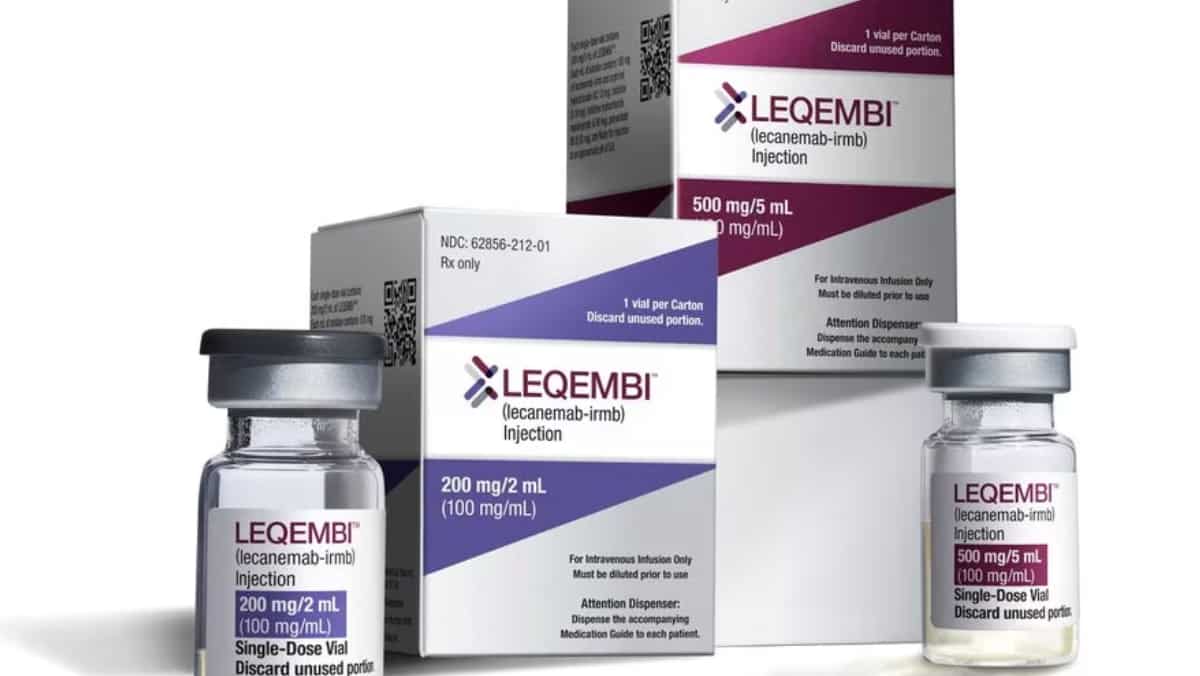
FDA decision presents concerns regarding the safety of the drug
The US Food and Drug Administration (FDA) on Thursday granted standard approval to Leqembi (lecanemab-irmb), a drug intended for the treatment of Alzheimer's disease, however, the decision also presents challenging concerns regarding the safety of the medication and its cost.
Leqembi has a US list price of $26,500 per year.
The decision comes after a confirmatory trial demonstrated clinical benefit, making Leqembi the first amyloid beta-directed antibody to transition from accelerated approval to traditional approval for Alzheimer's disease treatment.
"The drug works by reducing amyloid plaques that form in the brain, a defining pathophysiological feature of the disease," FDA said in a press release.
Accelerated approval
Leqembi initially received accelerated approval in January. This approval allows FDA to grant approval for drugs addressing serious conditions with unmet medical needs.
In the case of Leqembi, the drug's ability to reduce amyloid plaques indicated potential clinical benefit. "Efficacy of Leqembi was evaluated using the results of Study 301 (CLARITY AD), a Phase 3 randomised, controlled clinical trial," the statement added.
Teresa Buracchio, the acting director of the Office of Neuroscience in the FDA's Center for Drug Evaluation and Research, said, “Today’s action is the first verification that a drug targeting the underlying disease process of Alzheimer’s disease has shown clinical benefit in this devastating disease."
“This confirmatory study verified that it is a safe and effective treatment for patients with Alzheimer’s disease," the official added.
Alzheimer's disease
Alzheimer's disease is an irreversible, progressive brain disorder affecting over 6.5 million Americans. It leads to memory loss, impaired thinking skills, and the inability to carry out simple tasks.
Although the precise causes remain uncertain, the disease is characterised by changes in the brain, including the formation of amyloid beta plaques and neurofibrillary tangles, which result in the loss of neurons and their connections.
Study 301
Study 301 enrolled 1,795 patients with Alzheimer's disease, focusing on those in the mild cognitive impairment or mild dementia stage with confirmed amyloid beta pathology.
Participants were randomly assigned to receive a placebo or a Leqembi dose of 10 mg/kgbody weight every two weeks.
Watch | Russian expert claims the US is working on weaponising asteroids against enemies
"Leqembi demonstrated a statistically significant and clinically meaningful reduction of decline from baseline to 18 months on the primary endpoint, the Clinical Dementia Rating Scale Sum of Boxes score, compared to placebo," FDA statement said.
Support from advisory committee, safety considerations
On June 9, the FDA's Peripheral and Central Nervous System Drugs Advisory Committee reviewed the evidence from Study 301 and voted positively, affirming Leqembi's clinical benefit for treating Alzheimer's disease.
The FDA said the drug’s label will include a “boxed warning” highlighting safety issues. The most common side effects of Leqembi include headache, infusion-related reactions, and amyloid-related imaging abnormalities (ARIA). It may also involve small spots of bleeding in or on the brain's surface.
While ARIA is often asymptomatic, FDA said, it can cause symptoms such as headache, confusion, dizziness, vision changes, and nausea.
According to Medicare's announcement on Thursday, the FDA's decision will result in the drug becoming accessible to a wider range of individuals.
Previously, Medicare, the health programme for older Americans, did not cover the cost of the drug beyond clinical trials following its accelerated approval.
However, Medicare has now stated that the treatment will be covered once it receives complete FDA approval, on the condition that healthcare providers participate in registries that gather information about the real-world effectiveness of Leqembi.
The approval of Leqembi was granted to Eisai Inc, FDA said.
WATCH WION LIVE HERE
You can now write for wionews.com and be a part of the community. Share your stories and opinions with us here.