Explained: What does Xi Jinping’s visit to Saudi Arabia mean for its relations with the US?

Saudi Arabia
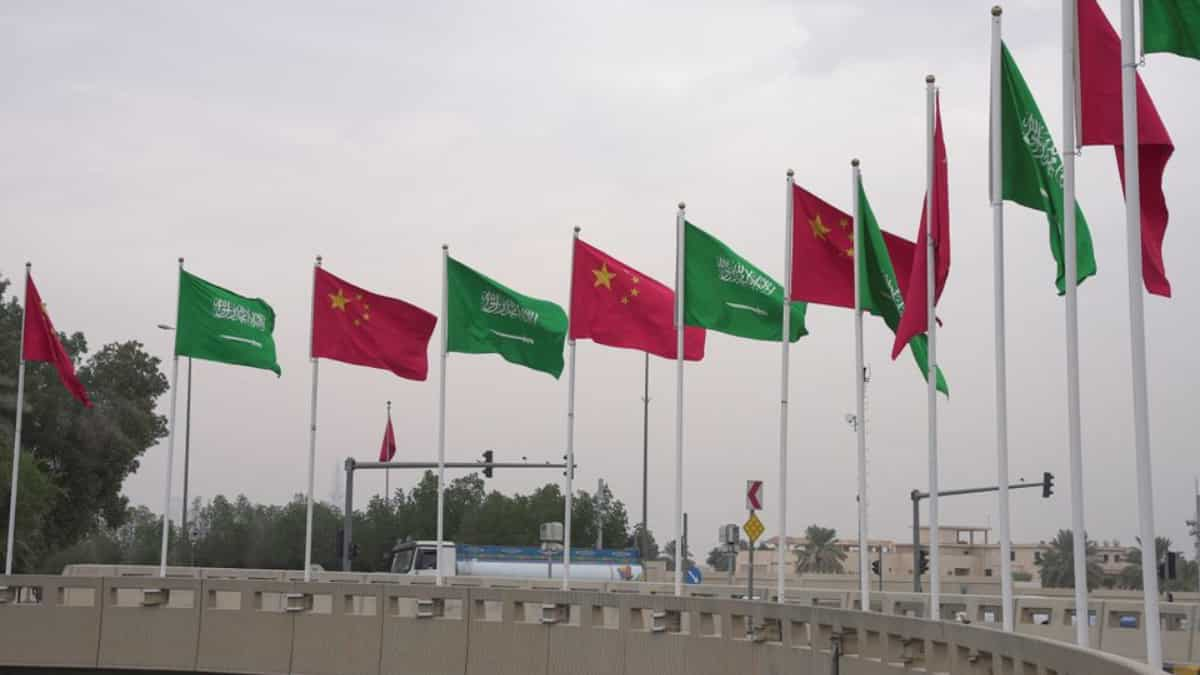
Chinese President Xi Jinping has arrived in Saudi Arabia for the long-awaited visit to its regional ally, where he is set to meet nearly 30 heads of state and business leaders in the capital city, Riyadh. Notably, the timing for this visit has been at the forefront of the discussions in the west, since it comes at a “delicate time” for the relations between Saudi Arabia’s strategic ally the United States, said analysts.
For this visit, the Saudis have rolled out the red carpet while Xi will be welcomed amid fanfare with several reports comparing it to the grand welcome former US President Donald Trump received, in contrast to the incumbent US President Joe Biden’s visit, earlier this year.
Notably, Biden’s visit to Jeddah was marked by an awkward fist-bump from an unsmiling Crown Prince Mohammed bin Salman’s greeting him. Furthermore, the US president who had arrived in Saudi Arabia to seek reassurances over global oil prices left empty-handed after the kingdom had refused to lower prices as well as announced a limited increase in oil production.
ALSO READ |Chinese President Xi Jinping arrives in Riyadh on Wednesday, will meet Saudi and Arab leaders

However, months later they also went on to announce that it is cutting down its oil production, which created a further rift in the ties between the two countries. OPEC+ slashed its output by two million barrels a day in a bid to “stabilise” prices despite Washington’s heavy campaigning against it.
Furthermore, media reports suggest that this visit will also include a China-Arab summit and a China-Gulf Cooperation Council conference, where the summit is set to witness at least 14 Arab heads of state and has also been described as a “milestone” in China-Arab relations, said a report by CNN citing a diplomatic source.
The bilateral summit will be chaired by Saudi King Salman bin Abdulaziz Al Saud and will also be attended by the kingdom's de facto ruler MBS, reported the official Saudi Press Agency (SPA).
A report by Bloomberg citing two people briefed on the plans said that energy and infrastructure deals will be at the top of the agenda during Xi’s visit. This comes amid reports of the two countries planning to sign agreements worth at least $30 billion.
“Riyadh is working according to strategic calculations that it must accommodate Beijing, as it is now an indispensable economic partner,” said the head of Middle East and North Africa at Eurasia Group, Ayham Kamel to Reuters, in the context of the China-Arab summit.
ALSO WATCH |Saudi Arabia becomes China's top crude oil supplier again as Russian imports fall
However, Kamel also noted that “MBS is certainly not pursuing this out of spite,” but also that there is a certain risk in expanding ties with China and which could potentially create a further rift in the US-Saudi relationship. Notably, Saudi Arabia’s relations with China have also deepened in the economic context including Beijing’s potentially investing in Riyadh’s state oil giant Saudi Aramco.
In 2021, the kingdom’s exports to China exceeded $50 billion which accounts for more than 18 per cent of Saudi Arabia’s total exports. However, this is not just limited to Saudi Arabia as more Gulf states are seemingly moving toward deepening ties with China and Russia and the war in Ukraine does not appear to affect their relations with Moscow.
A Saudi analyst familiar with its leadership’s thinking, Ali Shihabi, told CNN, that Saudi is not indifferent to the US and it continues to remain a key partner. He added, “But the Kingdom has learned the hard way that the US cannot be relied on consistently for support.” Therefore, the leadership a few years ago began to develop multiple key relations in an “increasingly multipolar world” which is irreversible.
This remark could be in reference to Washington’s lack of response when the Shia militia attacked Saudi Arabia’s main refinery. While the US’s security presence, rather the lack thereof amid growing threats from Iran and its armed Yemeni proxies in the region has left the Middle East nations bitter. On the other hand, Riyadh’s human rights record has emerged as an issue, particularly after the alleged assassination of Washington Post columnist Jamal Khashoggi.
ALSO WATCH |US: Joe Biden's govt grants legal immunity to Mohammed bin Salman
During his trip to Saudi Arabia, US president Biden had also vowed, “We will not walk away and leave a vacuum to be filled by China, Russia, or Iran.” However, an official document titled “Report on Sino-Arab Cooperation in a New Era”, outlining Beijing’s policies in the region was released ahead of Xi’s visit to the kingdom said, “China has always believed that there is no such thing as a ‘power vacuum’ in the Middle East and that the people of the Middle East are the masters of the future and destiny of the region.”
Furthermore, the report also highlighted that China’s strategic focus in the Middle East remains on trade and economic cooperation and that it “upheld justice” on the region's security issues. “That message will be very clear when this visit gets under way. The Chinese do not lecture and they don’t disrespect. They know how to do business,” said a senior Saudi official to the Guardian.
ALSO WATCH |Chinese President XI Jinping to meet Saudi Arabia's Crown prince
“The Americans on the other hand have wanted us to choose sides. We will not,” the official added. Meanwhile, the US appears to be unsettled by what it perceives as China and Saudi Arabia’s support for the Russian invasion of Ukraine due to Moscow selling Beijing its discounted oil amid Western sanctions.
In the Indian context, one of the long-term implications of Xi's visit to the kingdom could potentially be the Chinese infrastructure being built closer to India, as analysts say that although these are civil projects the worry is Beijing’s growing influence in regions in New Delhi.
ALSO READ |Indian army chief expresses concern over China's BRI, lauds ties with Nepal and Bangladesh
“Clearly they are coming closer and closer to India and that is extremely worrying given its adversarial, hostile relations with China,” said Rajeswari Pillai Rajagopalan, director for the Center for Security, Strategy and Technology at New Delhi’s Observer Research Foundation, to the Voice of America (VOA), last year.
(With inputs from agencies)