Explained | What did Trump allege about NATO spending and how the international organisation is funded?

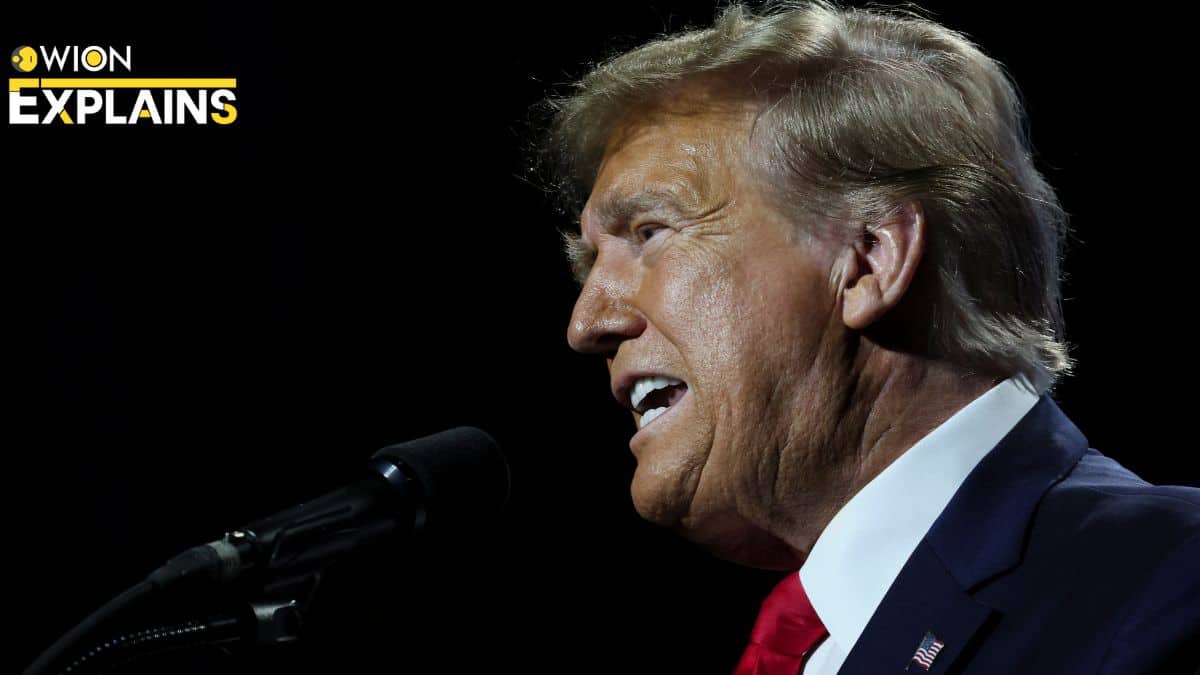
US former president Donald Trump
United States former president Donald Trump faced a lot of criticism from top Western officials and the White House after he said that he would not defend the NATO allies who have not been able to spend enough on defence and would also encourage Russia to attack them.
Trump is running for another presidential term in the White House against President Joe Biden in November.
What is NATO?
The North Atlantic Treaty Organisation (NATO), which was founded in 1946 to counter the Soviet Union amid increasing Cold War tensions, is a political and military alliance of nations from Europe and North America.
The group's founding treaty, which has been enshrined in Article 5, is the principle of collective defence and propagates the idea that if one of its members is attacked, it will be considered an attack on the entire group.
All the decisions within NATO are taken after countries reach a consensus and the United States' political and military strength means that it is by far the alliance's most powerful country and its nuclear arsenal is perceived as the ultimate security guarantee.
Which countries are part of NATO?
Currently, NATO has 31 members, most of whom are European countries. The United States and Canada are also part of the NATO.
Finland is the newest member of NATO which joined the organisation last April after Russia invaded Ukraine in 2022. Sweden has also applied for membership but it awaits ratification of its application.
What accusations did Trump levy on NATO?
Donald Trump, who served as the US president from 2017-21, often lambasted NATO and its members like Germany, while accusing them of failing to pay enough for their own defence and depending on the US for their protection.
He has also questioned the collective defence principle openly. Meanwhile, the Europeans have also been accused by other US administrators of failing to spend enough on defence.
Taking his criticism to the next level during a campaign rally on Saturday (Feb 11) in Conway, South Carolina, Trump recounted what he said regarding a conversation with the "president of a big country".
"Well sir, if we don't pay, and we're attacked by Russia - will you protect us?" Trump quoted the unnamed leader as speaking.
"I said: 'You didn't pay? You're delinquent?' He said: 'Yes, let's say that happened.' No, I would not protect you. I would encourage them (Russia) to do whatever the hell they want. You gotta pay," he said.
How does NATO receive its funding?
The NATO members have often been accused by Trump of not paying their dues which gave the impression of the alliance being similar to a club which has membership fees.
However, NATO operates differently. The organisation has some common funds to which all members contribute.
The organisation's vast bulk of strength comes from the national defence spending of the members. The national defence spending of member countries is used in maintaining forces and buying arms which can also be used by NATO.
The NATO members have committed to spend at least 2 per cent of their Gross Domestic Product (GDP) on the defence sector every year. However, most of them failed to meet that goal even in 2023.
How many NATO members reach the defence spending target?
As per the estimates by NATO in July last year, 11 members were most likely to meet the 2 per cent target in 2023. These members includePoland, the United States, Greece, Estonia, Lithuania, Finland, Romania, Hungary, Latvia, Britain and Slovakia.
Europe's economic heavyweight - Germany - was most likely to spend 1.57 per cent on defence. However, the German officials claimed that they were hoping to meet the 2 per cent target, especially due to a special 1-billion-euro fund which was established in response to Russia's war in Ukraine.
According to NATO figures, the countries which contributed the lowest shares of their GDP on defence were Spain, Belgium and Luxembourg.
Meanwhile,NATO's Secretary General Jens Stoltenberg at a press conference on Wednesday (Feb 14) said, "I expect 18 allies to spend 2% of their GDP on defence this year."
What is NATO's Article 5?
In the founding treaty's Article 5, NATO members announced that an armed attack against one or more of them either in North America or Europe "shall be considered an attack against them all".
The nations agreed that they would "assist the Party or Parties so attacked by taking forthwith, individually and in concert with the other Parties, such action as it deems necessary, including the use of armed force".
Watch:Donald Trump defiant after backlash over NATO remarks
Article 5, however, falls short of a commitment to an automatic military response for helping an ally under attack.
The comments made by Trump caused a furore because the statements were made at a time when there was heightened alarm in NATO regarding Russia's intentions after its invasion of Ukraine.
By stating that he would not take any military action to defend an ally, Trump undermined the claims in Article 5.
"Any suggestion that allies will not defend each other undermines all of our security, including that of the U.S., and puts American and European soldiers at increased risk," said NATO Secretary General Jens Stoltenberg, on Sunday (Feb 11).
(With inputs from agencies)