Explained: The political life of outgoing Nigerian President Muhammadu Buhari

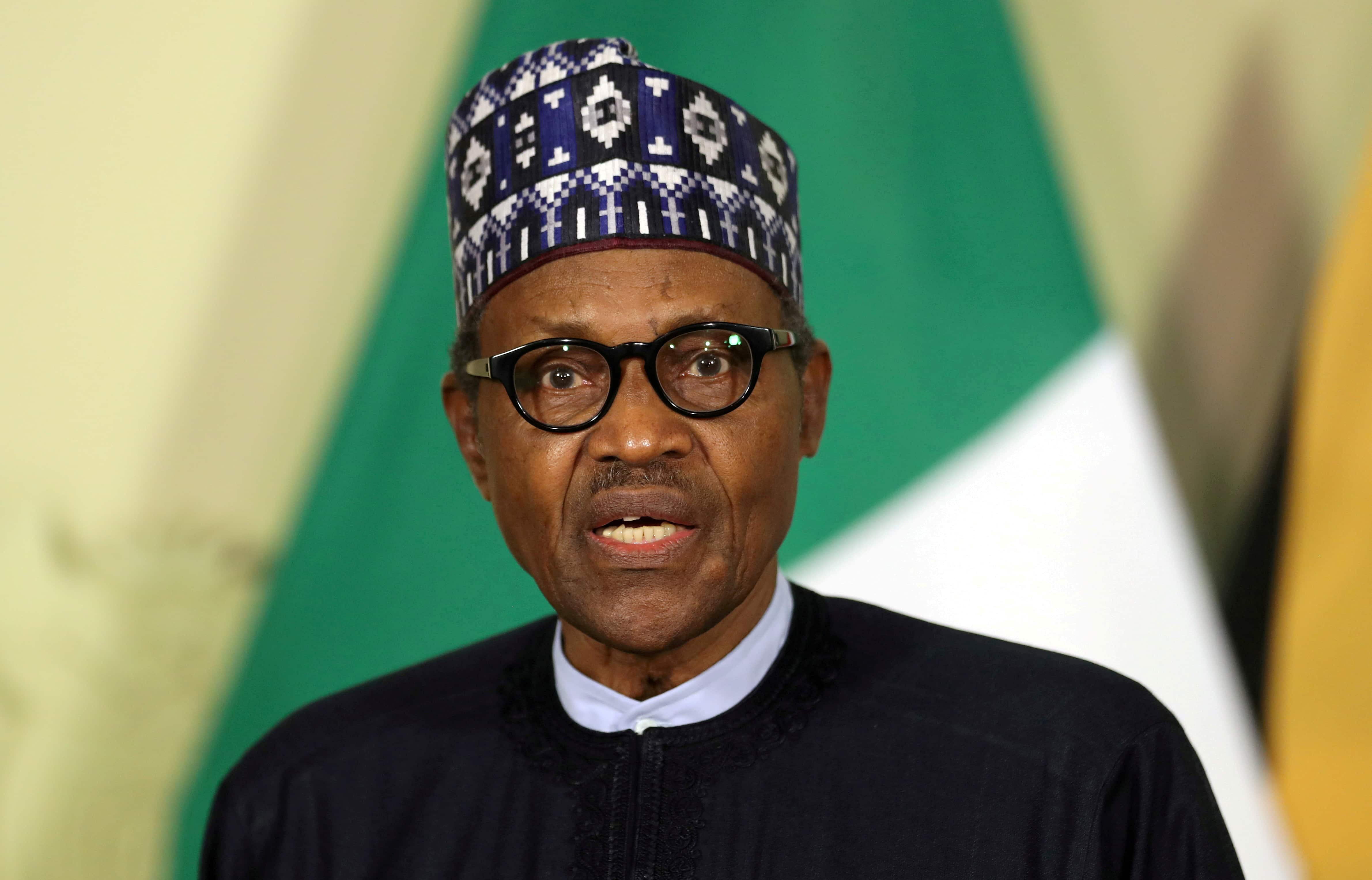
Muhammadu Buhari steps down as Nigeria's president on May 29, 2023.
Nigerian President Muhammadu Buhari addressed the country in a farewell broadcast on Sunday (May 28), a day before he steps down from the top position. In his speech, President Buhari, 80, expressed his gratitude to citizens and said that he is leaving the country better than he met it. "I address you today, in my last assignment as a democratically elected President of our great and well-endowed nation, with a deep sense of gratitude to God, a great deal of appreciation to the Nigerian people and a modest sense of fulfilment," Buhari said.
"We must as a nation improve and sustain gains we make in the electoral process, on an incremental basis for Nigeria to take its rightful place among nations," he added.
In his farewell speech, Buhari said thatNigeria's influence continued to grow on the global stage as exemplified by notable Nigerians occupying headship and leadership positions in renowned global bodies. He also defended his record on the economy and the outcome of the presidential election, saying he was leaving a legacy of credible and fair votes.
His beginnings and military career
Muhammadu Buhari was born on December 17, 1942 in Nigeria's Daura. Buhari's father died when he was about four years old and was raised by his mother. Buhari was commissioned as a second lieutenant in the army in 1963. He was involved in the military coup in 1975 which ousted Yakubu Gowon and was appointed the military governor of North Eastern state (now Borno) during the same year.
Two years later, Buhari became the military secretary at Supreme Military Headquarters. By September 1979, he returned to regular army duties. Though a civilian government returned to Nigeria in 1979, dissatisfaction with economic conditions led to another military coup in 1983 and Buhari was unanimously chosen as the head of the state till August 1985. After this, he was overthrown in a coup led by General Ibrahim Babangida.
The presidential elections
Muhammadu Buhari ran for president in 2003, 2007 and 2011. But he lost in all these three elections to candidates of the People's Democratic Party (PDP). He was a candidate of the All Nigeria People's Party (ANPP) in the 2003 and 2007 presidential elections and fought the 2011 election as a candidate of the Congress for Progressive Change (CPC). In 2013, the CPC merged with the ANPP and other parties to form the All Progressive Congress (APC).
In 2014, the APC chose Buhari as the candidate for the 2015 presidential election- which he won and was sworn in as Nigeria's president on May 29, 2015. He promised to reboot the economy and end corruption.
The presidency years
Muhammadu Buhari's presidency had a rough start as Nigeria experienced its first recession in more than 20 years in 2016 when the economy contracted by 1.6 per cent due to negative oil prices and oil production shocks, which spilt over to the non-oil sectors. The former military ruler saw an escalation of attacks by the Boko Haram. Buhari's state of health and his ability to lead Nigeria was also questioned.
However, Buhari's administration dismissed the concerns regarding his health and he was APC's candidate for the 2019 presidential election, which he won. In this year's presidential election, Buhari was term-limited and could not seek re-election for a third term.
The 2023 unrest over the cash crunch
Just days before this year's presidential election on February 25, violent protests rocked Nigeria over the scarcity of cash after the central bank started to swap old bills of the local naira currency for new ones, which caused a shortfall of banknotes.
President Buhari defended the currency swap but ordered old, small denomination 200 naira notes to remain in circulation to ease the scarcity of cash. Addressing citizens on February 16, he described the naira policy as a positive departure from the past and said it represented a "bold legacy step" towards free and fair elections by helping to curb vote buying.
The farewell speech a day before he steps down as president
During his farewell speech on Saturday, President Buhari spoke on several topics but particularly his record on the economy. Buhari said the economy became more resilient because of various strategies put in place to ensure it remained afloat during cases of global economic downturns.
"You would all recall the supply chain disruptions and economic downturn that the world witnessed between 2020 and 2022 as a result of the COVID-19 pandemic. The deftness of our response to the pandemic still remains a global best practice," Buhari added.
"In the course of revamping the economy, we made some difficult choices, most of which yielded the desired results. Some of the measures led to temporary pain and suffering for which I sincerely apologise to my fellow countrymen, but the measures were taken for the overall good of the country," the outgoing president further said.
WATCH WION LIVE HERE
You can now write for wionews.com and be a part of the community. Share your stories and opinions with us here.