Explained | How Trump’s potential White House return impacts India and global dynamics

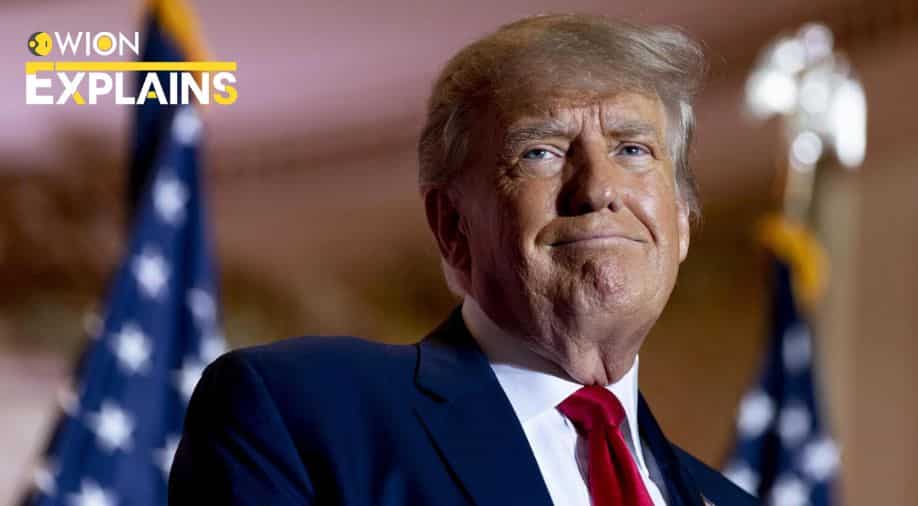
Former US President Donald Trump in a file photo
As the spectreof a potential return of former president Donald Trump to the White House looms, countries worldwide are delicately recalibrating their diplomatic strategies. The repercussions of Trump's unexpected 2016 victory left an indelible mark on international relations, prompting a proactive approach from global leaders to navigate the uncertainties that a Trump 2.0 presidency might bring.
Estonia's strategic outreach: Balancing diplomacy
Estonia's Prime Minister, Kaja Kallas, has exemplifiedthe global trend of strategic engagement. During her November visit to Washington, Kallas not only engaged with White House officials but also sought conversations with key allies of Donald Trump, reported Bloomberg.
The outreach extends beyond the political hub of Washington, as demonstrated by Estonia's foreign minister, Margus Tsahkna, expressing gratitude to Lockheed Martin Corp. workers in Arkansas, acknowledging their role in Estonia's security. Such initiatives aim to preemptively address concerns and garner support from diverse segments of American society.
Global fears and hopes
World leaders, scarred by the unpredictable outcomes of the 2016 election, are treading carefully, expressing both fears and hopes about the potential impact of a Trump resurgence.
European allies, once taken aback by Trump's America First rhetoric and threats to NATO, are cautious in their discussions. Some European Union leaders are avoidingopenly acknowledging the prospect of Trump's return, fearing that mere mention could influence the political landscape.
European Central Bank President Christine Lagarde has publicly labelled it a "threat," stressing the need to learn from the lessons of Trump's first term.
Asia's mixed sentiments
In Asia, the dynamics are mixed.
India, having enjoyed a personal rapport between Prime Minister Narendra Modi and Trump, leans towards a preference for the previous administration.
Modi's government, in particular, favoured Trump's approach over Biden's, especially concerning human rights. However, the concern is not uniform, and nations in the Global South are discerning potential opportunities in Trump's transactional approach.
China's economic perspective
China, a focal point of Trump's trade policies, assesses the economic implications of a potential return.
The continuation of tariffs imposed during Trump's presidency could modestly benefit China. However, broader global repercussions, particularly on the United States, Canada, and Mexico, are acknowledged. The delicate balance between economic interests and geopolitical tensions characterises China's approach.
Global South's perspective
Nations in the Global South see opportunities amid the uncertainty. Brazil, assuming the G-20 presidency, fears potential disruptions to its climate action and poverty reduction plans with a resurgent Trump.
On the other hand, some nations in the Gulf region anticipate alignment with Trump's transactional approach, viewing it as a pragmatic fit for their policies.
Russia's cautious optimism
Russia, initially optimistic about Trump's election in 2016, is approachingthe potential return with caution.
While there is an anticipation of better relations with a re-elected Trump, disappointment over unmet expectations during his first term tempers expectations.
The Kremlin's cautious optimism underscores the complexity of managing relationships with a volatile global actor.
The European Union, scarred by tit-for-tat sanctions with the Trump administration, aims to "Trump-proof" agreements. Senior EU diplomats, mindful of dependencies in energy and raw materials, recognise the need to address vulnerabilities.
Defence strategies, energy partnerships, and raw material dependencies are critical considerations as Europe prepares for potential shifts in global dynamics.
Also watch |US: Trump projected to win Iowa caucuses in bid for 2024 Presidential nomination
Defence concerns in Europe
Europe, particularly concerned about potential impacts on Russian relations, the Ukraine conflict, and the future of NATO, is actively engaging with Trump's representatives.
Defence and security discussions are paramount, with European nations taking precautionary measures and reaching out to influential voices close to the former president. Personal ties are seen as crucial in balancing national interests with diplomatic strategies.
The importance of personal relationships in global diplomacy is evident as leaders seek to balance personal rapport with national interests.
The delicate dance involves engaging with ex-officials, think tanks, and influential figures connected to Trump. Strategies range from massaging egos to preemptively addressing potential concerns, as nations strive to understand the foreign policy trajectory under a potential Trump administration.
As global leaders prepare for a range of scenarios, from reassessing trade dynamics to recalibrating defence strategies, the diplomatic community is actively adapting strategies. The sheer unpredictability of Trump's foreign policy poses challenges for all governments.
(With inputs from agencies)