Europe's 'brutal' lifting of covid precautions behind the rise in cases: WHO

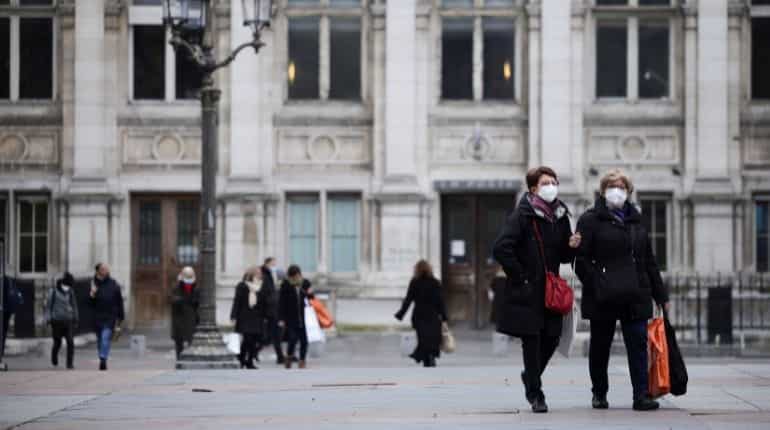
Coronavirus and Europe
Covid curbs in several European countries were lowered too aggressively, thereby causing a rise in cases likely due to the more transmissible BA2 variant, the World Health Organization (WHO) said Tuesday.
As a result of a "perfect storm" of government restrictions being lifted, waning immunity, and the more contagious BA.2 Omicron subvariant, COVID-19 cases have surged.
Over the past few days, countries such as the United Kingdom, France, Germany, and Italy have all seen a dramatic resurgence in cases following a month of falling rates.
Hans Kluge, WHO Europe director, said at a press conference in Moldova that he was "optimistic but vigilant" about the pandemic's progress in Europe.
He said that Covid is rising in 18 of 53 countries in the WHO European region.
"The countries where we see a particular increase are the United Kingdom, Ireland, Greece, Cyprus, France, Italy and Germany".
The main cause of the increase is most likely the BA2 variant, which experts say is about 30 per cent more contagious than its predecessor BA1, but not more dangerous.
But in addition, "those countries are lifting the restrictions brutally from too much to too few," he said.
WHO data show that the number of new Covidcases in Europe fell sharply after peaking at the end of January, but has been spiking since early March.
More than 5.1 million new cases and 12,496 deaths were reported in the European Region of the WHO in the past seven days.
This brings the total number of cases and deaths since the start of the pandemic to almost 194.4 million and 1.92 million, respectively.
In spite of this, Kluge said, Europe was relatively well prepared for the virus now.
"There is a very large capital of immunity ... either thanks to the vaccination or due to the infection."
Watch |Coronavirus cases surge in western Europe, France reports 90,000 average daily Covid-19 cases
In addition, "winter is finishing so people will gather less in small, crowded places, and thirdly, we know that Omicron is milder in fully vaccinated people including a booster", he said.
Despite this, he noted that it remains a deadly disease in countries with low vaccination rates.
Kluge said the world would have to deal with Covid for quite some time, but that doesn't imply we won't be able to get rid of the pandemic.
His recommendations included protecting the vulnerable, strengthening surveillance, getting access to new antiviral medicines, and strengthening genomic sequencing.
Finally, he said countries must deal with "post-covid" sufferers and the backlog of medical care caused by the pandemic.
(With inputs from agencies)

