Don't trust anything said by Tehran: Family of late Iranian-German prisoner

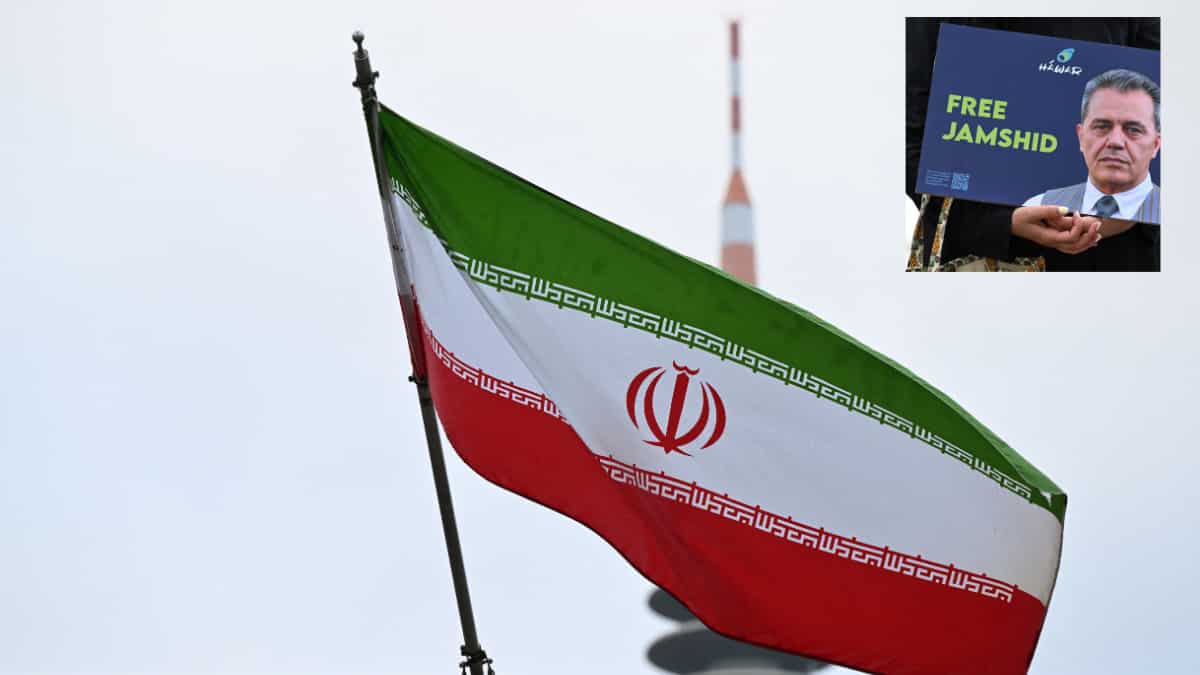
File photo.
The family of an Iranian-German prisoner who died said on Tuesday (Nov 5) that they do not trust anything said about the Iranian government about his fate. Last week, Iran announced thatJamshid Sharmahd, 69, was executed. However, an Iranian judiciary spokesperson said that Sharmahd had died in prison before his death sentence could be implemented.
Speaking to the news agency AFP, Sharmahd's daughter Gazelle said, "We do not trust anything. We have to get proof from an independent investigation that is carried out outside of Iran."
She said it was up to Germany and the United States (US) to investigate and provide proof of what happened to her father.
'Who has seen my father, who murdered my father?'
"Immediately we asked, who has seen my father, who murdered my father? We need responsible governments who do their jobs and investigate," Gazelle told AFP.
"Any cause of death -- even if proven -- of my father, who was in solitary confinement for 1,400 days, is murder," she added.
"If Germany and the US think this kind of statement (from the Iranian judiciary) will free them from their obligations then this is not the case," Gazelle further said and pointed out that if her father's death was not an execution, thenit was even worse.
"This is murder and they (the German and US governments) are complicit," she further said.
Who wasJamshid Sharmahd?
Jamshid Sharmahdwas a US-based Iranian-German software engineer. He was a permanent resident of the US. AFP reported that in the US, the 69-year-oldhelped develop a website for an opposition movement and hosted radio broadcasts critical of Iranian authorities.
Sharmahd was tried and convictedafter he was abducted in the United Arab Emirates in July 2020 by Iranian agents and forcibly brought to Iran.
In his trial, Sharmahd was accused ofinvolvement in a bombing against a mosque in 2008 in the southern city of Shiraz that killed 14 people as well as espionage, claims rejected by the United Nations Working Group.
His case had long been shrouded in secrecy.
There never werereports of fellow detainees having seen him, even though foreign passport holders are known to regularly cross paths in Tehran's Evin prison.
AFP reported that during his captivity, Sharmahdmade a handful of phone calls to his family but was never allowed to reveal where he was being held amid increasing concern over his health.
(With inputs from agencies)