Donald Trump announces Morocco latest Arab state to recognise Israel

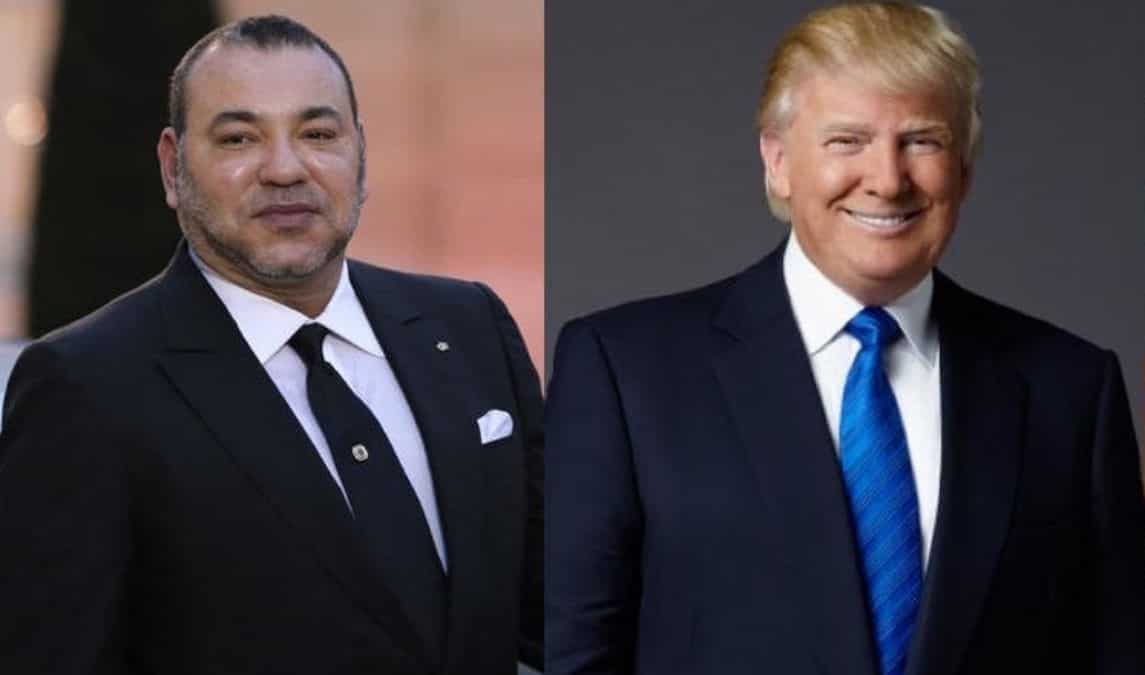
King Mohammed VI and Donald Trump
US PresidentDonald Trump announced on Thursday thatMorocco is the latest Arab state to recognise Israel.
Calling it a ''historic breakthrough'', Trump said ''Our two GREAT friends Israel and the Kingdom of Morocco have agreed to full diplomatic relations – a massive breakthrough for peace in the Middle East!''
As part of the agreement, Trump changed the longstanding USpolicy and recognised Morocco's sovereignty over Western Sahara.
Western Sahara is a desert region where a decades-old territorial dispute has pitted Morocco against the Algeria-backed Polisario Front, a breakaway movement that seeks to establish an independent state in the territory.
The White House said Trump and Morocco’s King Mohammed VI had agreed in a conversation that Morocco would resume diplomatic relations between Morocco and Israel and expand economic and cultural cooperation to advance regional stability.
As his time in office winds down, Trump said Israel and Morocco would restore diplomatic and other relations, including the immediate reopening of liaison offices in Rabat and Tel Aviv and the eventual opening of embassies. USofficials said it would also include joint overflight rights for airlines.
The Republican took to social networking site Twitter and said ''Morocco's serious, credible, and realistic autonomy proposal is the ONLY basis for a just and lasting solution for enduring peace and prosperity!''
Earlier,Morocco’s constitution recognisedthe country’s Jewish heritage and permittedIsraelis to visit the country, butthe two countries did not have formal diplomatic relations.
It comes aftera high-profile Moroccan security delegation visited Israel and agreed to cooperate with the Jewish state on a series of issues.
Morocco is the fourth Arab nation to recognise Israel as the administration seeks to expand its Abraham Accords framework, which began over the summer with an agreement between the Jewish state and the United Arab Emirates.
Bahrain and Sudan have followed suit and administration officials have also been trying to bring Saudi Arabia into the grouping.
Much of the momentum behind the deal-making has been to present a united front against Iran and roll back its regional influence.
Palestinians have been critical of the normalization deals, saying Arab countries have set back the cause of peace by abandoning a longstanding demand that Israel gives up land for a Palestinian state before it can receive recognition.
With Trump due to leave office on Jan. 20, the Morocco deal could be among the last his team, led by White House senior adviser Jared Kushner and USenvoy Avi Berkowitz, will negotiate before giving way to President-elect Joe Biden's incoming administration.
Kushner told reporters on a conference call it was inevitable that Saudi Arabia would eventually strike a similar deal with Israel.
Washington had supported a 1991 ceasefire between Morocco and Western Sahara's Polisario Front independence movement that called for a referendum to resolve the issue. Last month, after a border incident, the Polisario pulled out of that deal and announced a return to armed struggle.
The Trump White House has tried to get Saudi Arabia to sign on to a normalisation deal with Israel, believing if the Saudis agreed other Arab nations would follow, but the Saudis have signaled they are not ready.
One more Middle East breakthrough is possible. Last week Kushner and his team traveled to Saudi Arabia and Qatar seeking an end to a three-year rift between Doha and the Gulf Cooperation Council countries.
A tentative deal has been reached on this front but it was far from clear whether a final agreement to end a blockade of Qatar will be sealed. Saudi Arabia, the United Arab Emirates, Bahrain, and Egypt have maintained a diplomatic, trade, and travel embargo on Qatar since mid-2017.
While Biden is expected to move USforeign policy away from Trump's "America First" posture, he has indicated he will continue the pursuit of what Trump calls "the Abraham Accords" between Israel and Arab and Muslim nations.
The news broke as Jews marked the first night of the Hanukkah festival of lights, commemorating the 2nd century BC victory of Judah Maccabee and his followers in a revolt in Judea against armies of the Seleucid Empire and the ensuing restoration of the Jewish temple in Jerusalem.