Danish Muslims feel backlash as immigration becomes election issue

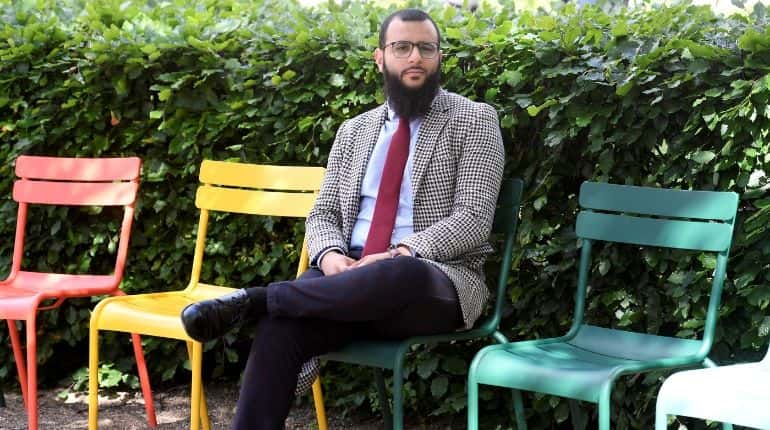
Tarek Ziad Hussein
Growing numbers ofDanishMuslimssay they have faced verbal abuse, exclusion and hate crimes since mainstream political parties began adopting anti-immigrant policies previously the preserve of the far right.
The ruling centre-right Liberal Party and the opposition Social Democrats both say a tough stance onimmigrationis needed to protect Denmark's cherished welfare system and to integrate the migrants and refugees already in the country.
But Manilla Ghafuri, 26, who came to Denmark from Afghanistan in 2001 as a refugee, fears that anti-Muslim attitudes could harden further as theimmigrationdebate heats up ahead of a generalelectionon June 5.
"In 2015 I thought: 'Wow, what's happening?' and I think it has got a lot worse over the last few years," she told Reuters.
Ghafuri, who has more than once been told to go back to her "own country", said she has been kicked out of a supermarket while shopping with her family. While she was working at a bakery a male customer refused to be served by her.
"I asked if I could help him, but he didn't look at me at all. He just stood and waited for another girl who is an ethnicDanishgirl," said Ghafuri, who also works as a teacher and has a degree inDanish.
The number of immigrants from non-Western countries and their descendants who have experienced discrimination because of their ethnic background rose to 48% last year from 43% two years earlier, according to the National Integration Barometer.
"If people are ready and willing to be part ofDanishsociety and want to contribute to it, then we invite them to become part of one of the best-functioning societies in the world," said Mads Fuglede, the Liberal Party'simmigrationspokesman.
"But we need to be able to discuss openly if there are problems with groups of people," he said, citing a large number of immigrant women from the Middle East who have not found work in Denmark.
He did not see any connection between racist incidents and the tone of theimmigrationdebate.
Tarek Ziad Hussein, 26, aDanish-born Muslim of Palestinian origin, has written a book about being Muslim in Denmark. He told Reuters he has received death threats.
"An environment has been created where you can say crazy things without too many people even raising an eyebrow," said Hussein, who works as a lawyer.
"I and a lot of others from my generationfeelthat no matter what we do, we are not good enough in the eyes of society," he added. "No matter how educated we are or how integrated we become, we are not good enough because of our skin colour or our religion."
The number of racially or religiously motivated hate crimes registered byDanishpolice jumped to 365 in 2017 from 228 the year before. That could be higher as not all cases are reported.
TheDanishInstitute For Human Rights has urged politicians to draw up plans to combat racism and hate crimes, especially againstMuslimsand Jews.
"The politicians are moving very close to the boundaries of human rights," said Louise Holck, the institute's deputy director.
Denmark's 320,000Muslimsare about 5.5 per cent of the population, a slightly higher proportion than in the rest of Europe, according toDanishand US estimates.
The shift to the right by Denmark's mainstream parties runs counter to outsiders' traditional views of liberal Scandinavia, but has its parallels elsewhere in Europe, particularly since large numbers of migrants arrived there in 2015.
CAKE
Theimmigrationminister, Inger Stojberg, has meanwhile been criticised for celebrating her 50th piece of legislation tighteningimmigrationlaws with a big cake. A tracker https://uim.dk on the ministry's website showsimmigrationlaw has been tightened 114 times under the present government.
Earlier this year, the government passed a law that would mean more refugees could be repatriated, the latest move to discourage non-westernimmigration.
The law was passed with support from the anti-immigrationDanishPeople's Party, a key ally of the minority government, and the Social Democrats, the country's biggest party, which has hitherto had a softer stance onimmigration.
It means residence permits for refugees will be temporary, there will be a limit on the number of family reunifications, and a cut in benefits for immigrants.
The law has been criticised by theDanishInstitute for Human Rights and the United Nations refugee agency. Trade organisations and unions have warned that tight immigration policies could worsen labour shortages and put a brake on growth.
Fuglede of the Liberal Party said lower benefits would encourage people to work.
Around 43% of refugees who have lived in Denmark for more than 3 years were employed by the end of 2018, up from just 20% by the end of 2015. However, only 19% of women had jobs compared to 57% of men.
But while employment has risen, assimilation of immigrants has not always kept pace. More young men descended from non-western immigrants commit crimes than Danes, official figures show.
HISTORY BOOKS
The Social Democrats declined to comment for this article because of a tight pre-electionschedule, but they have repeatedly said they want to limit the number refugees.
"You are not a bad person, just because you are worried aboutimmigration," party leader Mette Frederiksen said earlier this month.
With the mainstream parties toughening up onimmigration, Denmark's biggest populist group, TheDanishPeople's Party (DF) has lost some of its appeal and opinion polls show it is likely to shed almost half of its voters in theelection.
This is partly because voters are moving to the Social Democrats. DF also faces competition from far-right parties the New Right and Hard Line, the latter a new grouping that wants Islam banned andMuslimsdeported.
But even though the DF is losing voters fast, its impact onDanishpolitics is undeniable.
"They have completely changed the discussion and politics in Denmark over the past 20 years," according to Rune Stubager, professor of political science at Aarhus University. "For the history books, this is definitely a big victory for them."