Columbia faculty senate passes resolution over administrative handling of anti-Israel protests

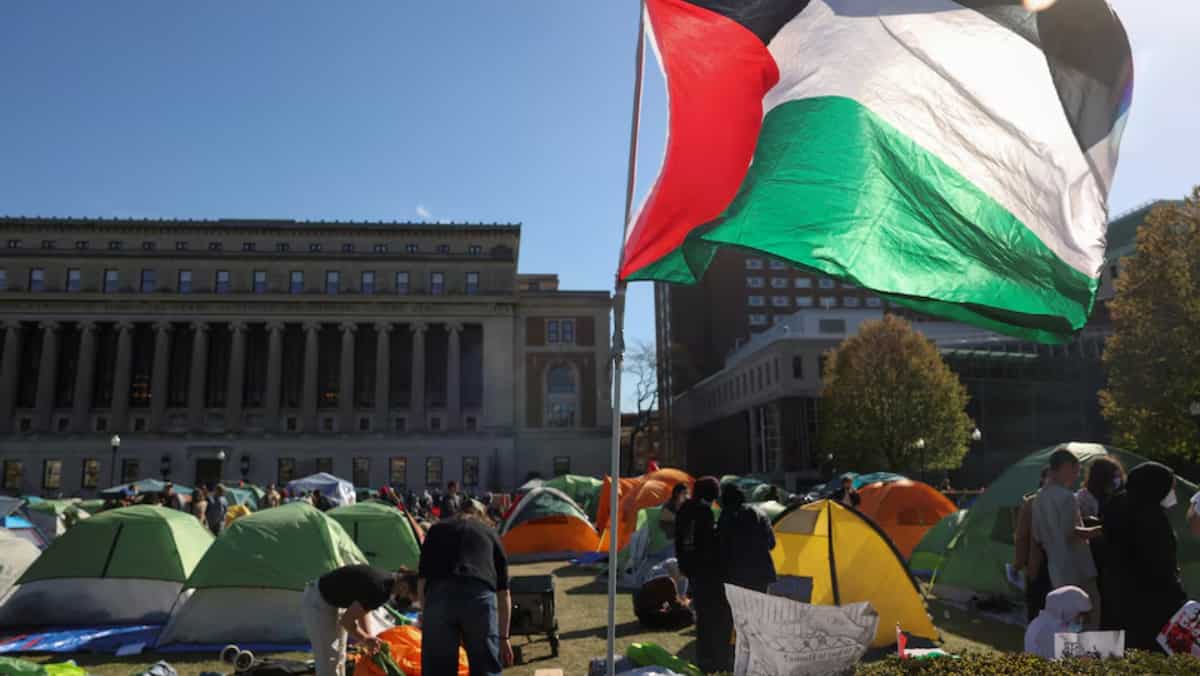
Students protesting at an encampment supporting Palestinians on the Columbia University campus
Columbia University senate has passed a resolutionproposing a task force to oversee “corrective actions” in connection to the administrative policies. This comes amid the escalating tensions at Columbia University and other campuses regarding protests against Israel's actions in Gaza.
The Columbia Faculty Senate is a vital body representing the academic faculty of the university and it plays a crucial role in governance and participates in decision-making processes that impact the academic community.
Columbia University's President Nemat Minouche Shafik has come under scrutiny over her handling of recent protests on campus, especially the controversy stemmed from her decision to involve the New York police in dismantling a protest encampment.
The resolution was passed by 62 votes in favour, 14 votes against, and 3 abstentions. Shafik's move sparked outrage among students, faculty, and observers after 100 were arrested and the tents from the campus lawn were removed.
The resolution calls on the University to address issues of endangerment of academic freedom, breaches of student and faculty privacy, and violations of shared governance principles. It suggests that the Senate establish a task force, overseen by the Executive Committee and investigate and deliver recommendations for subsequent senate measures.
However, protesters swiftly reassembled the encampment and limited the university's options for quelling the demonstrations. Similar protests have erupted across the country, from California to Boston, with students demanding divestment from companies linked to Israel's military.
Also Read |Does Argentine president Javier Milei speaks with dead dogs? His office lashes out at speculation
Republican House Speaker Mike Johnson joined the chorus calling for the resignation of Columbia University President Minouche Shafik.
Shafik's office in an email on April 25 wrote,"The talks have shown progress and are continuing as planned." "We have our demands; they have theirs. A formal process is under way and continues."
Watch |Russia-Ukraine war: Russian drones hitting targets & draining Ukraine's war chest
Overseas, tensions escalated outside Paris' Sciences Po university as pro-Israeli and pro-Palestinian protesters clashed. The White House so far has defended free speech while denouncing antisemitic protests and highlighted the need for campus safety.
Elsewhere, the University of Texas at Austin's President, Jay Hartzell, faced backlash for involving police in dispersing a pro-Palestinian protest. Faculty criticised the decision. Civil rights groups have condemned the arrests and urged respect for free speech rights. Campuses are grappling with balancing free speech and safety concerns amid escalating tensions and growing demands for accountability from university administrations.
(With inputs from agencies)