Chinese lawyers up in arms after they caught judge receiving instructions on WeChat

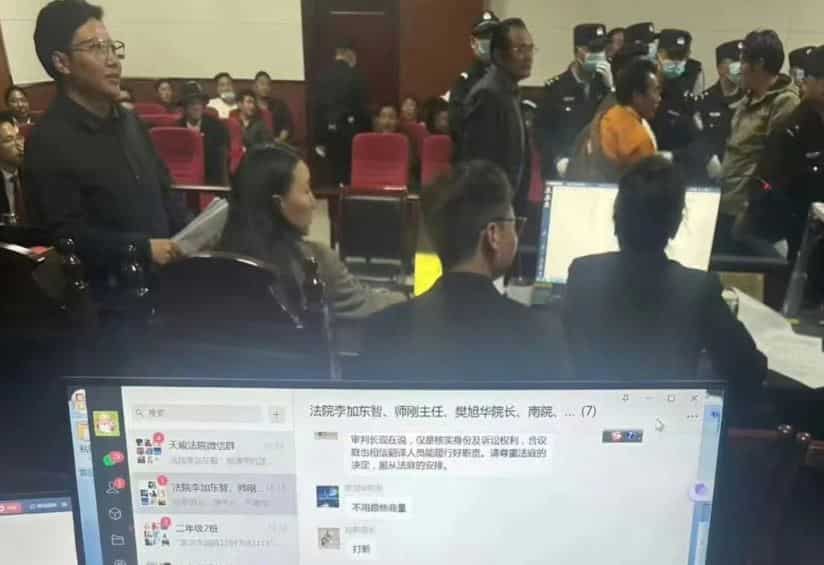
Liu Zheng of the Beijing Zebo Law Firm took a photo of the computer screen of the presiding judge
Lawyers across China are up in arms over what they sayis 'blatant sabotage'of the legal system as they stage a rare protest on Chinese social media.Thishappened after advocates at the Tianjun county court in HaixiMongolcaught the presiding judge red-handed receiving real-time instructions on WeChat group, a Chinese messaging app.
The lawyers posted a lengthy letter on X-like Chinese social media platform Weiboand explainedin detail what transpired on May 11 in the court located in the northwestern province of Qinghai.
What happened in the courtroom?
As per the letter, the judge suddenly adjourned the proceedings in a case.
“Afterwards, we accidentally found the criminal court judge of the Haixi intermediate court and the director of the Tianjun county court were remotely giving instructions in a WeChat group,”the letter said.
As it happened, Liu Zheng of the Beijing Zebo Law Firm took a photo of the computer screen of the presiding judge, which laid bare the unofficial WeChat group that had several judicial officers and staff of local courts as its members.
The photo also captured some communication happening between the judge and his seniors.
County court director Fan Xuhua canbe seensaying in the group chat:“Youdon’thave to communicate with him about it.”
The photo then shows Hasi Chaolu, president of the criminal court at Haixi Intermediate Court – the court that will hear the case if itis appealed—directing the presiding judge to“be tough,don’tspeak randomly”.
“Their actions blatantly sabotage our legal system where the appealcourt’sdecision is the final one, and those involved should be probed for malpractice or even criminal activity,”the public letter said.
The lawyers also complained about the incident to the Qinghai Provincial Prosecutor’s office and the Qinghai HigherPeople’sCourt. Both of them said they had opened an investigation into the case.
As per the letter, the lawyers havefiled a request with the county court totransfer the case for trial outside of Haixi.
Responding to the incident, Xu Xin, a prominent lawyer in China, said on WeChat that such incidents were quite common in the communist country.
(With inputs from agencies)