Chinese experiment to immunise twins against HIV may have failed, created mutations: Scientists

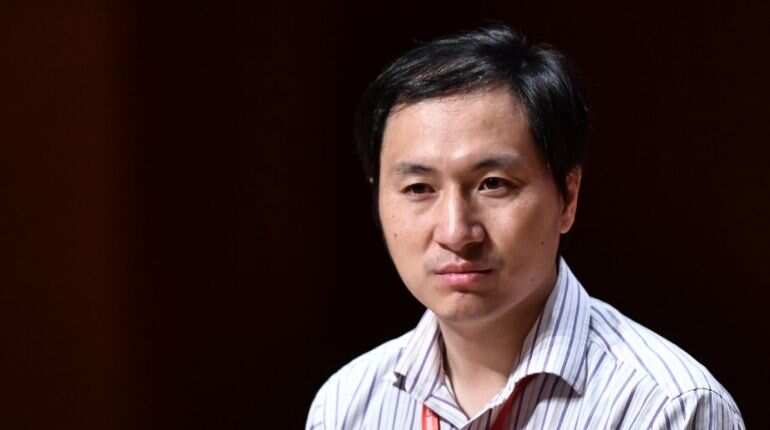
Chinese scientist He Jiankui reacts during a panel discussion after his speech at the Second International Summit on Human Genome Editing in Hong Kong.
Chinese experiment to immunise twins against HIV may have failed, created mutations: Scientists
The gene-editing performed onChinesetwins last year meant to immunize them against HIV may have failed in its purpose and created unintended mutations,scientistssaid Tuesdayafterthe originalresearchwas made public for the first time.
Excerpts from themanuscriptwerereleasedby the MIT Technology Review for the purpose of showing howChinesebiophysicist He Jiankui ignored ethical and scientific norms in creating the twins Lula and Nana, whose birth in late 2018 sent shockwaves through the scientific world.
He made expansive claims of a medical breakthrough that could "control the HIV epidemic," but it was not clear whether it had even been successful in its intended purpose,immunizing thebabiesagainst the virus,because the team did not, in fact, reproduce the gene mutation that confers this resistance.
A small percentage of people are born with immunity because of a mutation in a gene called CCR5 and it was this gene that He had claimed he had targeted using a powerful editing tool known asCRISPRwhich has revolutionized the field since bursting on the scene in 2012.
Fyodor Urnov, a genome-editing scientist at the University of California, Berkeley told the MIT Technology Review: "The claim they have reproduced the prevalent CCR5 variant is a blatant misrepresentation of the actual data and can only be described by one term: a deliberate falsehood.
"The study shows that theresearchteam instead failed to reproduce the prevalent CCR5 variant."
While the team targeted the right gene, they did not replicate the "Delta 32" variation required, instead creating novel edits whose effects aren't clear.
Moreover,CRISPRremains an imperfect tool because it can lead to unwanted or "off-target" edits, making its use in humans hugely controversial.
Here, the researchers claimed they had searched for such effects in the early-stage embryos and found just one,but this glossed over the fact that it would be impossible to carry out a comprehensive search without inspecting each of the embryo's cells and thus destroying it.
Further ethical concerns included that the parents of thebabiesmight have wanted to take part for the wrong reasons.
The father was HIV positive, which carries a significant social stigma in China and makes it almost impossible to have access to fertility treatment, even though a well-established technique known as "sperm washing" prevents the infection from being passed on to unborn children.
Their lack of access to any kind of fertility treatment may have motivated them to take part in the experiment despite the huge risks to their children, Jeanne O'Brien, a reproductive endocrinologist at Shady Grove Fertility told the MIT Technology Review.
The authors also appeared to have taken steps to make it hard to find the family, like leaving the names of the fertility doctors off the paper, and including a false date of birth (Hu claimed November 2018 while multiple reports have indicated it was, in fact, October 2018).
He attempted to shop hismanuscriptaround to prestigious journals including Nature and JAMA, but it remains unpublished.