China expected to take other measures to counteract trade war: Expert

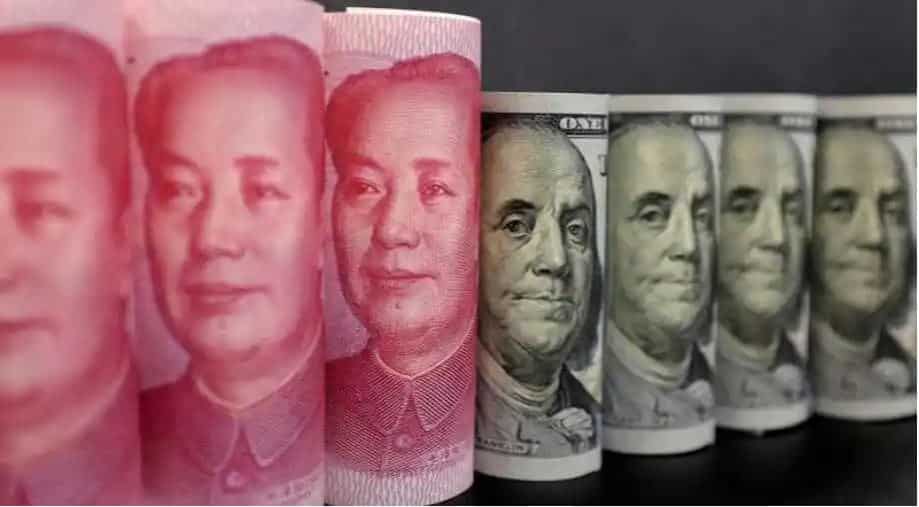
China US
On Thursday, China's Commerce Ministry said it will respond with tariffs on an additional 60 billion dollars of US goods.
US President Donald Trump has threatened to impose tariffs on all imports from China.
The US president made the comments aboard Air Force One on Friday, saying he's prepared to impose tariffs on another 267 billion US dollars in Chinese goods, in addition to the tariffs on 200 billion US dollars' worth of Chinese goods that could be rolled out any time.
On Thursday, China's Commerce Ministry said it will respond with tariffs on an additional 60 billion dollars of US goods.
The next round of tariffs could impact thousands of consumer goods.
Yan Liang, an associate professor of Economics at Willamette University in the US state of Oregon, said once Washington imposes another tariff on the 267 billion dollars' worth of Chinese exports to the US, then China will run out of goods to tariff.
But Beijing can still take other measures to counteract the trade war.
"Things like making some more administrative red tapes for the US companies operating in China and so on. One thing that I think is important to note is that Beijing increasingly seems to reckon that this is not just about trade disputes and I would say they were more willing to make concessions on trade front such as reduce the trade imbalances, lower tariffs or provide more market access to US businesses," said Liang.
Liang said the People's Daily, which is the mouthpiece of the Communist Party of China, issued a statement last month and basically said that this trade war seems to be a testament to quote 'Washington's engagement plus containment approach to China'. And so what that means is that a lot of the demands from Washington simply are not open to negotiation, she added.
Xu Qinduo, a senior researcher with Pangoal Institution in Beijing, said China is concerned with whether the US is changing its China policy in an overall manner, not only about trade but also about strategy towards China.
"But so far China has tried to contain the disputes within the trade area to avoid a spill over to other issues like currency, like other aspects of the dispute between the two countries," said Xu, adding that China is quite firm in its response to the US tariffs or upcoming tariffs.
Liang said in terms of intellectual property (IP) protection, Chinese progress on this should not be neglected.
"Remember the Chinese have made a lot more payments for the use of foreign technologies in the recent years. The last year the number was 29 billion dollars for the use of foreign technology. So yes, admittedly, China needs to work on protecting IP. But again I don't think having this trade war, this tariff escalation is the right way to go. And I think eventually this is not going to make Beijing to make concessions, but rather escalate the trade war and it's going to negatively impact both countries," said Liang.
Merrill Matthews, a resident scholar with the Institute for Policy Innovation in Dallas, said President Trump is taking a huge gamble by imposing tariffs on China.
"This is a huge gamble. Donald Trump says he wants China to lower its tariffs. So if I were talking to President Xi, I'd call his bluff. Comeback, President Trump has said to the G7: I want to go to zero tariffs and trade barriers. He has a deal with Jean-Claude Juncker of the European Union. They want to negotiate to get down to zero tariffs and trade barriers. I suggest President Xi come up and say, 'Let's give us the same deal. It'll take some years to do it, but let's agree to try to get to that point and start that negotiations.' I think if you were to do that, you would either call his bluff or you'd get us on the right path," said Matthews.