
&imwidth=800&imheight=600&format=webp&quality=medium "China defends construction of world's largest hydropower dam on Brahmaputra river, Claims no downstream damage")
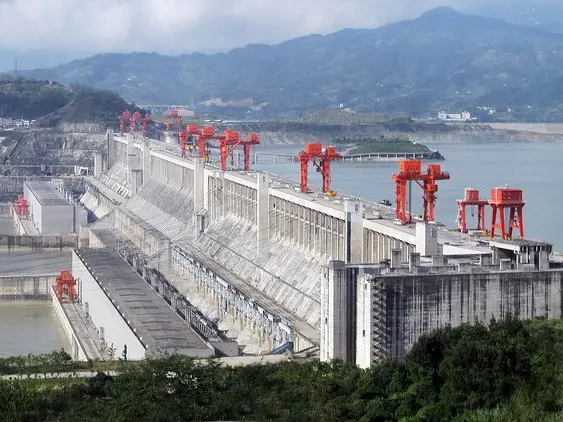
After China announced the construction of the world's largest hydropower dam in Tibetan territory on the Brahmaputra River (known as the Yarlung Zangbo River), it sparked concerns from India and Bangladesh. In response, Beijing has issued an explicit statement defending the dam project, calling it a clean energy development and a matter of national sovereignty.
"To build the hydropower project in the lower reaches of the Yarlung Zangbo River is fully within China's sovereignty," the official statement said. "The project aims to speed up clean energy development, improve local people's lives, and proactively respond to climate change," the official added.
The announcement has raised concern in downstream nations such as India and Bangladesh about potential ecological disruption and water flow control. However, China claims that the development is being done with a high sense of responsibility in handling cross-border rivers and that the project meets the highest national industrial standards.

"The planning, design, and construction... strictly follow the highest national industrial standards. The project puts a lot of emphasis on all-round ecological conservation, stays away from multiple environmentally sensitive areas, and vows to preserve the original ecosystem to the largest extent possible," the statement further added.
What is India's stance?
China maintained that the dam will not negatively impact downstream areas. Instead, it ensured that the hydropower facility would support disaster mitigation efforts along the river. Concluding the statement, China said that it is collaborating with downstream nations with necessary communication on the project in response to enhanced cooperation for the benefit of all people along the river basin.
Meanwhile, Arunachal Pradesh Chief Minister Pema Khandu has described the dam as a "ticking water bomb" and a serious threat to existence. “Setting aside the military threat from China, it seems to me that this is a far bigger issue than anything else. It is going to cause an existential threat to our tribes and our livelihoods. It is quite serious because China could even use this as a sort of 'water bomb',” Indian news agency PTI quoted Khandu as saying.
However, Assam Chief Minister Himanta Biswa Sarma downplayed any immediate threat from the project and said that the Brahmaputra is not completely dependent on the Yarlung Zangbo for its flow. "I am not immediately worried because the Brahmaputra is a mighty river, and it is not dependent on a single source of water," Sarma said.
The announcement was made by Chinese Premier Li Qiang on Saturday (July 19, 2025) for the construction of the dam in the lower areas of the Brahmaputra River, locally known as Yarlung Zangbo, at Nyingchi City, situated close to the Line of Actual Control (LAC) in the vicinity of Arunachal Pradesh.

