Chemical signal for swarming by locusts identified to help toward curbing plagues

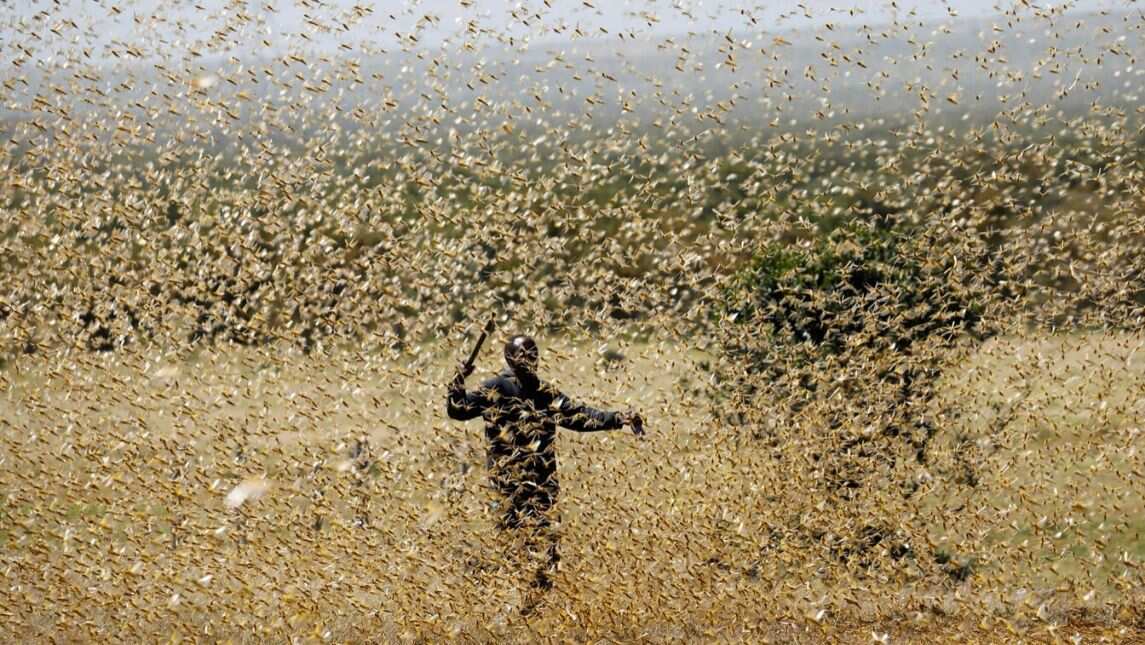
Locusts in Kenya
Researchers have identified a chemical compound released by locusts that causes them to swarm. This, they say, would help discover new ways to prevent these insects from devouring crops vital to human sustenance as they have for millennia.
The scientists said on Wednesday they identified the pheromone in the migratory locust, or Locusta migratoria.
The 4-vinylanisole (4VA) is primarily released from the hind legs and is detected by the antennae of other locusts and sensed by odorant receptors. 4VA powerfully attracted locusts regardless of age or sex, the research published in the journal Nature showed. Its production was triggered in the insects when as few as four to five solitary locusts came together, precipitating swarming behaviour.
The migratory locust represents a serious threat to agriculture worldwide.
Swarms can include billions of locusts and span hundreds of square miles (km) as the insects voraciously consume crops, imperiling food security. Migratory locusts inhabit Asia, Africa, Australia and New Zealand, attacking pastures and critical crops such as wheat, rice, corn, millet, barley, oats, sugarcane and sorghum.
Further research is needed on whether 4VA exists in other locust species such as the desert locust, called Schistocerca gregaria, that currently is ravaging parts of Africa and the Middle East.
The chemical insecticides currently used to suppress locust outbreaks raise concerns about human health and safety. The identification of 4VA could inspire new methods.
Moreover, a chemical could be developed to block 4VA's effects to prevent swarming, or a synthetic version could lure locusts into traps to be killed.