Baltimore bridge collapse: Authorities open second temporary channel to ease traffic

Baltimore bridge collapse
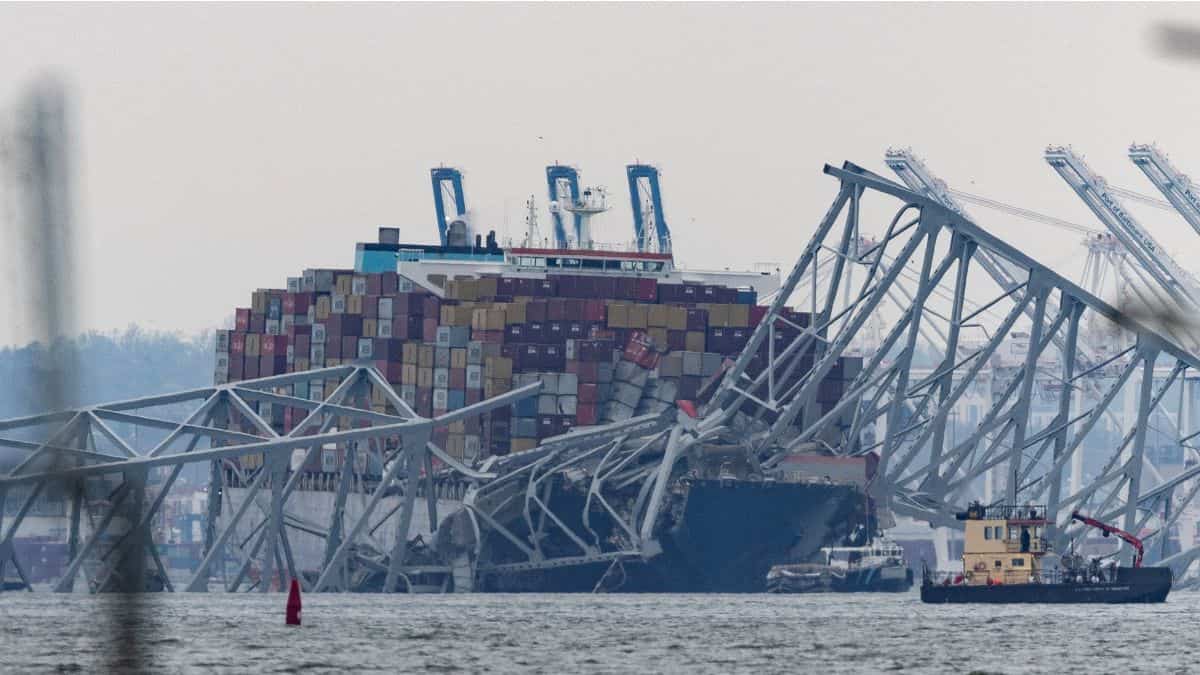
A week after the Baltimore bridge collapse, a second temporary channel has been opened to facilitate marine traffic bypassing the collapsed Francis Scott Key Bridge.
The collapsed bridge had blocked the main shipping channel at the vital port for a week following its destruction.
The new channel, which opened on Tuesday, allows a limited amount of marine traffic to pass through, primarily vessels involved in the clean-up effort and some barges and tugs stuck in the Port of Baltimore.
As per an AP report, a tugboat pushing a fuel barge supplying jet fuel to Delaware’s Dover Air Force Base was the first vessel to use the alternate channel late on Monday (Apr 1).
To open the channel, crews used a large crane to lift the wreckage out of the way.
A third channel is also in the works to accommodate larger vessels and restore more commercial activity, said officials at a press conference on Tuesday (Apr 2).
Salvage operation
As per the report citing Governor Wes Moore, the salvage operation has faced challenges due to rough weather conditions over the past two days. Because of the weather, it is unsafe for divers to attempt to recover the bodies of the four construction workers believed to be trapped underwater in the wreckage.
Governor Wes Moore expressed the state's commitment to completing the mission without injuries or casualties.
"We promised these families that we would do everything in our power to bring them closure, but also my directive is to complete this mission with no injuries and no casualties," he said.
The collapse of the Key Bridge occurred after the cargo ship Dali lost power shortly after leaving Baltimore en route to Sri Lanka. The ship struck the bridge, causing it to collapse and tragically claiming the lives of six road construction crew members.
President Joe Biden has pledged significant federal resources to aid therecovery effort and is expected to visit the collapse site on Friday.
The Dali, managed by Synergy Marine Group and owned by Grace Ocean Private Ltd, remains stationary with its crew on board. Both companies have filed a court petition seeking to limit their legal liability, a standard procedure in cases litigated under US maritime law.
(With inputs from agencies)

