'Baby dragons' to rescue China? Beijing is counting on 2024 to fix its population woes - Here's Why

China population crisis
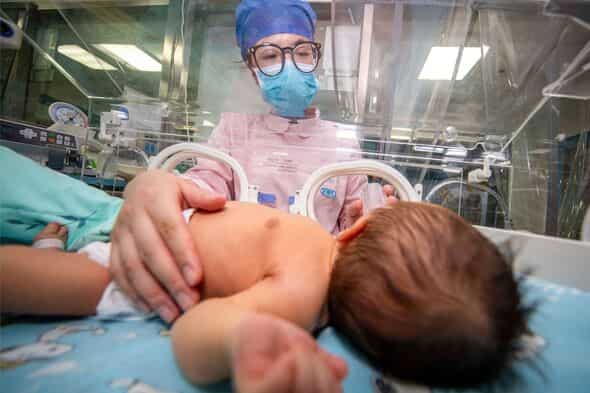
The declining fertility rate and crashing population numbers have kept Chinese authorities on the edge over the past few years. But the year 2024 could bring some respite; at least this is what the Chinese government is hoping. As per the Chinese calendar, 2024 is the year of the Dragon, which according to the Chinese culture isassociated with strength, intelligence and success. So, a lot of parents are trying to time the births of their children in the auspicious year, so that their offspring are imbued with these traits.
China’s population crisis
China's recent statistics reveal a notable decline in its population by 2.08 million in the past year, surpassing the 2022 decrease. Despite government initiatives to encourage childbirth and address the ageing workforce, the efforts seem insufficient.
University of Wisconsin-Madison demographer Fuxian Yi explained that the Chinese zodiac had minimal impact on birth rates until around 2010, referencing annual census data. Notably, during the Dragon Year in 2000, China reported a fertility rate of 1.22 births per 1,000 women, showing a decline from the previous years.
While there were slight increases in birth rates in 2000 in Hong Kong, Taiwan, and South Korea—regions following the Lunar calendar with its 12 zodiac signs—overall, China experienced a modest rise in fertility in 2012, the year of the dragon.
Despite a slight increase in the expected number of births in 2024, reaching around 9.3 million, the influence of the end of pandemic-era measures is predicted to outweigh any impact from the zodiac sign, according to Yi.
The future looks even bleaker
Concerns arise for China as projections suggest that by 2050, individuals aged 60 or older may constitute a significant 40 per cent of the population, leading to economic and social challenges. Yi anticipates a net population decline this year, attributing it to deaths offsetting any positive growth from births.
Watch:China's urban population decline & GDP slowdown
According to experts, China’s economic miseries are having a direct impact on the birthrate.
“Having a child is a life-long responsibility. Economic pessimism is a strong counterforce for improving the birth rate this year, saidWang Feng, an expert on Chinese demographics at the University of California, Irvine.
"It is also because of these miseries that Chinese women are increasingly resorting to not having children or not getting married at all," he further said.
(With inputs from agencies)