ALERT ! 2022 Geminid meteor shower, most beautiful & much-awaited meteor shower, Here's when to watch

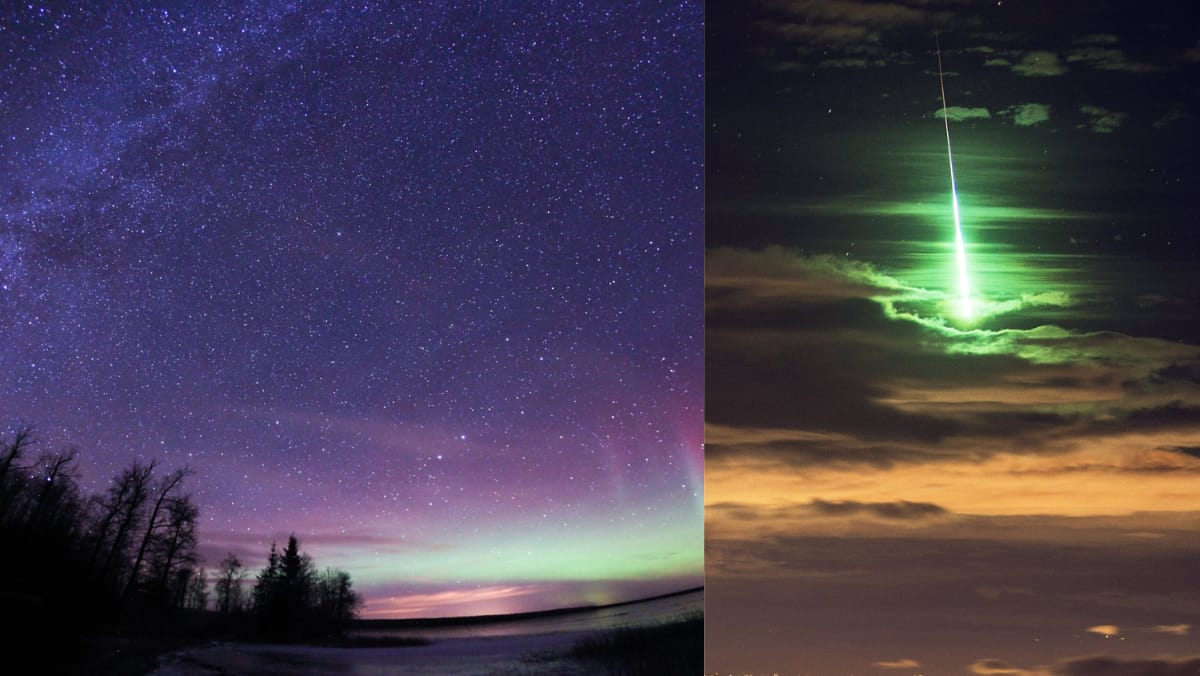
2022 Geminid meteor shower, the most beautiful & much-awaited meteor shower, Here's when to watch
The Geminid meteor shower is caused by the asteroid 3200 Phaethon. This is in contrast to most meteor showers, which are triggered by comets rather than asteroids. Simon Green and John Davies identified 3200 Phaethon on photos taken by the IRAS (Infrared Astronomical Satellite) on October 11, 1983. In 1985, it was awarded the asteroid designation 3200 Phaethon after being given the naming 1983 TB. Fred Whipple stated that this asteroid had the same orbit as the Geminid meteor shower. This was extremely unique, as an asteroid has never previously been proposed as the cause of a meteor shower. It's still unclear how debris from the asteroid's surface or interior ends up in the meteoroid stream.
Why in mid-December?
3200 Phaethon first comes near the sun. The distance is half the distance between the sun and the innermost planet, Mercury. Then it zooms out past Mars' orbit. On its inbound leg, the meteor material contacts the earth's orbit, and the earth arrives at this spot every mid-December, hence the Geminid meteor shower.
The Moon connection
This year a declining gibbous moon will be visible above the horizon during optimal viewing hours. On the evenings of December 13 and 14, one alternative is to watch by moonlight. Also, because the moon rises soon before midnight on both December 13 and 14, keep an eye out in the evening before the moon rises. Geminid meteors are bright, white, and fast. The brightest ones will outshine the moonlight. The final quarter moon of 2022 occurs on December 16. So, in 2022, a dazzling waning gibbous moon will rise in the midst of the Geminids' peak.
When to watch?
Gemini will be visible by mid-evening in December. On the evenings of December 13 and 14, the moon rises later, soon before midnight. In addition, the moon rises later on December 14, giving you additional opportunity to observe meteors. It's worth a shot on December 14th evening!
Peak time: The Geminids can be observed from a dark-sky position about 2 a.m. local time (for all time zones).
Shower Duration
The Geminid meteor shower occurs between November 19 and December 24. When the radiant is at its peak, it is possible to see 120 Geminid meteors every hour under a dark sky with no moon. The vivid, white, and dazzling Geminids provide one of the greatest showers in the Northern Hemisphere. The Geminids may also be seen from the Southern Hemisphere, but at a reduced pace.