Alabama's largest hospital pauses IVF after SC says frozen embryos are children

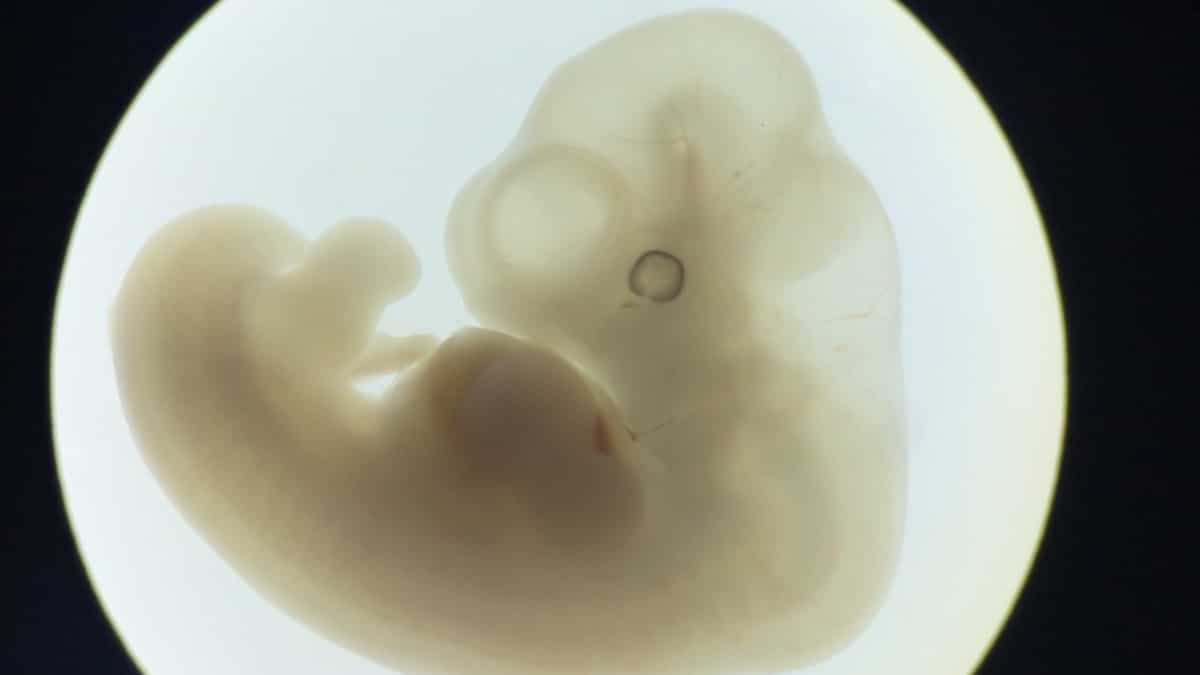
Representational image of embryo.
The largest hospital in Alabama, United States has placed a halt on vitro fertilisation procedures after the state’s supreme court delivered the first-of-its-kind decision in which it ruled that frozen embryos are “children”.
Alabama Supreme Court's ruling that frozen embryos should be considered children and that any person can be held liable for destroying them accidentally has now started a new debate in the United States.
The southern US state's hospital took the decision to pause its in-vitro fertilisation (IVF) services after the court's ruling as it feared that they could be exposed to criminal prosecution.
The health system of the University of Alabama at Birmingham said that they will continue retrieving eggs from the ovaries of women.
However, it said that the next step they take in the IVF process will be stopped. In the next step, they fertilise the eggs with sperm before they are implanted into the uterus.
"We are saddened that this will impact our patients' attempt to have a baby through IVF," said the leading state medical provider, in a statement.
"But we must evaluate the potential that our patients and our physicians could be prosecuted criminally or face punitive damages for following the standard of care for IVF treatments," it added.
What was the lawsuit and what was the decision made by the court?
The case has emerged from a wrongful death lawsuit which was filed by three couples after a fertility clinic lost their embryos in 2020.
A person had entered the place where the embryos were kept, handled them and dropped them accidentally. Because of that, the embryos were destroyed.
The couples also took steps to sue the Center for Reproductive Medicine and the Mobile Infirmary Association under the Wrongful Death of a Minor Act of the state. The law includes foetuses but does not specifically include embryos which are created from IVF.
Watch:Are frozen embryos Children? Alabama Supreme Court gives first-of-its-kind decision
However, the Alabama Supreme Court in its ruling extended support to the couples and ruled that frozen embryos were considered "children".
The wrongful death law applied to "all unborn children, regardless of their location", the court said, in its decision.
Agreeing with the opinion of the majority, Chief Justice Tom Parker wrote: "Even before birth, all human beings have the image of God, and their lives cannot be destroyed without effacing his glory."
The ruling does not restrict or ban IVF and even the couples who filed the case actively sought out the procedure.
(With inputs from agencies)