
&imwidth=800&imheight=600&format=webp&quality=medium "'POTUS monitoring the situation': Cambodia-Thailand peace talks begin after days of intense fighting: Why is US presence important?")
After almost four days of intense cross-border offensive between Cambodia and Thailand, both countries are scheduled to hold peace talks in Malaysia later today (July 28). Confirming the presence of officials from the United States, Secretary of State Marco Rubio said that the high-level talks will be held to achieve an “immediate ceasefire.” Rubio's remark came after US President Donald Trump warned the South Asian neighbours that America would not engage in conversations related to trade till they stop fighting. Earlier on Friday (July 25), Cambodia's UN envoy Chhea Keo called for an immediate ceasefire and 'peaceful solution of the dispute' after a closed-door meeting at the United Nations Security Council (UNSC). However, the situation escalated on Sunday when an exchange of fire took place between the forces of both countries near Ta Kwai temple in Surin province of Thailand. Notably, the attack happened within hours of the announcement of a ceasefire by Trump, who likened the situation to the India-Pakistan conflict in May, in the aftermath of Operation Sindoor and the Pahalgam terror attack.
Rubio, in a post on X, said, “Cambodia and Thailand are scheduled to begin in Malaysia shortly in hopes of achieving an immediate ceasefire. State Department officials are on the ground in Malaysia to assist these peace efforts. Both POTUS and Iremain engaged with our respective counterparts for each country and are monitoring the situation very closely. We want this conflict to end as soon as possible.” Earlier, Trump in a post on Truth Social said that he spoke to the leaders of both countries, adding, “We happen to be, by coincidence, currently dealing on Trade with both Countries, but do not want to make any Deal, with either Country, if they are fighting — And I have told them so!”
If the US mediation in this conflict is successful, Donald Trump will get yet another opportunity to claim the Nobel Peace Prize. He will be known for acting as a mediator in conflicts, if not the one who resolves them. To his kitty, he already has India-Pakistan, Iran-Israel, DR Congo-Rwanda, as per his claims. Moreover, with the ongoing trade war that he has unleashed on world economies as a part of a reciprocal tariff, he will be able to secure business deals with several nations at the pretext of solving their crisis.

Thailand-Cambodia conflict
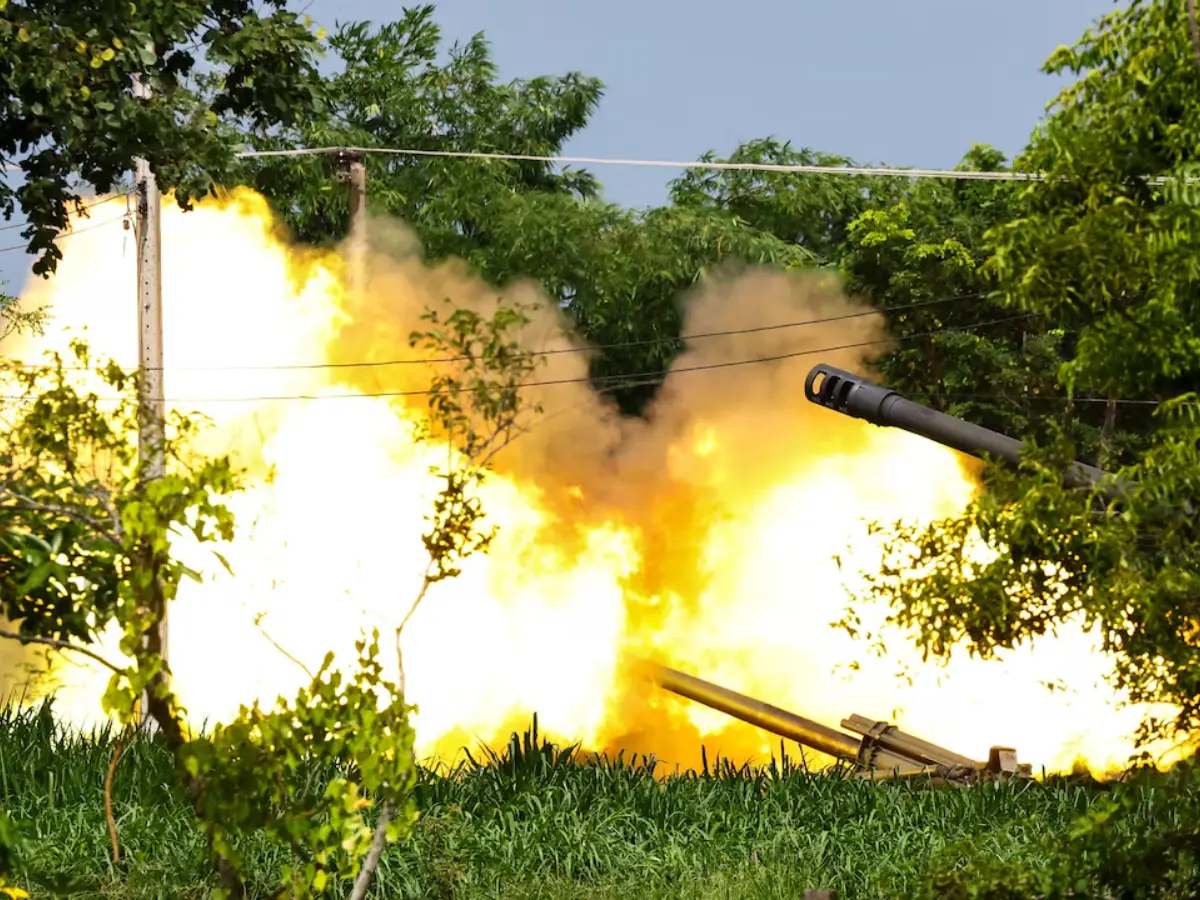
Thailand and Cambodia engaged in their worst fighting in over a decade this week, exchanging heavy artillery fire across their disputed border. Clashes broke out between the two countries early on Thursday (July 24) along a disputed area abutting an ancient temple, rapidly spilling over to other areas along the contested frontier and heavy artillery exchanges continued for a third straight day. The latest tensions rose over an 11th-century Hindu temple called Preah Vihear, or Khao Phra Viharn in Thailand - with both Bangkok and Phnom Penh claiming historical ownership over it. Tensions began rising between the Southeast Asian neighbours since May this year, following the killing of a Cambodian soldier during a brief exchange of gunfire. The incident triggered diplomatic spats, ultimately leading to armed clashes.
Thailand and Cambodia have for more than a century contested sovereignty at various un-demarcated points along their 817 km (508 miles) land border, which was first mapped by France in 1907 when Cambodia was its colony. That map, which Thailand later contested, was based on an agreement that the border would be demarcated along the natural watershed line between the two countries. In 2000, the two countries agreed to establish a Joint Boundary Commission to peacefully address overlapping claims, but little progress has been made towards settling disputes.

