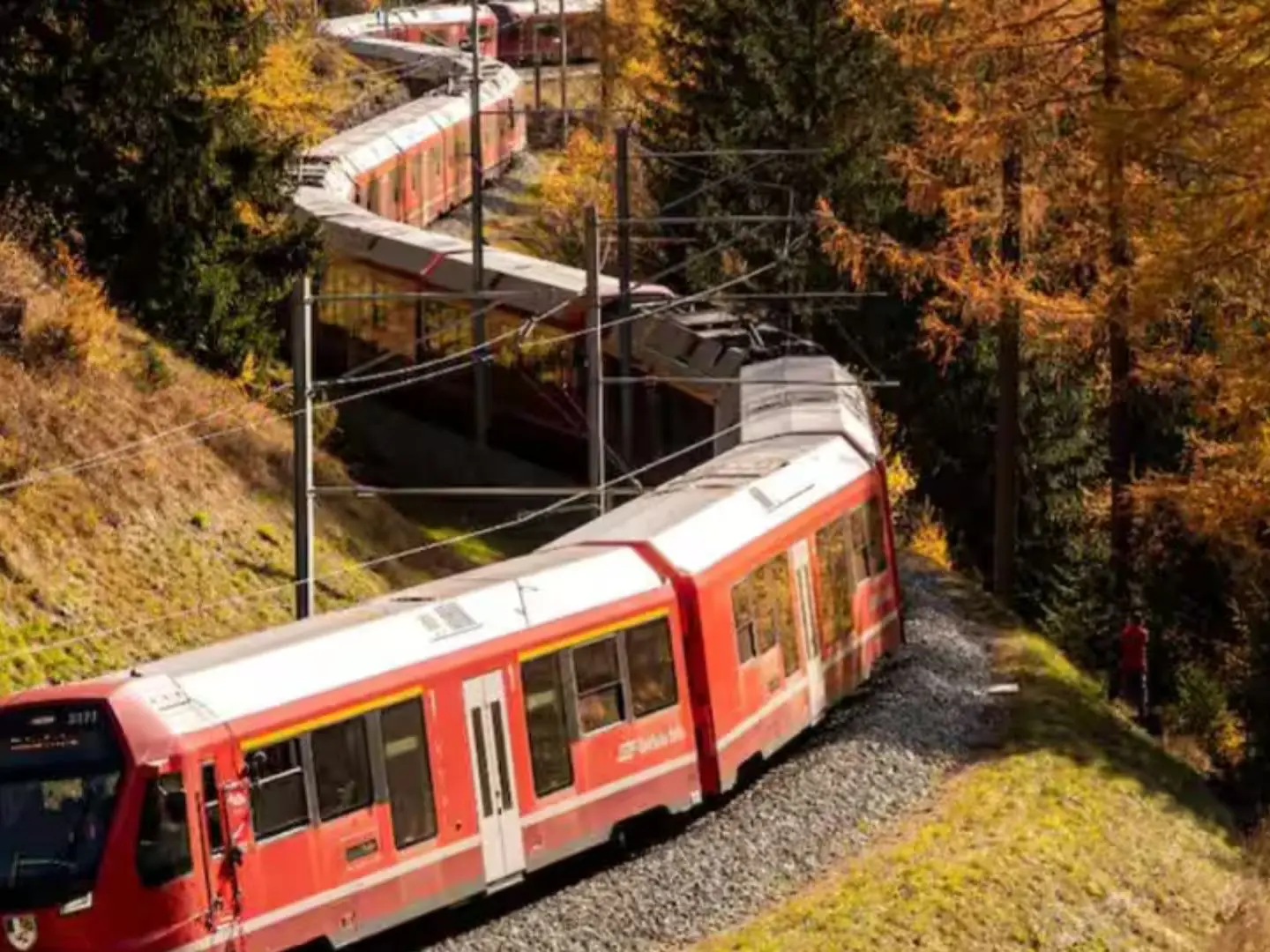
World's longest train 682 Carriages, requires 8 Engines, so massive it could fit 24 Eiffel Towers (not from india)

&imwidth=600&imheight=450&format=webp&quality=medium "World's longest train 682 Carriages, requires 8 Engines, so massive it could fit 24 Eiffel Towers (not from india)")
Australian BHP Iron Ore
The world's longest train, Australian BHP Iron Ore with 682 Carriages, requires 8 engines, but runs without passengers. Find out why. Operated by a mining giant, Rio Tinto its an autonomous train
Operated my mining giant, Rio Tinto, Australian BHP Iron Ore, is a steel Leviathan stretching up to 7.3 kilometres in length and hauling tens of thousands of iron ore moves across the arid landscape of Australia without any passengers. It first ran on June 21, 2001. This is the world's largest autonomous train, an auto haulier. This seems puzzling to many why a train which runs with 682 carriages and eight engines does not carry a single passenger.
A freight-only train
This giant is designed to ferry iron ore, one of the world's most vital industrial resources. It operates along the ports on the coast, starting from the mines of Western Australia’s Pilbara region. These operations are strictly industrial and highly unsafe for human transportation on such a scale. Its autonomous mechanism is designed to operate with minimal intervention and supervision. This is operated remotely using satellite communication, remote AI navigation and real-time data analytics. Adding human passenger carriages will reduce this efficiency and will also require more amenities. This will increase the regulatory oversight and protocols, reducing the train's core industrial function.
The route is desolate and deserted and has no one living along it; it mostly runs through an uninhabitable desert from inland mines to coastal ports. Temperatures in the region mostly reach 45°C, accompanied by dust storms, and sparse infrastructure, making it impractical to accommodate people onboard. It has no designated drivers' chamber, no pantry, and no dining hall.
The world's largest train is not an anomaly; it's a glimpse into the future of industrial transportation in the world. It doesn't carry any passengers because it doesn't need to; it was designed for one sole purpose, and it serves that purpose, in an unseen and hidden way, challenging the very idea of how a train should be.

