Watch: Massive fireball flashes in US night sky, cameras capture 'meteor magic'

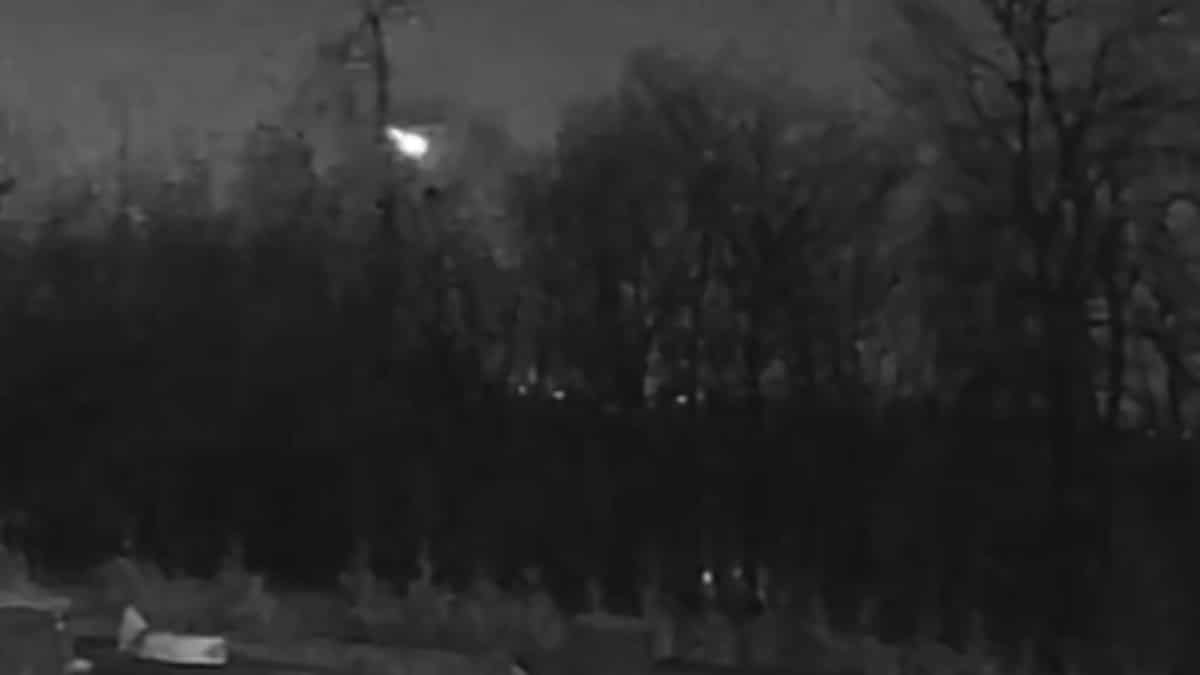
Camera captures massive fireball in night sky of United States.
The evening skies in major swathes of the United States and Canada were ignited by a glittering fireball on Wednesday (Feb 21), as ameteor entered the atmosphere of the Earth and immediately burned up.
More than 200 observers reported the dazzling display of meteors in 11 US states and Ontario, as per the data collected by the American Meteor Society. Most of those who spotted the meteor said that they saw it between 6:45 and 7 pmEST, according to the data, and most individual sightings had lasted from 1 to 7 1/2 seconds.
However, some of the reports claimed that the falling space rock was in the sky for some time before it disappeared. As per one report, the fireball was visible for 20 seconds in West Virginia.
The burst of light was captured by various cameras as it zoomed through the skies and various videos were shared on the social media platform.
As per the news station, additional sightings were also reported from farther north in Pennsylvania and into the Midwest. "Meteors are harmless and never hit the surface of the earth. Meteorites, on the other hand, do hit the earth before they burn up," said Topper Shutt, who is a meteorologist at WUSA, reported CBS News.
Earth receives 48 1/2 tonnes of meteoritic material every day
According to NASA, scientists have estimated that around 48 1/2 tonnes of meteoritic material falls on Earth every day. Once a space rock enters the atmosphere and burns up, it is known as a meteor or shooting star.
The meteor which is especially bright, sometimes shining even brighter than Venus, is known as a fireball. The space rocks are known as meteoroids before they descend down towards the Earth and can vary greatly in size.
Some of themare as small as a grain of dust and some others are large in size. Most of them hurtle inside the atmosphere of Earth as small pieces which have broken off from larger objects in space, like comets or the moon and other planets.
Watch:Gravitas: Asteroid flew past Earth in near miss
As per NASA, the meteoroids can be metallic, rocky or a combination of both. Last September, an exceptionally bright fireball was noticed by hundreds across the United States' mid-Atlantic region.
NASA stated that at the time, thefireball looked as bright as a quarter moon and scientists found out that the original meteoroid from which it had emerged was a small fragment of another asteroid.
NASA said that the asteroid may have come from the Asteroid Belt between Jupiter and Mars.
(With inputs from agencies)