THIS lost temple was hidden beneath synagogue where Jesus performed miracles, archaeologists suspect...

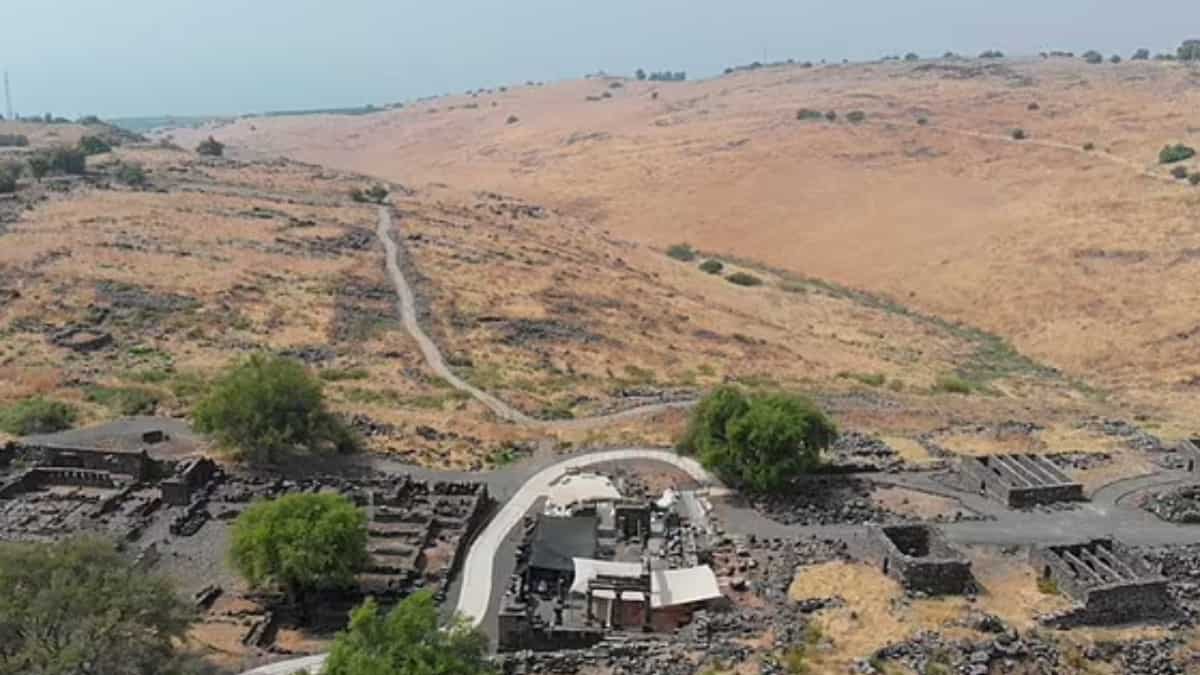
Image of the ruins of synagogue where Jesus Christ preached and performed miracles.
A long-lost temple has been discovered by archaeologists hidden beneath the most unexpected place - the synagogue where Jesus Christ was believed to have performed miracles.
According to various passages in the New Testament, Christ preached to his followers and healed those who were sick in a synagogue which was located in the ancientIsraeli city of Chorazin.
From across the world, the Jews travelled to this holy site in Korazim National Park which is in the north and where the temple's historical records are placed.
The synagogue, which was built in 380AD, was discovered by experts in the early 1900s. However, there was no physical evidence which proved that the synagogue existed in the time of Jesus Christ.
A team of archaeologists excavated the synagogue - which was found in 1905 - and stumbled upon the ruins of an even older temple which was buried beneath the synagogue.
The synagogue was built in 380AD and it is suspected that the temple hiding beneath the floor was built even before that.
Jesus walked from synagogue to temple more than 2,000 years ago: Experts
According to the experts, Jesus Christ walked on the path which led to the temple more than 2,000 years ago.
"This is a groundbreaking discovery. I have been excavating all over [the globe], and, for me, it's definitely one of the most important excavations I've ever directed," Achia Cohen-Tavor, lead archaeologistfrom Dagesh Tourist Archaeology, said.
Cohen-Tavor, along with his team, moved the giant boulders which were kept in specific arrangements in the third-century ruins and removed the floor.
The team removed the giant rocks and discovered pottery, coins and cookware which was nestled between them.
"I can't date the rock itself when it was put here," saidCohen-Tavor, in aYouTubevideo in which he spoke about the find.
"What I can date is the pottery and, hopefully, coins coming from the between the rocks and definitely what's beneath them. WhateverI get from between those stoneswould be dating the construction of the synagogue here," he added.
Watch:Greece: Athens Acropolis closes due to heatwave
Cohen-Tavor claimed that the giant boulders placed in the ground as well as the artefacts were the biggest evidence of first-century dwellings which was discovered in the region.
In the Book of Matthew, the site in the city of Chorazin where the synagogue is located has been mentioned. It states that Christ preached at the site but also cursed the town after he and his teachings were rejected by the locals.
"Then he began to denounce the cities in which most of his mighty works had been done because they didn't repent," read the holy book.
"Woe to you, Chorazin! Woe to you, Bethsaida! For if the mighty works had been done in Tyre and Sidon which were done in you, they would have repented long ago in sackcloth and ashes," it added.
(With inputs from agencies)