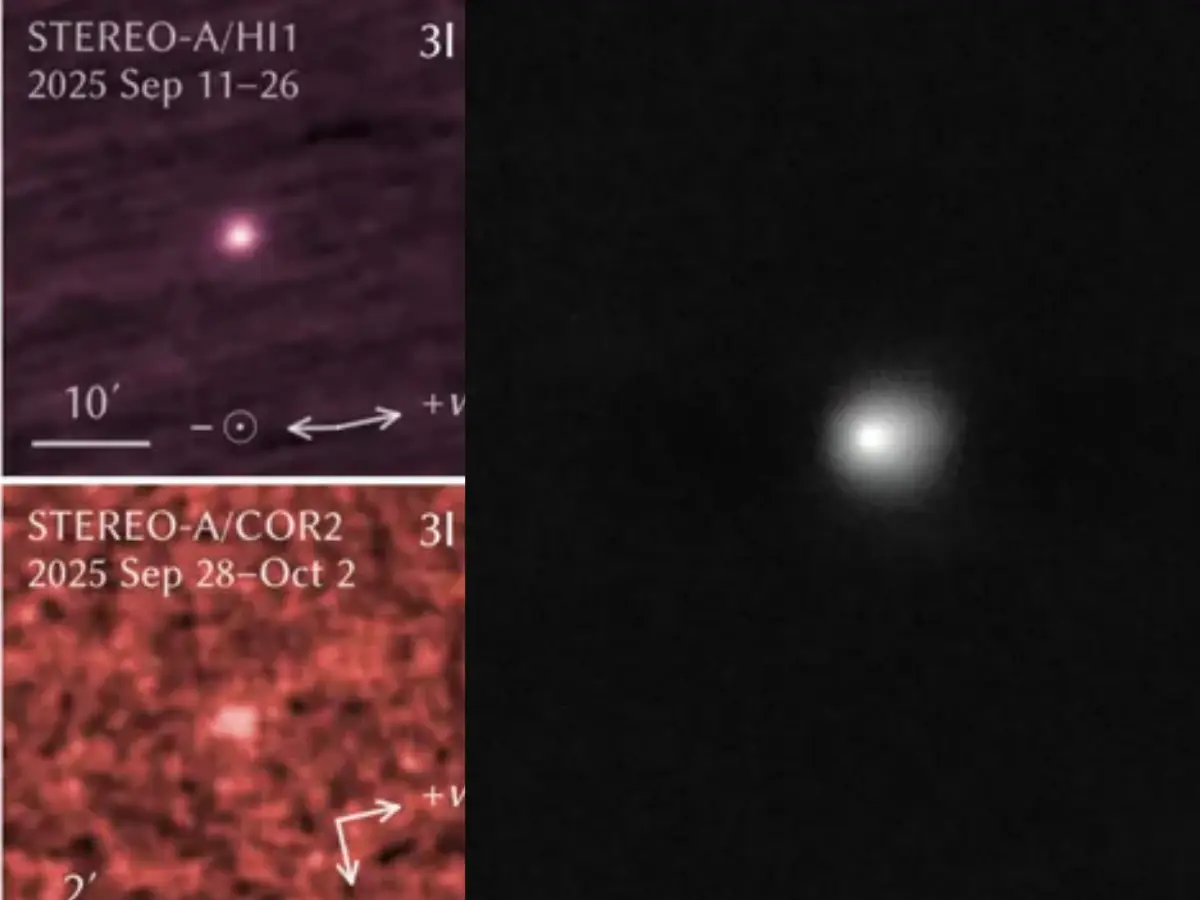
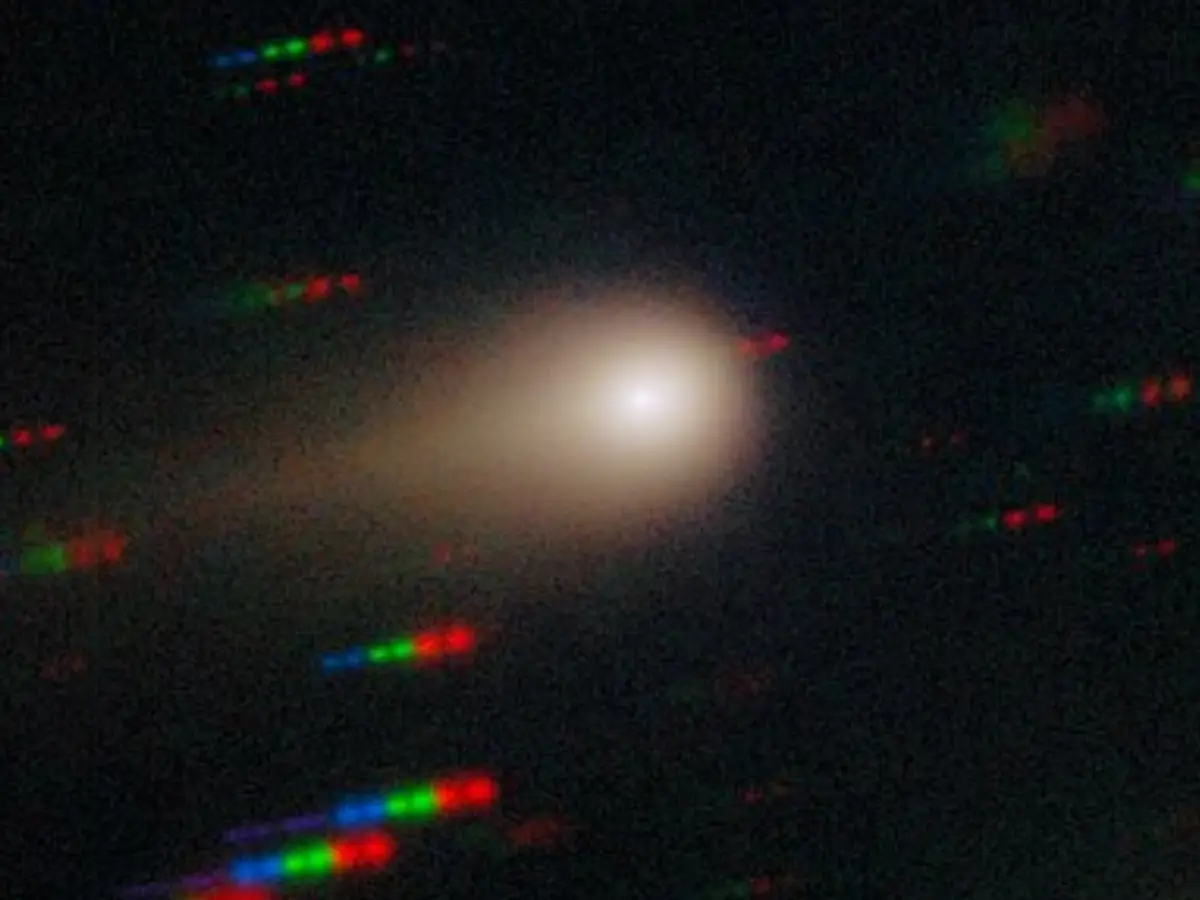
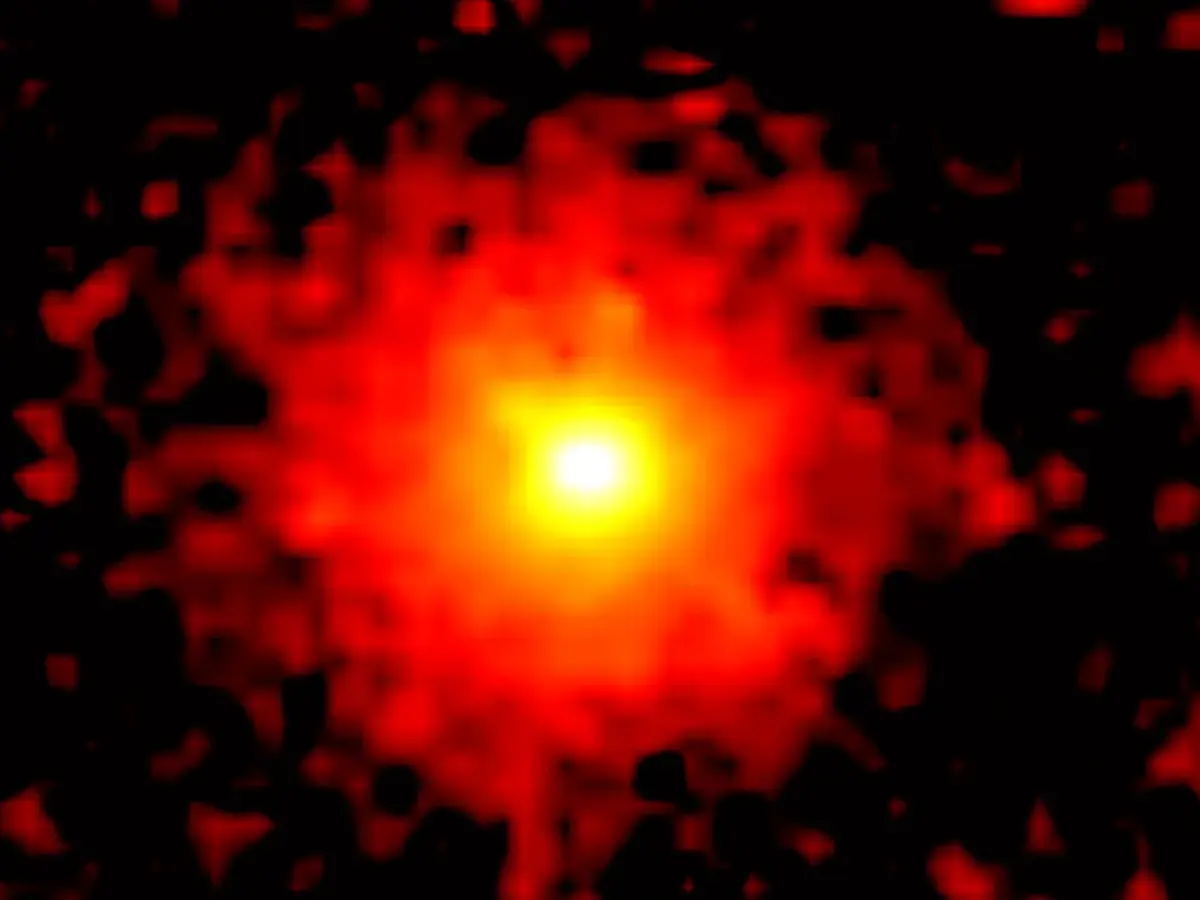
Spacecraft in deep space fires up to study 3I/ATLAS, TWICE. Here's who's watching

&imwidth=600&imheight=450&format=webp&quality=medium "Spacecraft in deep space fires up to study 3I/ATLAS, TWICE. Here's who's watching")
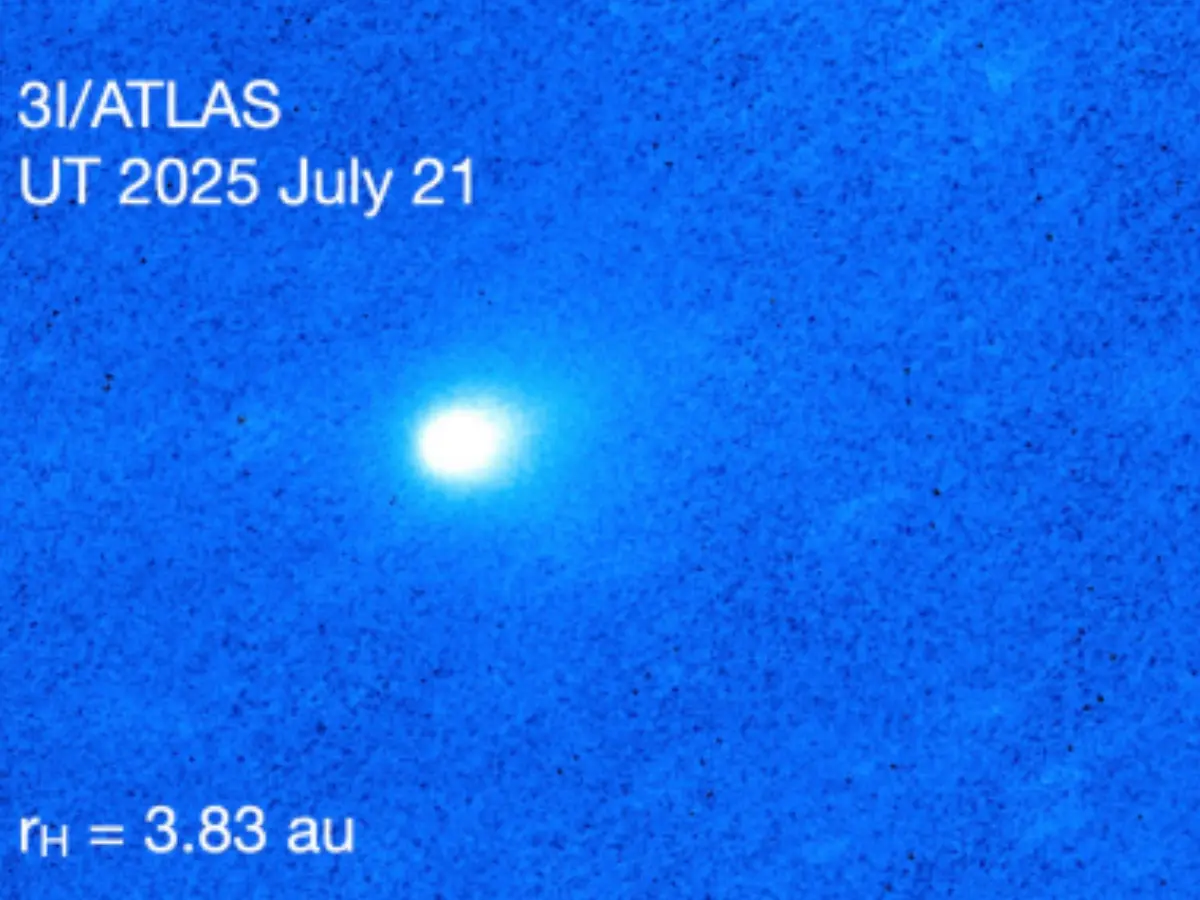
3I/ATLAS to be studied by JUICE twice in November. Photograph: (NASA)
Spacecraft travelling to study three of Jupiter's icy moons will power up in deep space to study 3I/ATLAS twice this month. The JUICE probe wasn't supposed to be in action during its journey, but will now bear the load of revealing some facets of the interstellar comet.
The European Space Agency's Jupiter-bound probe is set to study 3I/ATLAS in November. In fact, it would have not one but two opportunities to scan the interstellar comet. Jupiter Icy Moons Explorer (JUICE) is slowly treading towards the three moons of Jupiter, and isn't slated to reach before the early 2030s. However, it will soon be put to work in its journey as the JUICE probe will soon come 64 million kilometres near 3I/ATLAS. IFLScience reported that the JUICE probe will "observe 3I/ATLAS between 2 and 25 November." Olivier Witasse, ESA Project Scientist, said that the closest approach will happen on November 4 when the spacecraft will be 64 million kilometres. Witasse admitted that JUICE wasn't ready for a mid-space probe and is drifting slowly towards the icy moons of Jupiter - Ganymede, Callisto, and Europa. “All this campaign was unexpected for everybody!" he said.
Also Read: 3I/ATLAS oddities might increase as it emerges from Sun's glare - 'If 5 billion tons of gas...'
JUICE fires up camera to study 3I/ATLAS
But the "uniqueness of these observations" led ESA to "prepare this extra observation planning." One camera and other instruments on JUICE are ready to study the comet. "We will be using five instruments: the camera, the near-infrared imaging instrument, the UV spectrometer, the sub-millimetre instrument, and a sensor to image neutral atoms. We are far away (0.5 Astronomical units), therefore, only remote sensing,” Witasse stated. ESA describes this as a great opportunity to study 3I/ATLAS, the third interstellar visitor recorded in our solar system.
No details are available on the second observation date. The best viewing date is on November 4 as this is the closest JUICE will get to 3I/ATLAS, as per ESA. However, the second date will also be crucial to learn about the interstellar visitor. But ESA has clarified that data reception and download will take weeks because of the position of 3I/ATLAS. “Due to the position of JUICE with respect to Earth, the data rate is very low. We expect the data to be downloaded only in February 2026,” Witasse explained. Meanwhile, the comet is slowly coming out of the glare of the Sun. It will slowly start becoming visible from Earth, but you will need a powerful telescope to catch a glimpse of 3I/ATLAS.