Sinkholes, tunnels: Staggering wealth of microbial life in Mexico’s underwater labyrinth unravelled

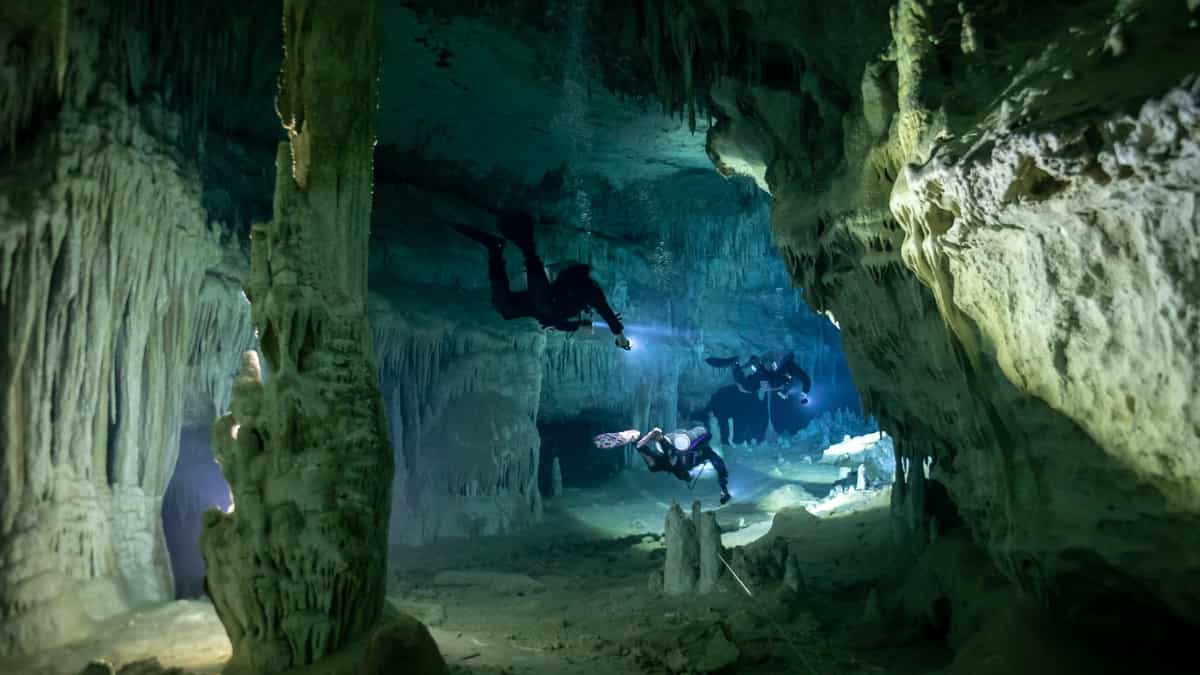
The subterranean cave networks in Mexico.
At first, some of the most inaccessible extremes of mapped cave systems hidden in mysterious underwater labyrinths were sampled by the researchers.
In these cave systems which are spread across 1,500 kilometres, the researchers have found thriving microbial metropolises which are within the layer of freshwater.
Mexico's Yucatan carbonate aquifer is among the most extensive groundwater systems present on Earth and only some of its parts have been mapped properly.
The groundwater system has numerous sinkholes, some of which are toxic in nature, as well as a complex web of subterranean tunnels. The system's massive caves provide drinking water to ten million visitors every year as well as two million locals.
"These are incredibly special samples of underground rivers that are particularly difficult to obtain," stated geobiologist Matthew Selensky, who was involved in the research while at Northwestern University.
Northwestern University's geobiologist Magdalena Osburn and her team sequenced genes using 78 water samples, which were collected by a team of cave divers, to understand the different microbe species.
Researchersdiscover4,183 unique sequences
The researchers discovered 4,183 unique sequences which represented 917 different families of microbes, which had unique patterns of species in various areas.
"The microbial communities form distinct niches," stated Osburn. "There is a varying cast of characters that seem to move around, depending on where you look. But when you look across the whole data set, there's a core set of organisms that seem to be performing key roles in each ecosystem,” she added.
While looking into the 12 sites which were sampled, the researchers found the same family of bacteria: Comamonadaceae.
Comamonadaceae are tiny, rod-shaped organisms which are found in water and soil environments. They need oxygen and swishy tail-like flagella is used by them to move about.
Watch:Top Chinese pharmaceutical companies use parts of endangered animals as ingredients: Report
"It seems that Comamonadaceae performs slightly different roles in different parts of the aquifer, but it's always performing a major role. Depending on the region, it has a different partner. Comamonadaceae and its partners probably have some mutualistic metabolism, maybe sharing food,” explained Osburn.
"This underground river system provides drinking water for millions of people. So, whatever happens with the microbial communities there has the potential to be felt by humans,” Osburn noted.
(With inputs from agencies)