Pistols Napoleon once tried to kill himself with auctioned for $1.82mn. But there is a catch

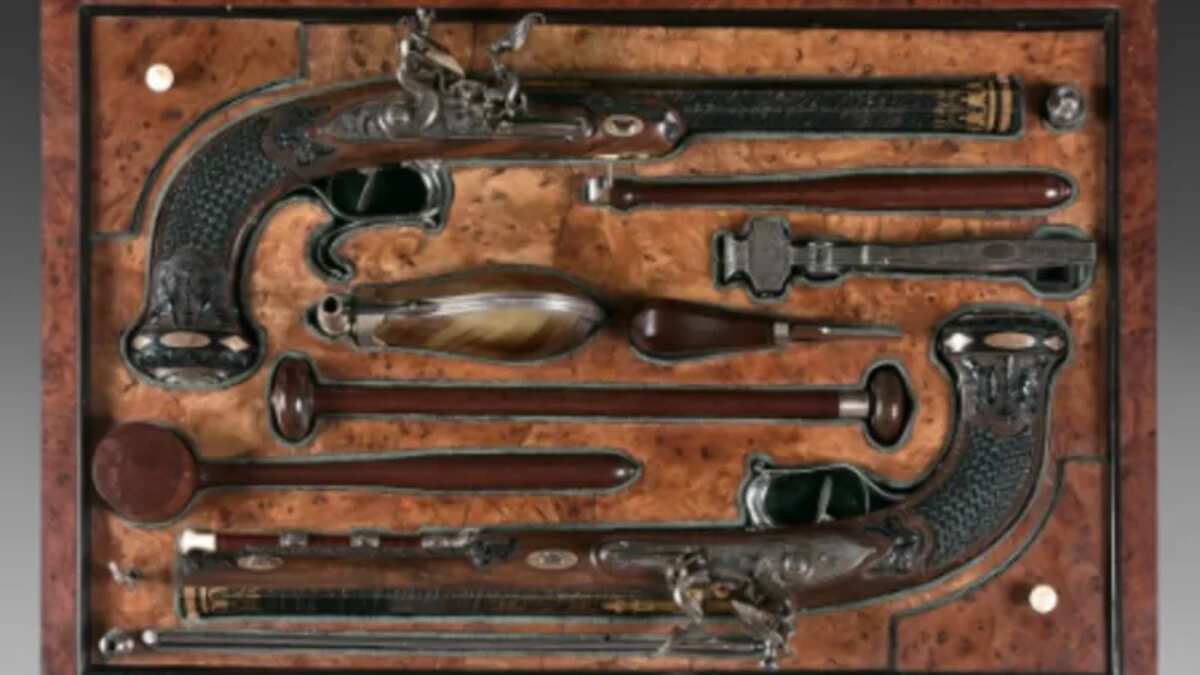
Napoleon guns
Two of French emperor Napoleon Bonaparte's pistols, which were recently named national treasures by France's culture ministry, have been auctioned off for €1.69mn ($1.82mn). They are the same pistols with which Napoleon once tried to kill himself after losing a major war. The expected price of the pistols was €1.2mn and €1.5mn. The pistols were made by Paris gunmaker Louis-Marin Gosset. The auction happened on Sunday (Jul 7) at the Osenat auction house.
The Fontainebleau palace, sitting next to the auction site, is the same palace where Napoleon tried to take his own life following his abdication in 1814.
What makes the guns so interesting is not just the fact that they belonged to Napoleon, but that he was said to have tried to kill himself on the night of 12 April 1814, with them after he lost to foreign forces. But his grand squire Armand de Caulaincourt removed the powder from the guns to prevent Napoleon from taking his own life. Napoleon then took poison but still survived. Napoleon gave the pistols to Caulaincourt and they were later passed on to his descendants.
Details about the pistols
The pistols are inlaid with gold and silver and also feature an engraved image of Napoleon himself in profile. The original box of the pistols was also included in the auction, along with various accessories including a powder horn and various powder tamping rods.
An "image of Napoleon at his lowest point" was also sold with the pistols and the other accessories, Auctioneer Jean-Pierre Osenat said.
However, since the pistols have been classified as national treasures, their permanent export is banned. So the French government needs to repurchase them from the person who bought them at the auction and has 30 months to do so.
This is not the first Napoleon memorabilia to be auctioned off. One of his famous tricorne hats was sold for €1.9mn ($2mn) in November.
Even though Napoleon lost a battle in 1814 and was exiled to the Mediterranean island of Elba after abdicating the throne, he returned to power in 1815. However, he was later defeated at the Battle of Waterloo. His second banishment was to the island of St Helena in the South Atlantic where he died in 1821.
(With inputs from agencies)

