Leafy greens first dished up 3,500 years ago: Study

Old-pot
Cooked leafy vegetables make up a significant percentage of our diet today, but archaeologists and archaeobotanists have discovered that leafy greens were first served 3,500 years ago in West Africa.
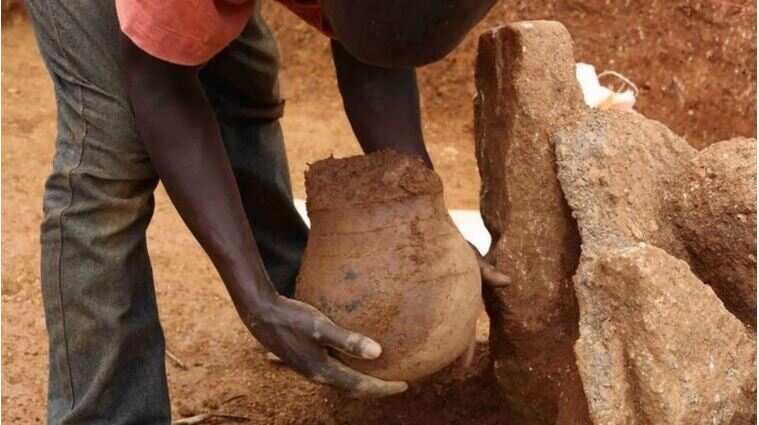
More than 450 prehistoric pots were investigated by teams from Germany's Goethe University and the University of Bristol in the United Kingdom, and 66 of them had signs of lipids, or compounds that are insoluble in water.
Chemists from the University of Bristol extracted lipid profiles on behalf of the Nok research team at Goethe University, with the goal of exposing which plants were utilised.
More than a third of the 66 lipid profiles had very diverse and complicated patterns, indicating that different plant species and portions had been processed, according to the findings published in the journal 'Archaeological and Anthropological Sciences.'
Archaeology and archaeobotany academics at Goethe University and chemistry scientists from the University of Bristol used their knowledge to confirm that such West African dishes had been there for 3,500 years.
The starchy mainstays of the main meal, such as pounded yam in the southern part of West Africa or thick porridge made from pearl millet in the drier savannahs in the north, are complimented by these leafy sauces, which are supplemented with spices and vegetables as well as fish or meat.
"Carbonised plant remains such as seeds and nutshells preserved in archaeological sediments reflect only part of what people ate back then," said Katharina Neumann.
With the help of lipid biomarkers and analyses of stable isotopes, the researchers from Bristol were able to show that the Nok people in central Nigeria included different plant species in their diet.
Using carbonised plant remains from central Nigeria, it was possible to prove that the Nok people grew pearl millet. However, it is unknown whether they also used starchy plants such as yam and which dishes they prepared with pearl millet.
"These unusual and highly complex plant lipid profiles are the most varied seen (globally) in archaeological pottery to date," said Julie Dunne from the University of Bristol’s Organic Geochemistry unit.
(With inputs from agencies)