Forest officer stumbles upon 140-million-year-old dinosaur footprint while jogging

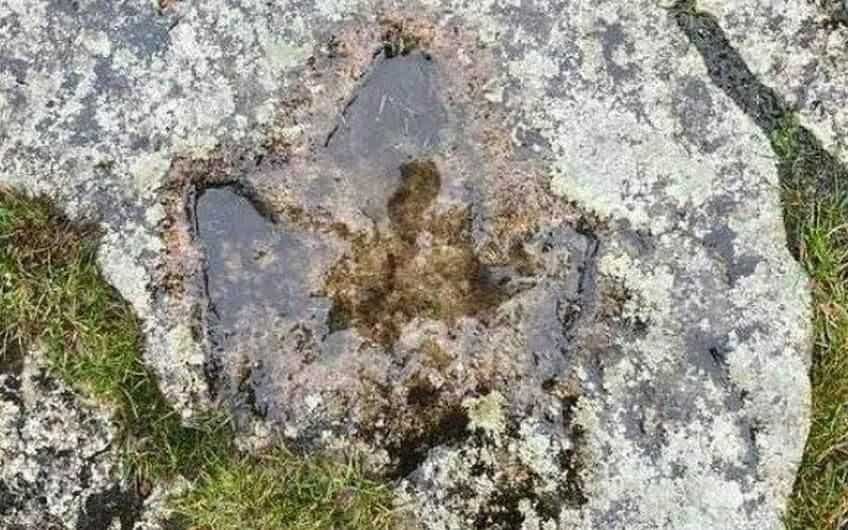
Dinosaur footprint
A forest officer in England stumbled upon the footprint of a dinosaur that is believed to be at least 140 million years old.
During a routine jogging last Sunday (Nov 12), National Trust ranger Sophie Giles chanced upon the fossilised treasure on the grounds of Brownsea Castle, in Poole Harbour, Dorset.
The footprint is believed to belong to Iguanodon— a three-toed bulky herbivore which was 36ft long and lived between 157 and 93 million years ago, around the Mesozoic Era, the Telegraph reported.
Footprint fossilised for thousands of years
According to experts, the foot was imprinted when the area was covered in tropical forests and swamps. As a result, it fossilised over thousands of years and became easier to see after it filled with water during a rain shower.
Local media reports say that the region is known for its Jurassic coastline and is abound with dinosaur footprints. Every year, it attracts hundreds of fossil hunters from around the world.
It is thought that the rock originated from the nearby Isle of Purbeck peninsula, where dinosaur footprints have been found near the village of Langton Matravers.
Posting about the "exciting find" on social media, the National Trust said: "We believe that the rock may have come from the Isle of Purbeck, where you can already see many dinosaur footprints at Langton Matravers."
Discovery creates excitement
The organisation said that it is actively seeking further research to uncover further details about the identity and history of this ancient relic.
Commenting on the discovery, Dr Martin Munt, curator of the Dinosaur Isle Museum in Sandown, on the Isle of Wight, confirmed to BBC that the latest footprint clearly came from a three-toed dinosaur.
“It is certainly what we call a tridactyl (three-toed) footprint, of the date we are talking about it could have been made by an iguanodon or related dinosaur,” he was quoted as saying.
(With inputs from agencies)