Fat head humans and Dragon Man roamed the same China region 150,000 years ago

&imwidth=600&imheight=450&format=webp&quality=medium "Fat head humans and Dragon Man roamed the same China region 150,000 years ago")
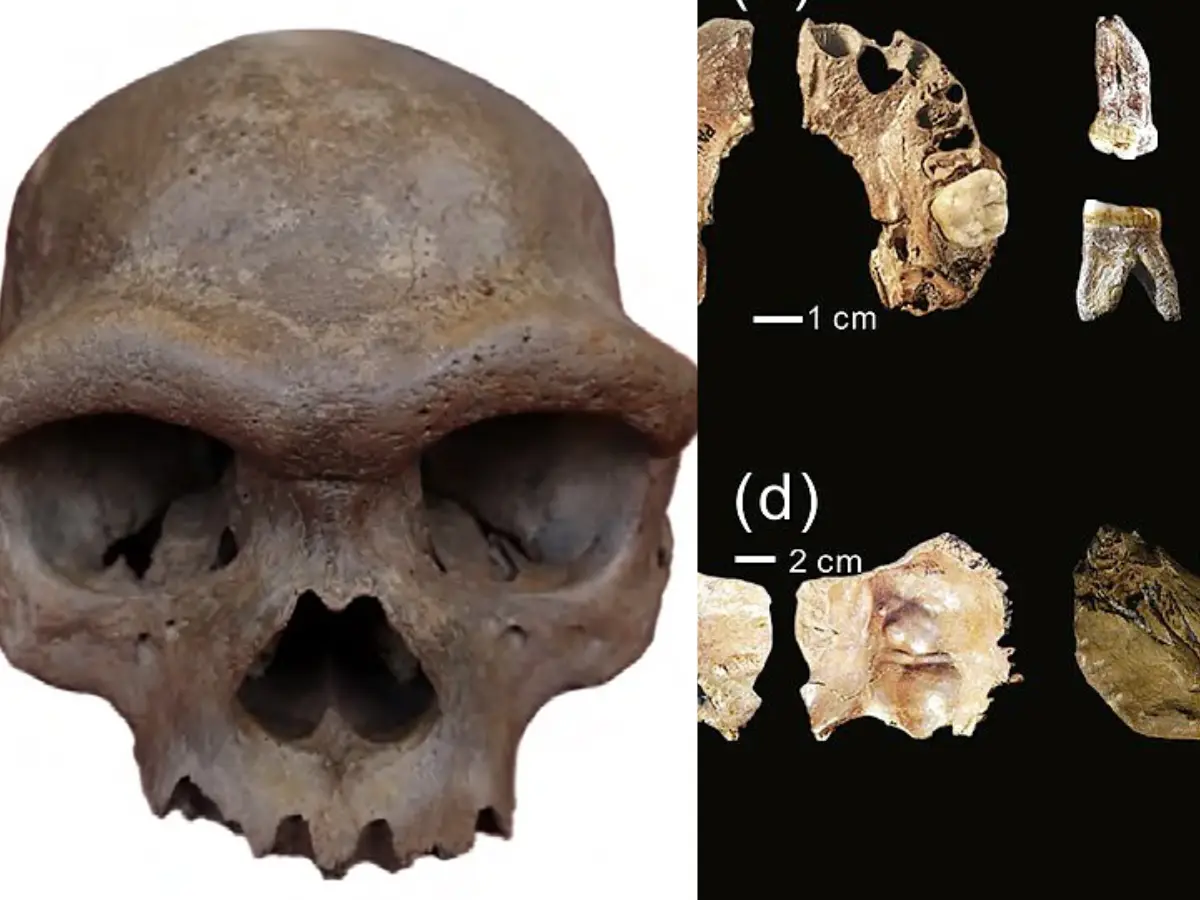
Human evolution in China was complex in one particular period. Photograph: (Wikimedia Commons)
The northern China region was inhabited by different human species at a time. New research has confirmed that a species of fat-headed humans lived alongside the Dragon Man between 138,000 and 228,000 years ago.
Homo juluensis, a human ancestor that had an unusually fat head, lived in northern China at the same time as the Denisovans, researchers have found. Uranium-series dating led them to the conclusion that this man roamed the region between about 140,000 and 230,000 years ago, the same as Homo longi, or the “Dragon Man". China during the Middle Pleistocene was populated by a mix of different groups of humans, some of whom are yet to be classified. This is why this period in human evolution is not greatly understood and is also known as the "muddle in the middle". Fossils found in the region show that H. juluensis, meaning “Large-Headed Man”, inhabited the region at this time, according to a study published in the journal Quaternary Science Reviews.
Its fossils were first discovered in Hebei Province in the 1970s, but the species was only named in 2024. Researchers thought it was a new human species. Dating attempts on the old Big Head over the years never produced any conclusive results. Magnetostratigraphic dating of minerals in the sediment layer in which the fossils were found hinted that it could be around half a million years old. But later, infrared stimulated luminescence dating showed the species lived only about 69,000 years ago.
How researchers confirmed the two lived together
So researchers of the new study decided to go with uranium-series dating. Five H. juluensis fossils and the bones of other mammals found in the same layer were analysed. They conclusively found that their findings clearly show that the species roamed this site sometime between 138,000 and 228,000 years ago. Meanwhile, the Dragon Man also inhabited northern China around 150,000 years ago, which means their time in the region overlapped. “These results indicate that at least two morphologically distinct hominin taxa (H. juluensis and H. longi) likely coexisted in northern China,” the study authors wrote.
Both of them are also believed to belong to the same branch of the human family tree. While it is not exactly clear how closely related they might have been, both H. longi and H. juluensis likely belong to the Denisovan heritage, with the former recently confirmed to have hailed from the species.

