Doomsday gets closer: Cracks on Thwaites Glacier have doubled in two decades

&imwidth=600&imheight=450&format=webp&quality=medium "Doomsday gets closer: Cracks on Thwaites Glacier have doubled in two decades")
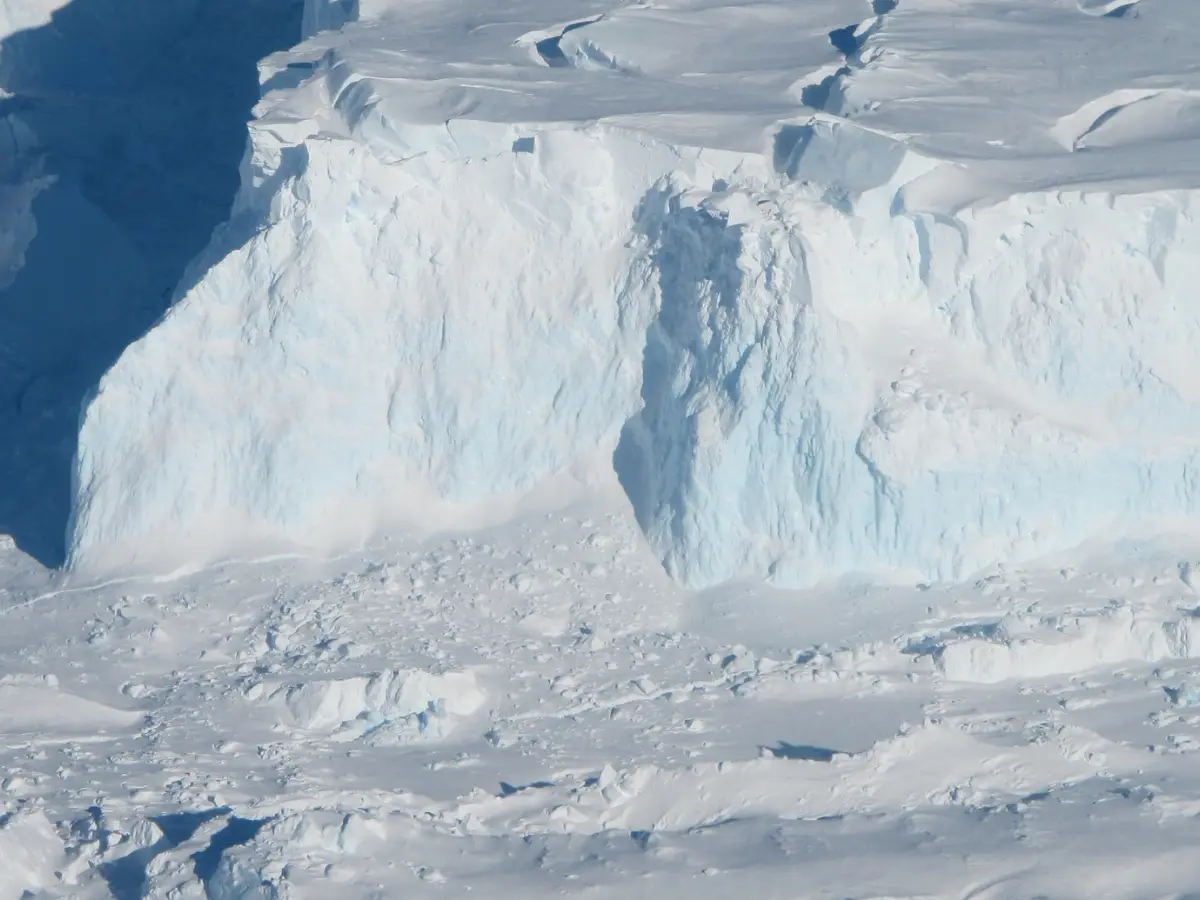
Doomsday Glacier fractures have spread to a larger area. Photograph: (NASA)
The Thwaites Glacier, or the Doomsday Glacier, is showing more signs of damage and is inching closer to its end. New studies have noticed that the cracks have spread to a larger area, and scientists think more stressors are at play.
Cracks continue to form around a shear zone of the Thwaites Glacier, also known as the Doomsday Glacier, as observed by satellites between 2002 and 2022. A team of researchers from the University of Manitoba wrote in a paper, "Over the past two decades, the shelf has experienced progressive fracturing around a prominent shear zone upstream of its pinning point, gradually compromising its structural integrity." They noted that the “total area length of fractures” grew from around 100 miles to over 200 miles in two decades. There are also hints that major new stresses are acting on the glacier since the average length did not actually increase.
Another study published by the International Thwaites Glacier Collaboration (ITGC) also confirmed that the large cracks in the ice shelf continue to weaken its structural integrity. The Thwaites Glacier is also called the Doomsday Glacier because it is at risk of imminent collapse, and when that happens, the sea levels could rise by 11 feet. Thwaites Glacier is often referred to as the "weak underbelly" of the West Antarctic Ice Sheet because the damage to it cannot be reversed, and it will collapse even under little stress. The Thwaites Ice Shelf holds the eastern portion of Thwaites Glacier and is expected to collapse by 2032. Once this shelf goes, the outflow from the glacier will speed up, leading to a complete breakdown.
Also Read: Scientists reveal Antarctic ice sheet witnessed a catastrophe 9,000 years ago - It was hotter
Warming oceans are melting glaciers faster
Thwaites is not the only glacier that could ultimately crash down, triggering a rise in sea levels. A recent study highlighted how warming ocean waters are melting ice shelves, and the changes are so clear that they can be noticed in mere hours and days. Meanwhile, circular currents of water measuring nearly 10 kilometres are digging underneath the glaciers. The warm, salty current flows hundreds of feet below the surface and moves upwards and onto the continental shelf. A positive feedback loop is created where new cold water from the ice shelf mixes with warmer, saltier ocean waters. The resultant ocean turbulence causes even more ice to melt.

